
Why Crop Insurance Matters
Crop insurance is a crucial financial safeguard for farmers, offering protection against the uncertainties that farming inevitably brings. Whether you are cultivating wheat, corn, or specialty crops, the threat of financial loss due to natural disasters or unforeseen events is real. Key facts:
- Purpose: Provides financial protection to farmers.
- Coverage: Includes natural disasters like droughts, floods, or hurricanes.
- Options: Flexible plans to meet diverse needs.
With crop insurance, farmers can secure their livelihood and continue feeding America even in tough times.
I’m Jeffrey Joseph, the founder of Farm & Country Insurance. With a deep understanding of agriculture, I focus on providing personalized crop insurance solutions. Leveraging my farming background, I ensure farmers in New York get the coverage they need to protect their operations.

Know your crop insurance terms:
– ag insurance agency
– ag insurance companies
Understanding Crop Insurance
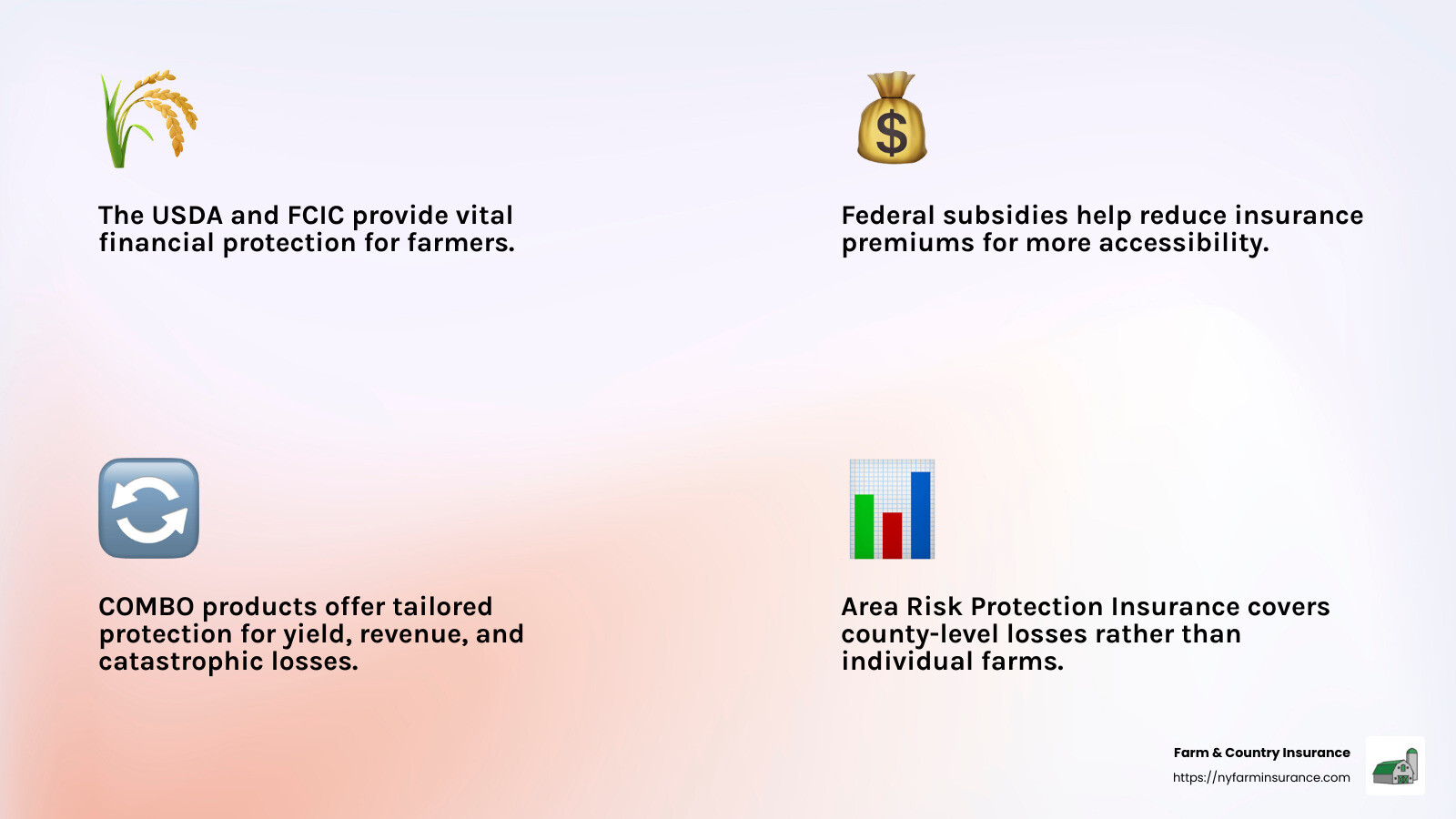
Crop insurance is a vital tool for farmers, offering both risk management and financial protection. It acts as a safety net, ensuring that farmers can recover from unexpected setbacks like natural disasters. This is where the USDA and the Federal Crop Insurance Corporation (FCIC) step in.
Key Players: USDA and FCIC
The USDA oversees the crop insurance program to support farmers across the nation. The FCIC, a government corporation, is responsible for administering this program. Their goal? To stabilize the agricultural economy by providing a robust system of crop insurance.
Why is Crop Insurance Important?
Risk Management: Farming is unpredictable. Weather patterns, pests, and diseases can impact yields dramatically. Crop insurance helps manage these risks, allowing farmers to focus on growing crops without constant worry about potential losses.
Financial Protection: When a disaster strikes, crop insurance provides financial compensation. This ensures that farmers have the necessary funds to cover operational costs and stay in business.

How Does it Work?
With crop insurance, the process is straightforward. Farmers purchase policies through private companies like Farm & Country Insurance, which work in partnership with the USDA. These policies cover a range of perils, from droughts to floods.
The Bottom Line
Crop insurance is more than just a policy—it’s peace of mind for farmers. It ensures that even when nature doesn’t cooperate, the farm can continue to operate and thrive. At Farm & Country Insurance, we understand the importance of this protection and are committed to offering custom solutions for every farmer’s unique needs.
Next, we’ll explore the different types of crop insurance available, so you can find the best fit for your farm.
Types of Crop Insurance
When it comes to crop insurance, there are several types to consider. Each offers unique protection against different risks. Let’s break them down:
Yield-Based Insurance
Yield-based insurance protects farmers against losses in crop yields. If your harvest is smaller than expected due to factors like bad weather or pests, this insurance kicks in. It ensures you receive compensation based on the average yield in your area.
Weather-Based Insurance
Weather-based insurance covers specific weather events that can damage crops. This includes hail, excessive moisture, or drought. It’s a great option for farmers in areas prone to extreme weather.
Revenue-Based Insurance
Revenue-based insurance combines yield protection with price protection. It covers you if the market price of your crop drops, even if your yield remains high. This way, you’re protected against both yield and price fluctuations.
Multi-Peril Crop Insurance (MPCI)
Multi-Peril Crop Insurance (MPCI) is a comprehensive policy that covers a wide range of risks. This includes natural disasters, disease, and price changes. It’s subsidized by the government, making it a popular choice among farmers.
Each type of insurance offers different benefits. Consider your farm’s specific risks and needs when choosing a policy. At Farm & Country Insurance, we can help you find the right fit to ensure your farm is protected against whatever nature throws your way.
Next, we’ll discuss the Federal Crop Insurance Program and how it supports farmers across the nation.
Federal Crop Insurance Program
The Federal Crop Insurance Program is a crucial element in supporting American farmers. Managed by the USDA and administered through the Federal Crop Insurance Corporation (FCIC), this program provides essential financial protection.
FCIC and USDA
The FCIC is a government corporation that ensures the economic stability of agriculture by offering a sound system of crop insurance. It works under the supervision of the USDA. The FCIC‘s mission is to provide insurance that protects farmers from losses due to natural disasters or significant price drops.
Subsidies and Support
One of the key features of the Federal Crop Insurance Program is the subsidy provided by the government. This subsidy helps lower the cost of insurance premiums for farmers, making it more accessible. As a result, farmers can secure their livelihoods without bearing the full financial burden of insurance costs.
COMBO Products
The COMBO products introduced by the USDA offer comprehensive coverage options. These include:
- Yield Protection (YP): Insures against yield losses.
- Revenue Protection (RP): Covers revenue losses due to price or yield changes.
- Revenue Protection with Harvest Price Exclusion (RPHPE): Similar to RP, but excludes harvest price changes.
- Catastrophic Coverage (CAT): Provides minimal coverage for significant losses.
These products allow farmers to select coverage that best fits their needs, whether they’re concerned about yield, revenue, or catastrophic events.
Area Risk Protection Insurance (ARPI)
ARPI is another insurance option that focuses on county-level protection. It covers area-wide losses rather than individual farm losses. This can be beneficial for farmers whose losses align with broader regional trends.
At Farm & Country Insurance, we understand the complexities of these programs and can guide you in selecting the right coverage. Next, we’ll explore crop insurance options specific to New York and how they cater to the state’s diverse agricultural needs.
Crop Insurance Options in New York
In New York, crop insurance is custom to meet the needs of a diverse agricultural landscape. With insurance available for 25 different crops, New York farmers have a variety of options to protect their operations.
Diverse Crop Coverage
New York’s agricultural producers can choose from insurance policies for a wide range of crops. This includes everything from apples and grapes to corn and soybeans. Each crop has specific insurance policies that cater to its unique risks and growth cycles.
Whole Farm Revenue Protection
For farmers growing multiple crops, the Whole Farm Revenue Protection (WFRP) program is an excellent option. It provides a safety net for the entire farm’s revenue under one policy. This is especially beneficial for diversified farms, as it simplifies coverage and helps manage risk across different crops.
Important Deadlines
Timeliness is crucial when it comes to crop insurance. New York farmers must be aware of specific deadlines for each type of crop insurance. Here are some key dates to remember:
- Spring-planted field crops: March 15
- Vegetables (except onions): March 15
- Onions: February 1
- Whole Farm Revenue Protection: March 15
- Fall-planted barley and wheat: September 30
- Apples, grapes, peaches, tart cherries: November 20
These deadlines ensure that farmers have adequate time to gather necessary documentation and consult with their insurance agents.
Customized Solutions
At Farm & Country Insurance, we specialize in helping New York farmers steer these options. Our team can assist in selecting the most suitable insurance policies based on your specific crops and farming practices.
Next, we’ll address some frequently asked questions about crop insurance to help you better understand its benefits and how it works.
Frequently Asked Questions about Crop Insurance
How does crop insurance work?
Crop insurance is a safety net for farmers. It helps protect against the financial risks of farming. If a natural disaster or other covered event harms your crops, insurance can provide compensation. This compensation helps cover the loss, ensuring you can keep farming without major financial setbacks.
Crop insurance is managed by the USDA and the Federal Crop Insurance Corporation (FCIC), which work with private companies like Farm & Country Insurance to deliver policies. These policies cover a range of risks, including bad weather, pests, and disease.
Is crop insurance worth it?
For many farmers, crop insurance is essential. It provides a crucial layer of financial protection. Without it, a single bad season could mean the end of a farm operation. With insurance, farmers can have peace of mind knowing they have a backup if things go wrong.
Multi-Peril Crop Insurance (MPCI) is one of the most popular options. It offers broad coverage for various risks. This type of insurance ensures that even if prices drop or yields are low, farmers have a revenue guarantee. It’s an investment in stability, allowing farmers to plan for the future without as much worry about unexpected losses.
What is the most common type of crop insurance?
The two most common types of crop insurance are yield-based insurance and revenue-based insurance.
Yield-Based Insurance: This type of insurance kicks in when crop yields are lower than expected. It’s ideal for farmers who want to ensure they receive compensation if they can’t harvest as much as planned due to weather or other factors.
Revenue-Based Insurance: This option protects against drops in revenue. It considers both yield and market prices. Even if you have a good yield, if market prices fall, this insurance helps cover the difference. It’s a great choice for farmers concerned about fluctuating market conditions.
At Farm & Country Insurance, we understand that every farm is unique. Our experts can guide you in choosing the best policy to fit your needs, ensuring you have the right coverage to protect your livelihood.
Next, we’ll explore more about how Farm & Country Insurance can offer custom solutions and comprehensive coverage to meet your specific farming needs.
Conclusion
At Farm & Country Insurance, we recognize the unique challenges and risks faced by farmers. Our mission is to provide custom solutions custom to each farmer’s specific needs. We understand that no two farms are alike, whether you’re growing grains, fruits, vegetables, or managing a dairy operation. That’s why we take the time to craft insurance plans that fit your individual circumstances.
With over 35 years of experience, we offer comprehensive coverage that goes beyond standard policies. Our coverage options are designed to protect against a wide range of risks, from adverse weather and pests to market fluctuations. We partner with you to ensure that your farm is well-protected, helping you focus on what you do best—farming.
By choosing Farm & Country Insurance, you’re not just getting a policy; you’re gaining a partner committed to your success. We work closely with the USDA and the Federal Crop Insurance Corporation (FCIC) to provide policies that are both reliable and affordable. Our expertise allows us to steer the complexities of crop insurance, ensuring that you have the financial protection you need.
For more information on how we can help safeguard your farming operations, explore our services and see how Farm & Country Insurance can be your trusted insurance partner.