
Understanding the Business of Agriculture
Agribusiness is the commercial sector encompassing the full value chain of farming and food production, from input suppliers to consumers. It includes all business activities involved in producing, processing, distributing, and selling agricultural products.
What is Agribusiness? Quick Answer:
| Definition | Components | Economic Impact |
|---|---|---|
| The business sector that covers all economic activities related to farming and food production | • Input sector (seeds, equipment, chemicals) • Production sector (farming) • Processing sector (food manufacturing) • Marketing sector (distribution, retail) • Support sector (research, finance) | • 17% of global greenhouse gas emissions • Generates trillions of dollars annually • Employs millions worldwide • Manages 570 million farms globally |
When the Harvard professors John Davis and Ray Goldberg coined the term “agribusiness” in 1957, they recognized that farming had evolved beyond just growing crops or raising livestock. Today, agribusiness represents a complex, interconnected system that feeds billions while navigating challenges from climate change to technological revolution.
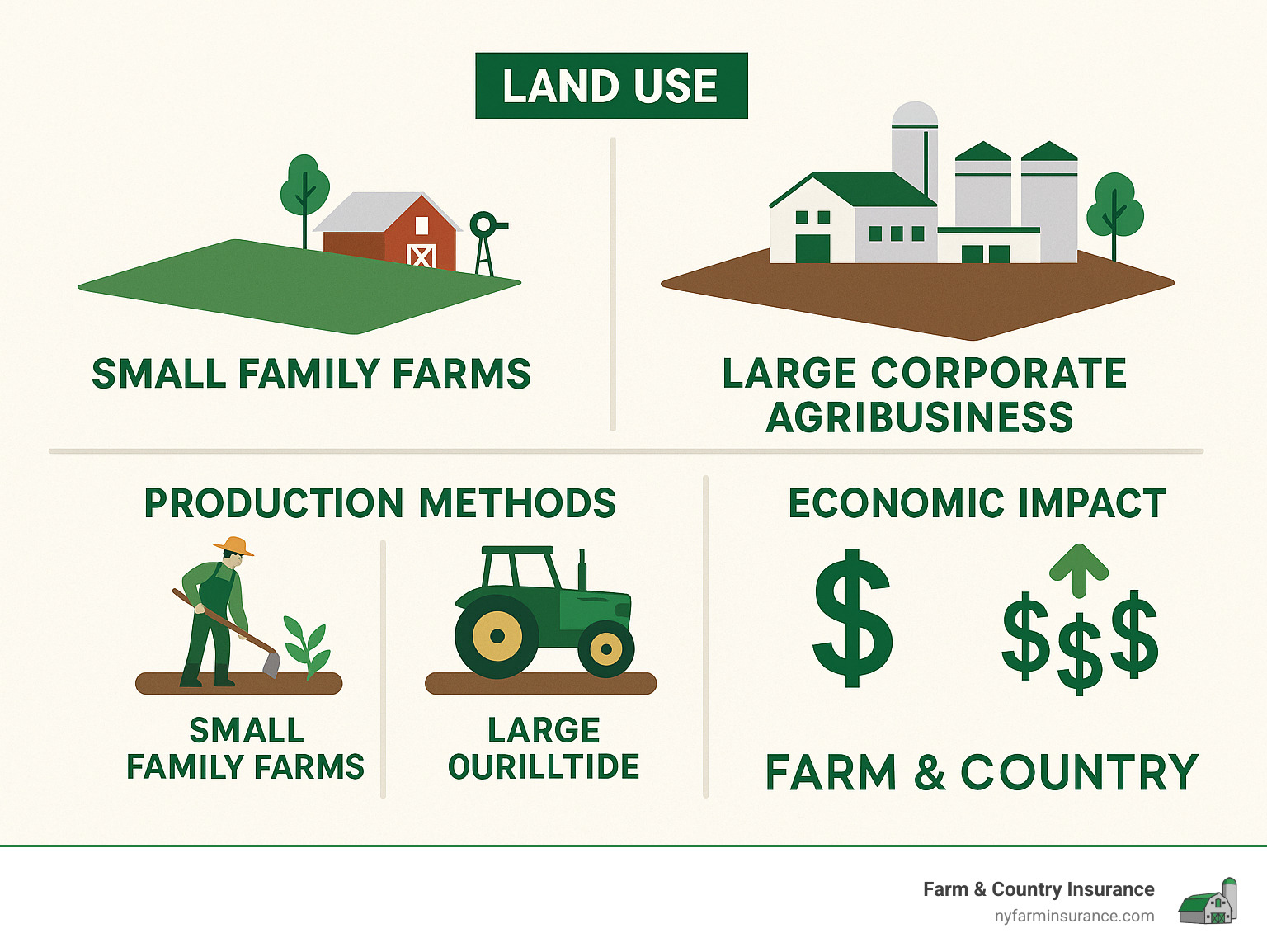
The scope of modern agribusiness extends from small family farms (which manage about 75% of the world’s agricultural land) to multinational corporations that control significant portions of the global seed, chemical, and food processing markets. This diversity creates both opportunities and challenges for those working within the agricultural sector.
I’m Casey Love, owner of Farm & Country Insurance, with over 15 years of experience helping New York farmers protect their agribusiness operations through customized insurance solutions that address the unique risks faced by agricultural enterprises of all sizes.
Agribusiness Explained: Definition, Evolution, Components & Value Chain
When we talk about agribusiness, we’re describing something much bigger than just traditional farming. It’s a vast, interconnected system that links what happens on the farm to your dinner table through a remarkable network of businesses and services. With over $2.4 trillion in global economic activity annually, agribusiness has grown into one of the world’s most vital economic sectors.
What is Agribusiness?
The term agribusiness cleverly blends “agriculture” and “business” into one word that captures their relationship. Harvard professors John Davis and Ray Goldberg officially defined it in 1957, though interestingly, the word appeared as early as 1847 in a Canadian almanac.

These professors described agribusiness as “the sum total of all operations involved in the manufacture and distribution of farm supplies; production operations on the farm; and the storage, processing, and distribution of farm commodities and items made from them.”
In friendlier terms, agribusiness is simply the business side of farming—the complete farm-to-fork system that includes growing crops, making farm equipment, processing raw materials into foods we eat, marketing those products, and providing crucial support services like the farm insurance we offer at Farm & Country Insurance.
What makes this approach so powerful is recognizing that modern agriculture thrives as an interconnected economic ecosystem rather than as isolated farms working alone.
How Agribusiness Has Evolved
The story of agribusiness is really the story of how farming itself has changed over time:
Before the 1950s, farming was mostly about production, with small, diverse family farms growing food mainly for nearby communities.
The Green Revolution of the 1950s-1970s changed everything. New high-yielding crops, chemical fertilizers, and modern machinery dramatically boosted productivity. This period saw the formal birth of agribusiness as farming became more commercially focused.
During the 1980s-1990s, we witnessed significant industry consolidation, with large corporations gaining substantial control over seeds, chemicals, and food processing. The use of nitrogen fertilizers skyrocketed by 800% between 1961 and 2019, fundamentally changing how we grow food.
From the 2000s to today, digital technology, biotechnology advances, and growing environmental awareness have reshaped agribusiness. As Ray Goldberg himself noted in 2017, modern agribusiness must now balance making money with protecting the environment and social responsibility—what we now call ESG (Environmental, Social, and Governance) principles.
Today’s agribusiness landscape features more vertical integration, global supply chains, precision farming technologies, consumers demanding transparency, and a growing focus on renewable biological resources (the bioeconomy).
Mapping the Agribusiness Value Chain
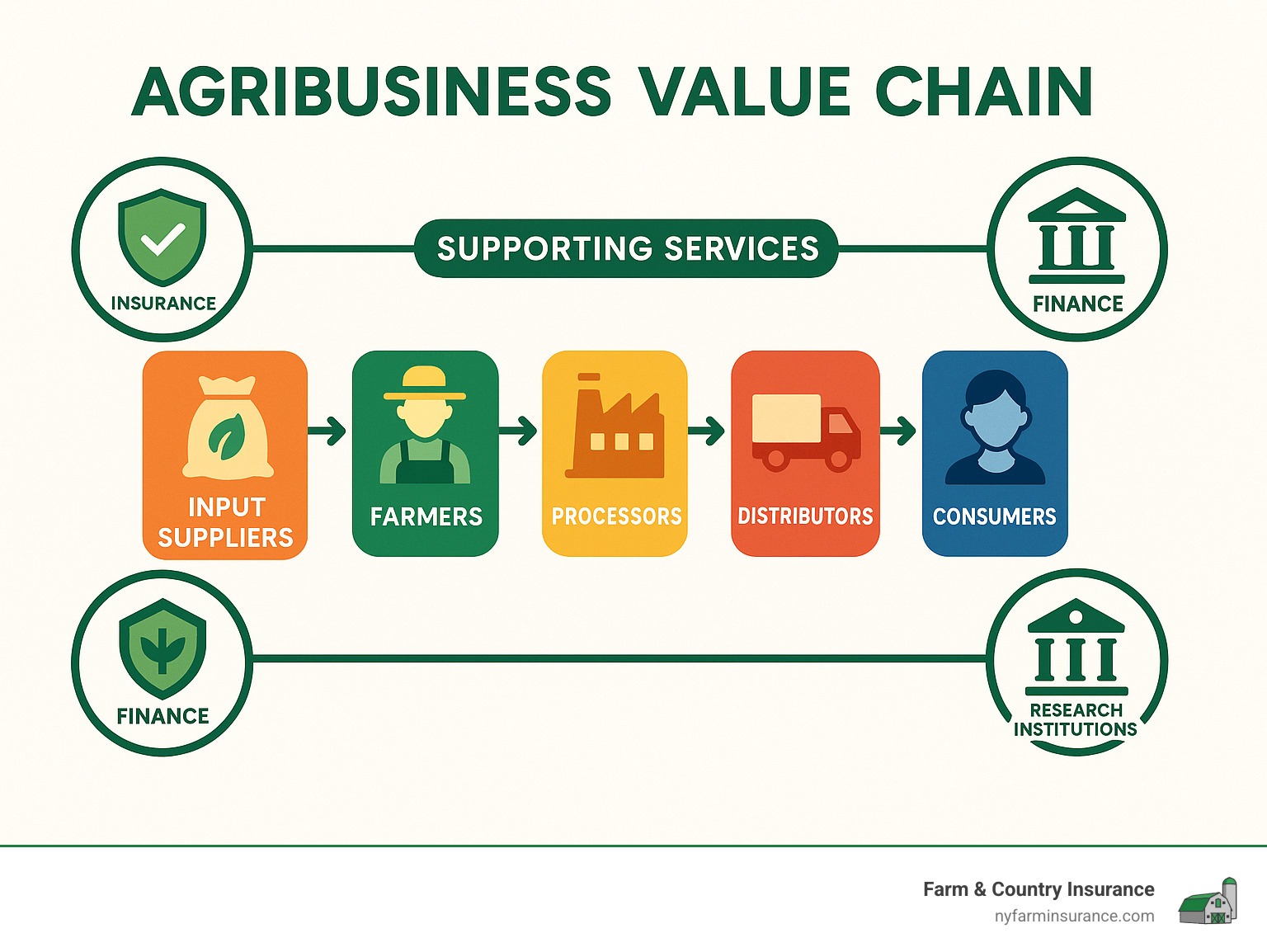
The agribusiness value chain shows how agricultural products journey from initial concept to your kitchen table, with value added at each step along the way:
The input sector includes the companies that supply farmers with what they need to grow crops or raise animals. These are businesses like Corteva and Bayer (seeds and genetics), John Deere and CNH Industrial (farm machinery), and BASF and FMC (agrochemicals). This sector also includes animal feed suppliers, irrigation equipment providers, and financial institutions offering farm loans.
The production sector is where the actual farming happens. This includes family farms (which manage 75% of agricultural land worldwide), corporate farms, cooperatives, specialty crop producers, livestock operations, fish farms, and forestry operations.
Once harvested, agricultural products move to the processing sector, where raw materials become consumer goods. This includes food manufacturers, meat processors, dairy processors, grain millers, biofuel producers, and textile manufacturers.
The marketing sector then takes these products to market through food wholesalers, commodity traders, transportation companies, retailers, exporters, and food service distributors.
Supporting this entire chain is the support sector, which includes agricultural research institutions, extension services, insurance providers (like us at Farm & Country Insurance), trade associations, government agencies, and certification bodies.
Each link in this chain faces unique challenges and opportunities, requiring specialized knowledge and custom risk management approaches. Understanding this interconnected system is crucial for anyone working within or serving the agribusiness sector—something we’ve been doing at Farm & Country Insurance since 1984.
Economic, Policy & Risk Landscape
The agribusiness sector packs quite an economic punch, contributing about 4% to global GDP directly—though in farming-focused economies, that number shoots way up. Just look at the United States, where agriculture, food, and related industries pumped $1.055 trillion into the economy in 2020. That’s no small potatoes!
Agribusiness & the Global Economy
When we talk about agribusiness, we’re talking about a true global powerhouse. Nearly one billion people worldwide—about one in five American workers—earn their living in this sector. That’s a whole lot of paychecks!
Beyond employment, agribusiness shoulders the enormous responsibility of feeding our planet. And that job is getting bigger—experts project we’ll need to grow 70% more food by 2050 compared to 2007 levels. Talk about pressure in the fields!
For countries like the United States, Brazil, and Australia, agribusiness exports are vital economic engines. Consider this: Cargill alone handles about 25% of all U.S. grain exports. That’s one company moving a quarter of America’s grain to the world!
The big players in agribusiness are truly giants. Sixteen agriculture-related companies made Fortune’s 2022 list of the 500 largest U.S. corporations. Heavy hitters like Archer Daniels Midland ($101 billion revenue), Tyson Foods ($53 billion), and John Deere ($53 billion) aren’t just big—they’re in the top 100.
For many developing nations, agribusiness isn’t just important—it’s the economic backbone. Take Costa Rica, where fruits, coffee, melons, and seafood make up a whopping 40% of exports.
The landscape has changed dramatically in recent decades, with significant consolidation reshaping the industry. Today, just three corporations control nearly half the global seed market. This concentration raises important questions about market power and its effects on everyone from the farmer planting the seeds to the consumer at the dinner table.
Policy, Regulation & Lobbying
Agribusiness operates in a policy environment as complex as the soil food web under our feet. Government support programs like farm bills, subsidies, crop insurance, conservation incentives, and research funding all shape how farms operate. Meanwhile, a web of regulations governs everything from food safety and environmental practices to labor laws and water rights.
International trade adds another layer of complexity, with WTO agreements, regional trade pacts, tariffs, and various health and safety measures all affecting how agricultural products move around the globe.
The sector’s political muscle has grown impressively—U.S. agribusiness lobbying more than doubled from roughly $80 million in 2000 to $180 million in 2024. This influence shapes policies from Washington to local communities.
A perfect example of current policy tension is the “Right to Repair” debate. Farmers want the freedom to fix their increasingly high-tech equipment without manufacturer restrictions, while equipment makers point to intellectual property concerns and safety issues. It’s a modern farming dilemma our grandparents never imagined!
Managing Agribusiness Risks
If farming were easy, everyone would do it! Agribusiness faces a unique constellation of risks that would make other industries shake in their boots.
Price volatility keeps farmers on their toes, with commodity prices, input costs, currency rates, and trade disruptions all potentially changing the financial picture overnight. Production risks include the weather events farmers have always faced, plus emerging challenges from climate change, evolving pest and disease threats, water concerns, and labor shortages.
Add in market risks like shifting consumer preferences and food safety concerns, plus regulatory risks from changing environmental rules and land use restrictions, and you’ve got a risk profile that requires serious management.
Here in New York State, where we at Farm & Country Insurance serve farms across Cayuga County and beyond, these risks hit close to home. With over 6.5 million acres of farmland, New York’s diverse agricultural landscape—from dairy operations to apple orchards—demands customized risk management approaches.
At Farm & Country Insurance, we’ve developed specialized coverage options specifically for New York’s agribusiness operations, including robust property coverage for buildings and equipment, liability protection for those “just in case” moments, business interruption insurance to keep the lights on after disasters, workers’ compensation for farm employees, and specialized coverage for unique operations like maple syrup production or farm wineries.
Smart agribusiness operators typically use multiple risk management strategies: diversifying crops and income sources, hedging through futures contracts, joining cooperatives to share resources, securing proper insurance solutions, and adopting technology to improve forecasting.
The COVID-19 pandemic showed just how important comprehensive risk management is in agribusiness. A 2020 survey found 65% of New York farms and agribusinesses took economic hits, with 43% losing customer sales and 37% facing cash flow challenges. Those who had solid risk management plans—including appropriate insurance coverage—weathered the storm much better than those caught unprepared.
Like my grandfather used to say: in farming, it’s not if something will go wrong, but when—and how prepared you’ll be when it does!
Technology, Sustainability & Future Opportunities
The future of agribusiness is being shaped by technological innovation and sustainability imperatives. As the sector faces the dual challenge of feeding a growing population while reducing environmental impacts, technology adoption and sustainable practices are becoming essential rather than optional.
Digital Change in Agribusiness
The digital revolution is changing every corner of agribusiness, creating opportunities that would have seemed like science fiction just a generation ago.
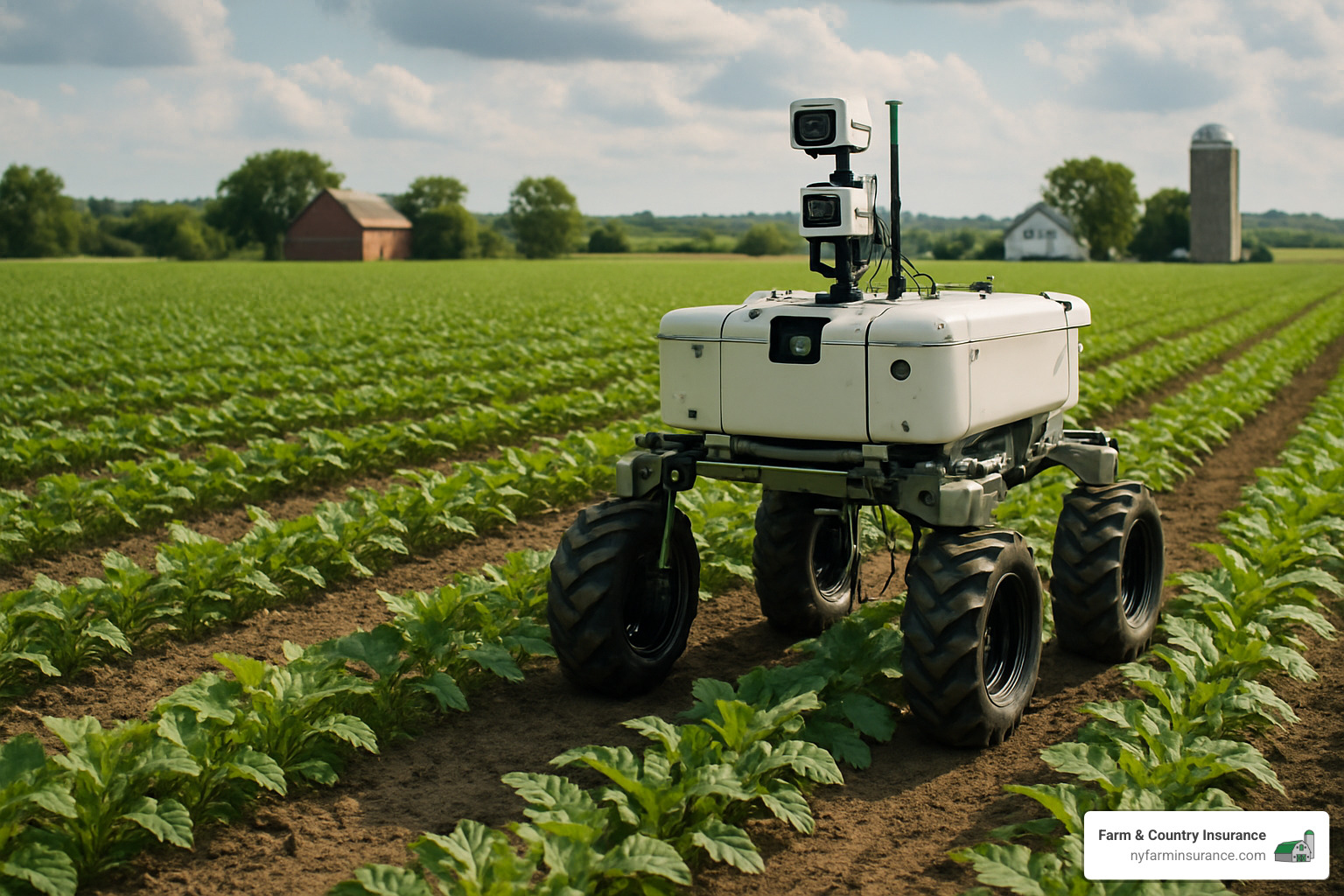
Farmers across New York are embracing precision agriculture technologies that allow them to do more with less. GPS-guided equipment now steers itself through fields with inch-perfect accuracy, reducing overlap and saving on fuel, seed, and chemicals. Soil sensors tucked beneath the surface send real-time data to smartphones, telling farmers exactly when and where to water or fertilize.
The robots have arrived, too—and they’re making farm work easier. Autonomous tractors can work around the clock during critical planting windows. Dairy farms are installing robotic milking systems that not only reduce labor needs but also let cows decide when they want to be milked, improving animal welfare. For smaller operations, Robotics-as-a-Service (RaaS) models are making these technologies accessible without the hefty upfront investment.
Data has become as valuable as any crop. Farmers are using predictive analytics to stay ahead of disease outbreaks and pest pressures. Machine learning helps select the perfect crop varieties for specific fields. AI-powered imaging can spot problems invisible to the human eye.
Dr. Yu Jiang’s work at Cornell AgriTech perfectly illustrates this technological acceleration. His team used specialized imaging robots and AI to find 60 disease-resistance genes in a single year—compared to just 20 genes found in the previous 40 years using traditional methods. That’s a 100-fold increase in research productivity!
Blockchain technology is bringing unprecedented transparency to agribusiness supply chains. Consumers can now scan a code and trace their apple from a specific orchard in the Hudson Valley to their shopping cart, building trust and opening premium market opportunities for farmers who can verify their sustainable practices.
Sustainability & Climate Resilience
With agribusiness responsible for about 17% of global greenhouse gas emissions, sustainability isn’t just good stewardship—it’s becoming good business.
Regenerative agriculture practices are gaining traction across New York’s diverse farming landscape. Cover crops blanket fields during winter months, preventing erosion and building soil health. More farmers are reducing tillage, keeping carbon locked in the soil rather than released into the atmosphere. Integrated pest management approaches are helping growers use fewer chemicals while maintaining yields.
Resource efficiency has become a competitive advantage. Precision irrigation systems deliver water exactly where and when crops need it, saving this precious resource. Energy-efficient processing facilities are reducing costs and carbon footprints. Waste streams are being reimagined as valuable inputs—what was once “just manure” is now a carefully managed nutrient source and potential energy generator.
Some of the most exciting innovations combine old wisdom with new technology. Take bee vectoring—this clever approach uses bees’ natural foraging behavior to deliver beneficial microbes directly to flowering crops. It’s a win-win that addresses both pollination challenges and pest control. This innovation feels particularly urgent given that almost half of U.S. honeybee colonies were lost between April 2022 and April 2023.
Vertical farming operations are sprouting in urban areas, growing leafy greens and herbs in carefully controlled environments that use 95% less water than conventional farming. Carbon farming programs are creating new revenue streams for farmers who adopt climate-friendly practices.
Here in New York, Cornell AgriTech in Geneva has become a hub for research on climate-resilient farming systems, helping local growers adapt to changing conditions while reducing their environmental impact. Their work on sustainable viticulture has been particularly valuable to the state’s thriving wine industry.
Future Outlook for Agribusiness
The road ahead for agribusiness is filled with both extraordinary challenges and promising opportunities.
By 2050, farmers will need to feed nearly 9.7 billion people—that’s about 2 billion more mouths than today. Meeting this demand will require boosting food production by nearly 70% compared to 2007 levels. At the same time, rising incomes around the world are changing what’s on the menu, with growing demand for protein, processed foods, and year-round access to fresh produce.
For forward-thinking farmers, these challenges create new markets. Premium prices await those who can verify sustainable production methods. Digital platforms are enabling direct-to-consumer models that capture more of the food dollar. Specialty and functional ingredients command higher margins than commodity crops. Beyond food, opportunities in bioenergy, biomaterials, and ecosystem services are expanding what it means to be in agribusiness.
Of course, significant problems remain. Climate change is already disrupting growing seasons and bringing more extreme weather events. Water scarcity looms in key production regions. Finding and keeping skilled farm labor gets harder each year. Balancing productivity with environmental stewardship requires constant innovation.
New York’s diverse agricultural landscape—from dairy and apples to maple syrup and wine—positions the state’s farmers well to steer these changes. The proximity to major urban markets and strong agricultural research institutions provides competitive advantages in an evolving marketplace.
At Farm & Country Insurance, we’ve been helping New York farmers manage risk since 1984, and we’re committed to evolving our Crop and Livestock Insurance solutions as agribusiness continues to transform. We understand that protecting your operation against tomorrow’s challenges requires insurance partners who truly understand the changing nature of agricultural risk. Whether you’re investing in cutting-edge technology or transitioning to more sustainable practices, we’re here to help you manage the risks that come with innovation.
Frequently Asked Questions about Agribusiness
What are the three main categories of agribusiness?
When we talk about agribusiness, we typically break it down into three main operational categories that form the backbone of the agricultural economy:
Agriculture covers everything related to growing crops—whether it’s the corn and soybeans stretching across fields, the apple orchards dotting our New York hillsides, or the specialty vegetables thriving in the rich soils of the Hudson Valley. Here in New York, our apple production is something to be proud of—we rank second nationwide, with our crisp varieties being shipped across the country and beyond.
Livestock encompasses all the operations raising animals for food and other products. This includes dairy farms (a New York specialty, as we rank among the top five milk-producing states), beef cattle operations, poultry farms, and producers raising everything from pigs to sheep to goats. Each morning, thousands of New York farmers head out to care for their animals before most of us have had our first cup of coffee.
Forestry might surprise some people as an agribusiness category, but managing forests for timber, pulp, and other wood products is very much an agricultural enterprise. New York’s northern forests support a vibrant timber industry that provides materials for everything from paper products to beautiful hardwood furniture and flooring.
Each of these categories comes with its own unique challenges, seasonal rhythms, and risk profiles. That’s why at Farm & Country Insurance, we’ve developed specialized knowledge in all three areas to better serve our diverse agricultural clients across New York State.
How does agribusiness contribute to food security?
Food security—having reliable access to sufficient, affordable, nutritious food—depends heavily on a functioning agribusiness system. Here’s how this complex network helps keep food on our tables:
Modern agribusiness operations produce food at the massive scale needed to feed nearly 8 billion people worldwide. The technological innovations developed and implemented by agricultural businesses have dramatically increased crop yields and reduced post-harvest losses. By specializing production in regions with natural advantages (like our dairy-friendly climate in New York), the system maximizes efficiency.
Behind every meal is an intricate distribution network connecting farms to consumers. Global supply chains ensure that surplus regions can support areas with food deficits, while storage, processing, and preservation technologies extend food availability well beyond harvest seasons. Without these agribusiness transportation systems, our urban centers simply couldn’t exist as we know them.
Innovation is another crucial contribution. Research and development creates more resilient crop varieties, precision agriculture technologies optimize resource use, and digital tools improve forecasting and planning. These advances don’t just happen—they’re driven by agribusiness investments and partnerships.
Risk management within the agribusiness system also bolsters food security. Diversified production regions provide a buffer against localized disruptions, while storage reserves help mitigate seasonal variations. Insurance and financial instruments protect against catastrophic losses, helping farms recover and continue production after disasters.
However, challenges remain. The COVID-19 pandemic exposed vulnerabilities in our food systems—65% of New York agribusinesses reported negative economic impacts during this period. Climate change, water scarcity, and global tensions continue to threaten food security, highlighting why we need resilient, adaptable agribusiness systems more than ever.
What insurance do agribusinesses typically need?
After working with New York farmers and agricultural businesses since 1984, we at Farm & Country Insurance have learned that agribusiness operations need protection as diverse as the farms themselves. Here’s what most operations typically need:
Property insurance forms the foundation of most farm policies. This covers the barns, silos, and greenhouses that dot our rural landscape, along with the tractors and specialized equipment that keep operations running. It also protects livestock, stored crops, and irrigation systems—essentially, the physical assets that farmers have invested in over generations.
Liability coverage has become increasingly important in today’s complex world. This includes protection against injuries that might occur on your property, product liability for food safety issues, environmental liability for unexpected pollution events, and specific coverage for farm visitors or employees.
Beyond these basics, specialized coverage often makes the difference between surviving a disaster and thriving through it. Crop insurance protects against weather-related losses (increasingly important with climate change), while livestock mortality and disease coverage safeguards animal investments. Equipment breakdown, business interruption, and transportation coverage round out many comprehensive policies.
Different types of farms need custom approaches. A dairy operation in Cayuga County has very different needs than a U-pick apple orchard in the Hudson Valley or a processing facility in Western New York:
Dairy farms need specialized coverage for milk contamination, livestock health issues, and sophisticated milking equipment. Fruit growers require frost damage protection and specific liability coverage for customer picking activities. Food processors need product recall insurance and equipment breakdown coverage that recognizes the seasonal nature of their operations.
At Farm & Country Insurance, we don’t just sell policies—we provide comprehensive risk management services including farm safety assessments, disaster preparedness planning, environmental compliance guidance, and employee safety training. Our deep roots in New York’s agricultural communities mean we understand the unique challenges our farmers face, from the specific growing conditions to the regulatory environment.
Whether you’re running a century-old family farm or launching an innovative new agricultural venture, we’re here to help you identify and address your specific risk exposures with coverage that truly protects what you’ve worked so hard to build.
Conclusion
Agribusiness has grown from its humble beginnings as a term describing farm-related commerce into the complex global system we know today. This intricate web connects everyone from the farmer planting seeds to the family sitting down for dinner, encompassing small family operations and corporate giants alike.
Looking ahead, the agribusiness world faces no shortage of challenges:
The need to feed nearly 10 billion people by 2050 while reducing environmental impact isn’t just a tall order—it’s the defining challenge of our generation. Add in climate change, unpredictable markets, costly new technologies, and the balancing act between productivity and sustainability, and you’ve got quite the puzzle to solve.
But within these challenges lie tremendous opportunities. The innovations happening right now—from soil sensors that precisely measure moisture to drones that spot crop diseases before they spread—are changing how we grow food. Regenerative farming practices are rebuilding soil health while sequestering carbon. New business models are connecting farmers directly with consumers who care deeply about where their food comes from.
Here in New York, these global trends take on local significance. Our state’s remarkable agricultural diversity—dairy farms dotting the landscape of Cayuga County, vineyards stretching across the Finger Lakes, specialty crops thriving in the Hudson Valley—means each operation faces its own unique combination of challenges and opportunities. Local weather patterns, New York’s regulatory environment, and access to Northeast markets all shape what success looks like for our state’s farmers.
At Farm & Country Insurance, we’ve spent nearly four decades walking alongside New York’s agribusiness operators through all kinds of changes. We’ve seen operations evolve, expand, diversify, and adapt. Our approach has always been to combine deep agricultural knowledge with insurance solutions custom to each operation’s specific needs. Whether you’re milking cows on land your great-grandparents farmed, opening your orchard for apple picking, or processing local foods for regional distribution, we understand what keeps you up at night.
As the agribusiness landscape continues to transform, staying informed, adaptable, and properly protected isn’t just good business—it’s essential for survival. We’re committed to being more than just your insurance provider. We aim to be a genuine partner in your journey, offering not just coverage but the risk management expertise that helps your operation thrive through whatever challenges tomorrow brings.
Ready to ensure your agribusiness operation has the protection it needs? Contact Farm & Country Insurance today to discuss customized insurance solutions that address your specific risks and concerns. Together, we’ll make sure you’re prepared to weather the storms and capture the opportunities that lie ahead in the dynamic world of agribusiness.