
Understanding the Essentials of Barn Insurance Coverage
Barn insurance coverage protects agricultural structures against perils like fire, wind damage, and theft. Most standard farm policies require barns to be specifically scheduled (listed) to receive protection, as they’re not automatically included under general farm coverage.
Quick Guide to Barn Insurance Coverage:
| Coverage Element | What You Need to Know |
|---|---|
| Basic Coverage | Protects against fire, wind, hail, and theft |
| Structure Coverage | Includes the barn building itself plus equipment within 100 feet |
| Typical Exclusions | Flood, earthquake, normal wear and tear |
| Valuation Options | Replacement Cost Value or Actual Cash Value (depreciated) |
| Key Requirement | Barns must be specifically scheduled on your policy |
Your farm’s barns represent significant investments that standard homeowners insurance typically covers at only 10% of your dwelling coverage – often insufficient for complete replacement. Most pole barns in the United States cost between $15,000 and $35,000 to build, making adequate coverage critical.
I’m Casey Love, owner of Farm & Country Insurance, with over 15 years of experience helping farmers secure comprehensive barn insurance coverage that protects their operations against unexpected losses.
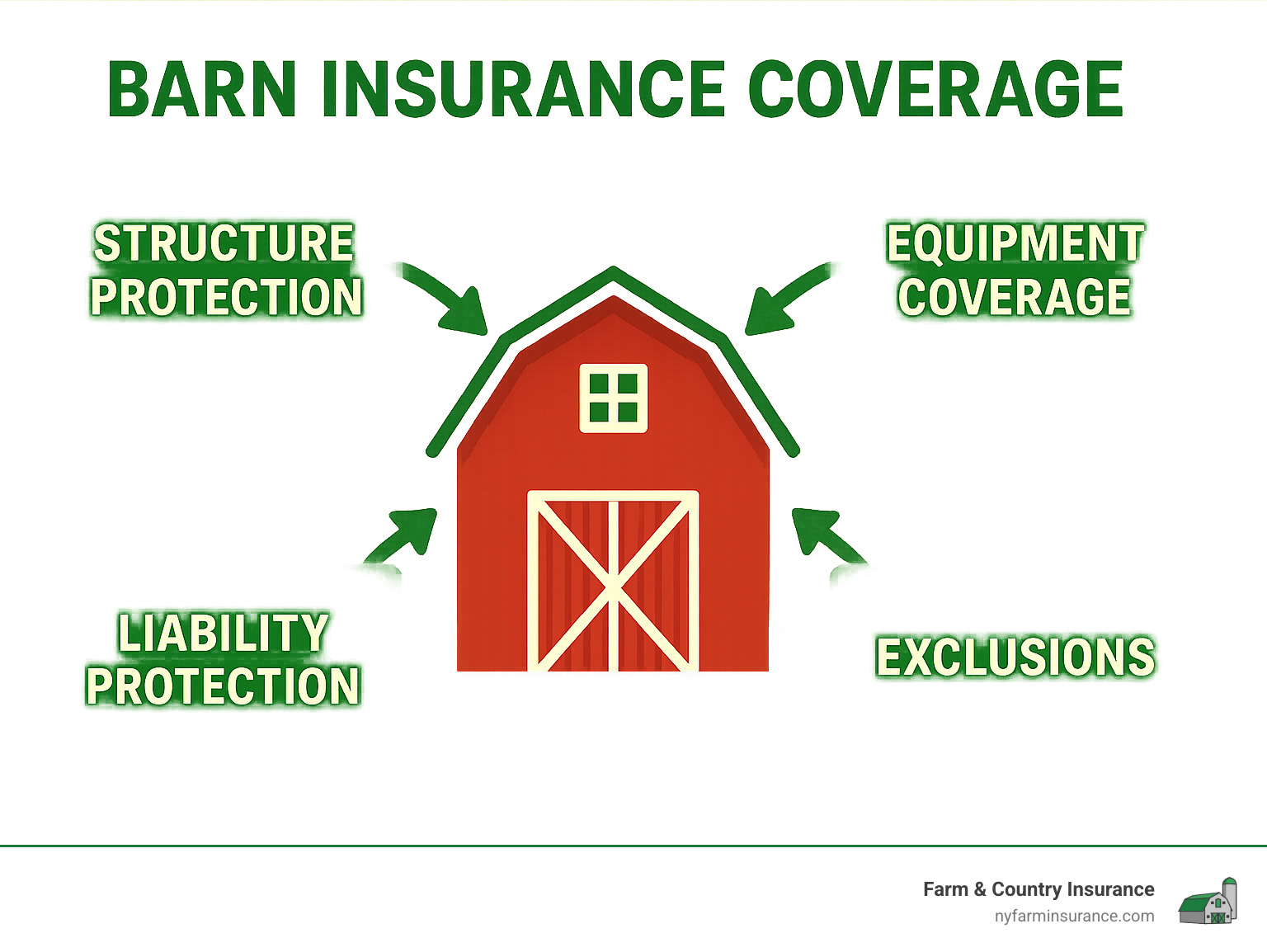
Barn insurance coverage terms at a glance:
– agricultural equipment insurance
– agricultural land insurance
– farm fire insurance
Why This Guide Matters
The stakes for proper barn insurance coverage have never been higher. With construction costs rising steadily across New York, rebuilding a barn today costs significantly more than it did even five years ago. Unfortunately, many farm owners find they’re dramatically underinsured only after a loss occurs.
Barn Insurance vs. Homeowners & Farm Policies
That red barn standing proudly on your property isn’t just a picturesque addition to your farm—it’s a valuable asset that deserves proper protection. But where does barn insurance coverage fit in the insurance landscape?

Barn insurance coverage isn’t something you purchase as a standalone policy. Instead, it’s a component within broader insurance frameworks:
Homeowners insurance includes some protection for structures beyond your house, but it’s limited to about 10% of your dwelling coverage—adequate for a garden shed but insufficient for most working barns.
Farm package policies provide robust barn insurance coverage, but your barns must be specifically scheduled (individually listed) on the policy with appropriate values assigned.
Hobby farms present unique challenges. If you’re primarily using your property as a residence with small-scale farming, you might get by with a homeowners policy with special endorsements.
Barndominiums combining living space with barn-like areas require specialized coverage acknowledging both their residential and utility aspects.
Key Differences at a Glance
The way your barn is used impacts your coverage needs. A barn used for storing hay has different insurance requirements than one housing valuable livestock or expensive equipment. Similarly, if customers regularly enter your barn (for farm tours or u-pick operations), you’ll need more robust liability protection.
Many farm policies include coinsurance requirements, which mandate that you insure your structures for a certain percentage of their replacement value (typically 80-90%).
At Farm & Country Insurance, we’ve been helping New York farmers steer these complexities since 1984. Learn more about specialized protection through our detailed guide to Farm Building Insurance Policy.
What Barn Insurance Coverage Includes
Barn insurance coverage protects your vital farm investment against a range of threats that could otherwise devastate your livelihood.
Your typical barn policy shields you against these common dangers:
- Fire and smoke damage – Often the most destructive threat to wooden structures
- Wind damage – From fierce New York straight-line winds to more severe tornados
- Hail damage – Particularly crucial if you’ve got metal roofing
- Lightning strikes – Both direct hits and the electrical surges that follow
- Theft and vandalism – Protection for your structure and permanently attached fixtures
- Vehicle impact – Whether it’s a car, tractor, or delivery truck
- Falling objects – Like that massive maple tree you’ve been meaning to trim
- Collapse – Including when winter snow loads become too heavy for your roof
Quality barn insurance coverage typically includes debris removal after a disaster, saving you from unexpected cleanup costs.
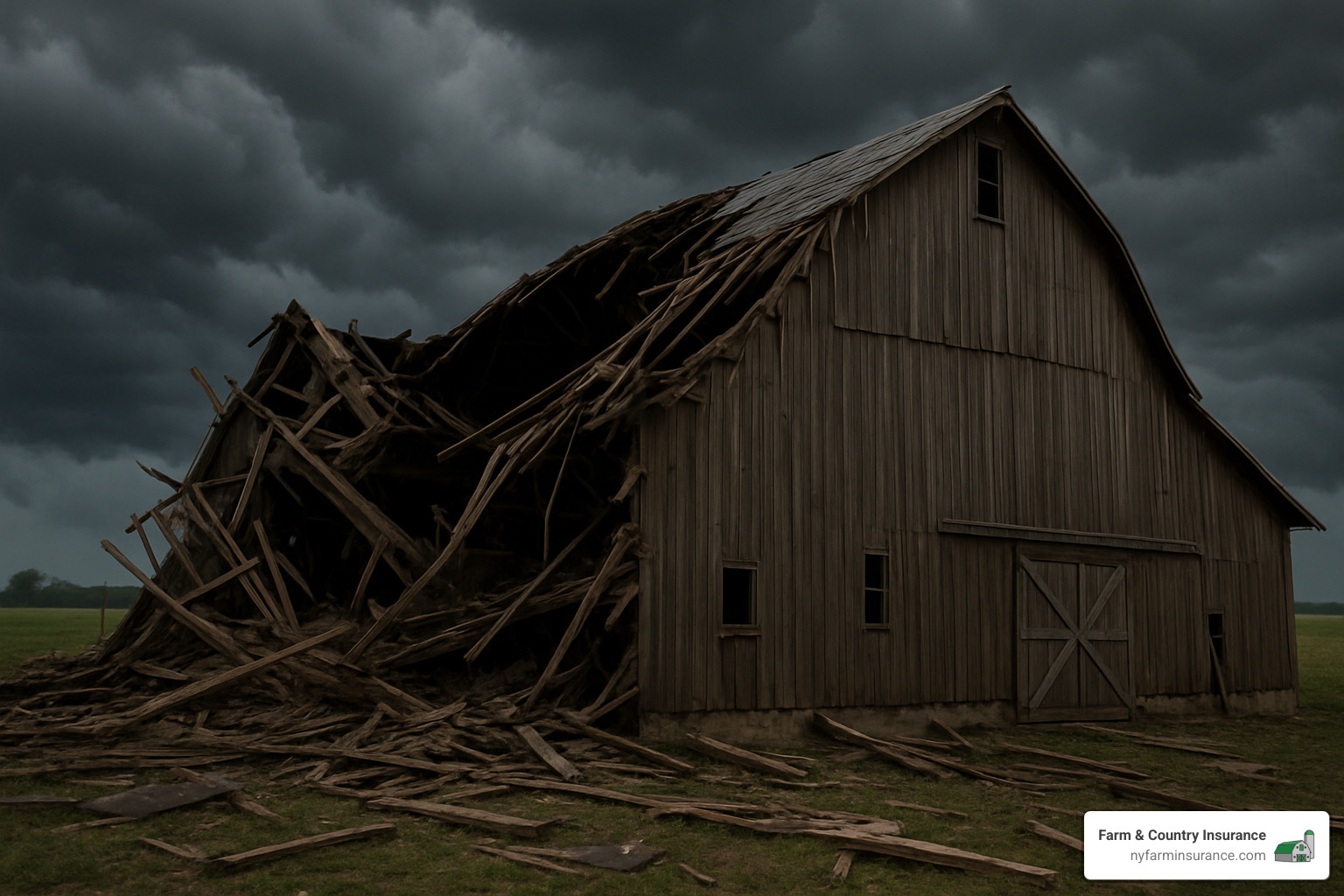
The “100-foot radius rule” means equipment and machinery within 100 feet of your barn that service the building are typically covered under your barn policy—even if they’re not physically attached to the structure.
Many farm policies (including AgriChoice®) offer automatic temporary coverage—often up to $100,000 for 60 days starting when building materials arrive for new construction.
Core Perils in Barn Insurance Coverage
When shopping for barn insurance coverage, you’ll generally choose from three protection levels:
- Basic Form covers the fundamentals—fire, lightning, wind, hail, explosion, smoke, and vandalism.
- Broad Form includes everything in Basic plus extras like falling objects, weight of ice/snow, and water damage.
- Special Form offers the most comprehensive protection, covering all perils except those specifically excluded in writing.
Equipment & Fixtures Protection Inside Barn Insurance Coverage
Quality barn insurance coverage protects equipment and fixtures that make your barn functional, including water pumps and motors, electrical systems, ventilation equipment, built-in feeding systems, milking parlors, bulk tanks, permanent lighting, and installed stalls and pens.
For dairy operations throughout Cayuga County and across New York, mechanical breakdown coverage for milking systems is particularly valuable.
At Farm & Country Insurance, we’ve been helping New York farmers steer these complexities since 1984. Check out our detailed guide on Farm Fire Insurance for more information.
What Isn’t Covered & How to Close the Gaps
Even with the best barn insurance coverage in place, there are always some gaps you should know about. Your policy won’t cover everything that might go wrong with your barn:
- Normal wear and tear is never covered – insurance companies expect you to maintain your structures properly.
- Damage from pests like rodents, insects, or birds is almost universally excluded.
- Flood damage requires separate flood insurance, regardless of how comprehensive your farm policy might be.
- Earthquake damage follows the same principle – you’ll need a specific earthquake endorsement.
- Vehicles stored in the barn need their own auto insurance, regardless of where they’re parked.
- Equipment and livestock inside your barn typically aren’t covered by the barn’s structural policy.

Closing these coverage gaps isn’t complicated, but it does require intentional planning:
- For flood-prone areas, National Flood Insurance Program policies or private flood insurance is essential.
- If you’re in a region with any seismic activity, adding an earthquake endorsement provides peace of mind.
- Equipment breakdown coverage is particularly valuable for modern farming operations.
- For farms that host any public activities, an umbrella liability policy provides critical protection beyond your base policy limits.
At Farm & Country Insurance, we’ve witnessed the devastating consequences of these coverage gaps firsthand. The best approach is a thorough review of your operation’s specific risks to identify which supplemental coverages will close your particular protection gaps.
Want to learn more about potential coverage gaps? Check out our article on Is Your Farm Property Underinsured? The Answer Might Surprise You.
Valuing Your Barn: Replacement Cost vs. Actual Cash Value
When it comes to barn insurance coverage, one of the most important decisions you’ll face is how your barn will be valued if disaster strikes.
Replacement Cost Value (RCV) policies pay what it costs to rebuild your barn with similar materials and quality, without subtracting for age or wear and tear. If your 20-year-old barn burns down, you’ll receive enough money to build an equivalent new one.
Actual Cash Value (ACV) policies take depreciation into account, meaning they pay what your barn is “worth” at the time of loss. For a barn that’s seen years of New York winters, this can be substantially less than rebuilding costs.
The financial impact of this choice becomes more dramatic as your barn ages. Most pole barns depreciate around 1% annually, so after 25 years, an ACV policy might only pay 75% of rebuilding costs.
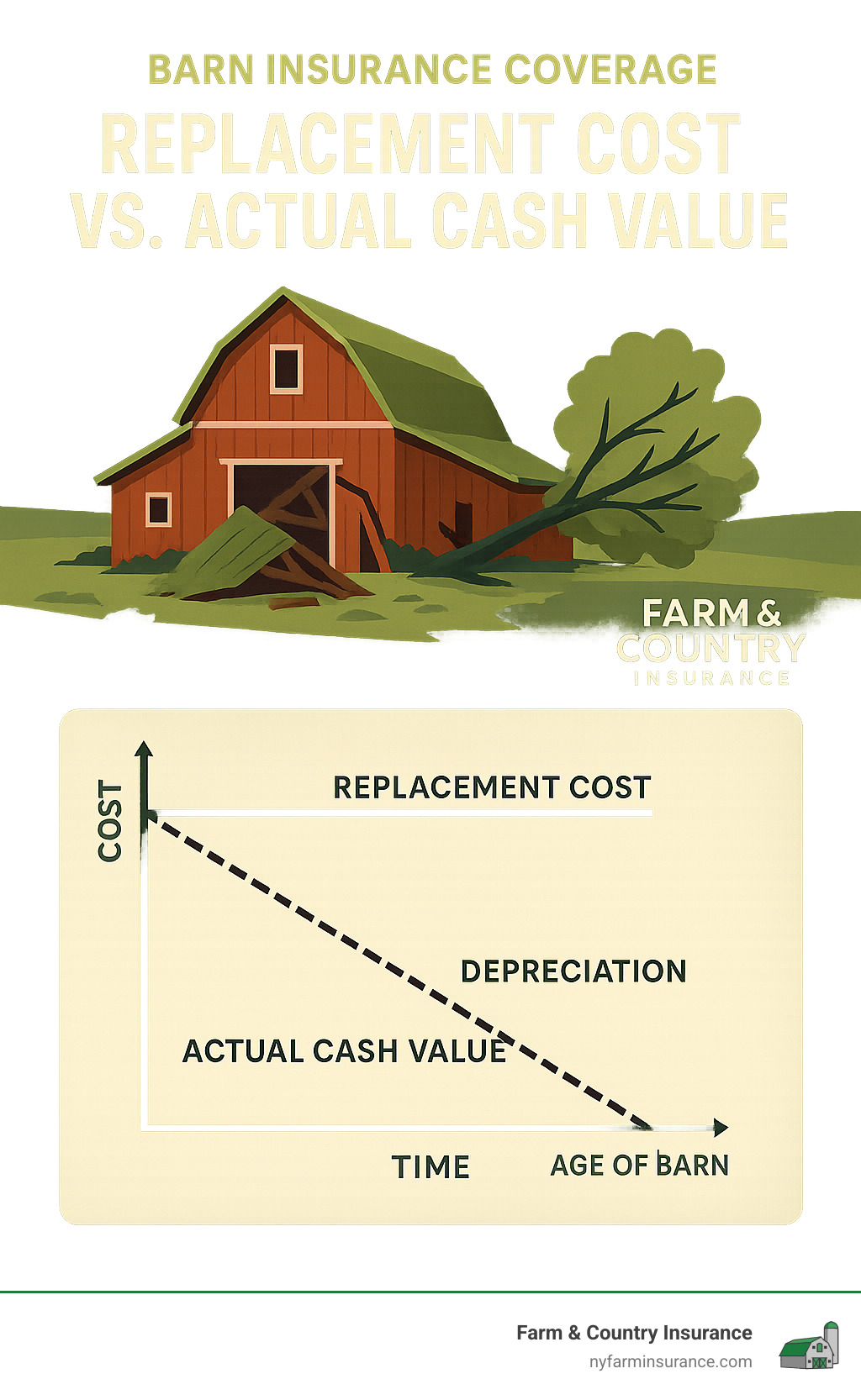
Here’s how this plays out financially for a typical $30,000 pole barn:
Comparison of RCV vs. ACV for a $30,000 Pole Barn
| Age of Barn | Replacement Cost Value | Actual Cash Value (1% annual depreciation) | Your Potential Out-of-Pocket Cost with ACV |
|---|---|---|---|
| New | $30,000 | $30,000 | $0 |
| 5 years | $30,000 | $28,500 | $1,500 |
| 10 years | $30,000 | $27,000 | $3,000 |
| 15 years | $30,000 | $25,500 | $4,500 |
| 20 years | $30,000 | $24,000 | $6,000 |
| 25 years | $30,000 | $22,500 | $7,500 |
At Farm & Country Insurance, we’ve seen too many farmers face difficult rebuilding decisions after losses because they chose ACV policies to save on premiums.
Be careful about coinsurance requirements too. Many policies require you to insure your barn for at least 80% of its replacement value to receive full benefits, even with RCV coverage.
For more specific information about barn insurance in New York, check out our guide on Barn Insurance New York.
Determining the Right Amount of Barn Insurance Coverage
Getting the right barn insurance coverage isn’t just about checking a box on your farm policy—it’s about protecting a crucial part of your operation.
Start by assessing what makes your barn unique:
– How big is it? (total square footage)
– What’s it made of? (wood frame, metal, pole construction)
– What type of roof does it have?
– Does it have special features like concrete floors, insulation, or electrical systems?
– What equipment is permanently attached to the building?
– How do you use it day-to-day?
– How old is it, and what condition is it in?
Barns don’t automatically get covered under your farm policy. Each structure needs to be specifically scheduled—meaning you’ll need to list each barn with its location, characteristics, and value.
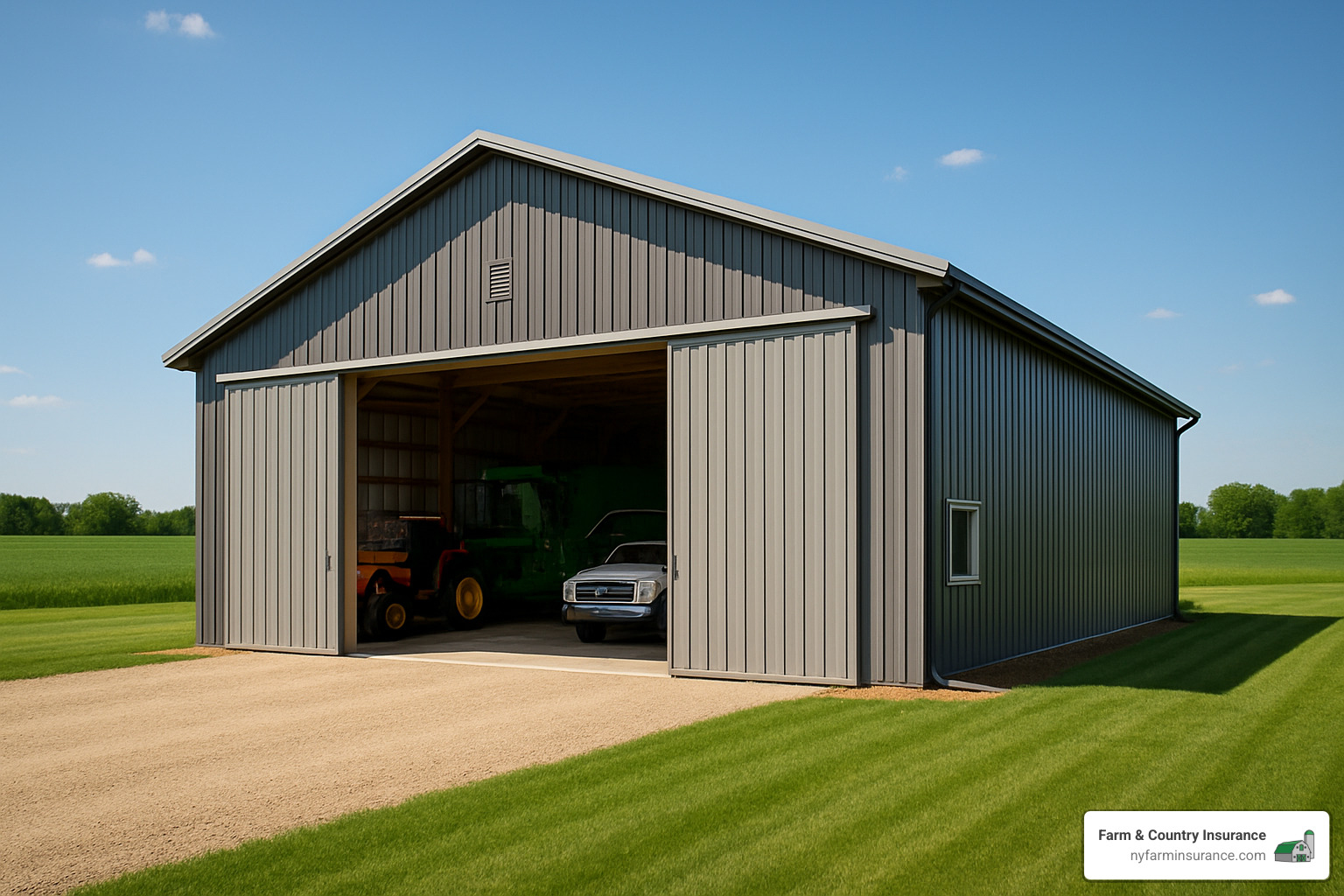
Take photos of your barn from multiple angles and keep an inventory of attached equipment and systems. These simple steps can be lifesavers during claims.
Information Your Agent Will Need
When you sit down with your Farm & Country Insurance agent, having certain information ready will make securing proper barn insurance coverage much smoother:
- When your barn was built
- Construction details (framing, siding, roofing, foundation materials)
- Realistic replacement value
- Security systems protecting your investment
- Renovation history
- Future plans for additions or renovations
- How you’re using the barn
For New York farmers with multiple outbuildings, we recommend creating a comprehensive schedule of all structures to ensure nothing important gets overlooked in your barn insurance coverage.
Learn more about comprehensive protection through our Farm Policy Insurance options.
Claims & Policy Maintenance
Even with the best barn insurance coverage, claims can happen. Understanding the claims process before disaster strikes helps ensure a smoother recovery:
Document the damage: Take photos and videos of all damage immediately, from multiple angles.
Mitigate further damage: Take reasonable steps to prevent additional damage, but don’t make permanent repairs before the adjuster’s inspection.
Contact your agent: Report the claim promptly, providing your policy number and damage details.
Meet with the adjuster: Walk through the damage together, sharing your documentation and discussing next steps.
Obtain repair quotes: Get detailed estimates from reputable contractors, preferably those with experience in agricultural structures.
Keep all receipts: Document all expenses related to the claim, including temporary repairs and debris removal.
Regular policy maintenance is equally important. We recommend reviewing your barn insurance coverage annually and after any significant changes to your operation.
Filing a Barn Insurance Coverage Claim Smoothly
When it comes to barn insurance coverage claims, timing and documentation are everything:
Report immediately: Most policies require prompt notification of losses, typically within 24-72 hours.
Preserve evidence: Don’t dispose of damaged materials until the adjuster has completed their assessment.
Document thoroughly: Take date-stamped photos and videos before cleanup begins.
Maintain a claim journal: Record all conversations with your insurance company, including names, dates, and discussion points.
Get specialized quotes: Use contractors familiar with agricultural buildings for the most accurate rebuilding estimates.
At Farm & Country Insurance, we pride ourselves on advocating for our clients throughout the claims process, ensuring they receive fair settlements that reflect their policy coverage.
Premium Cost Factors & Risk-Reduction Tips
Understanding what affects your premium can help you make smarter coverage decisions. Several factors impact barn insurance coverage costs:
- Location: Structures closer to fire departments typically enjoy lower rates
- Construction materials: Metal barns usually cost less to insure than wooden structures
- Age: Newer barns generally command lower premiums than older ones
- Usage: How you use your barn significantly impacts insurance costs
- Coverage limits and deductibles: Higher protection levels mean higher premiums
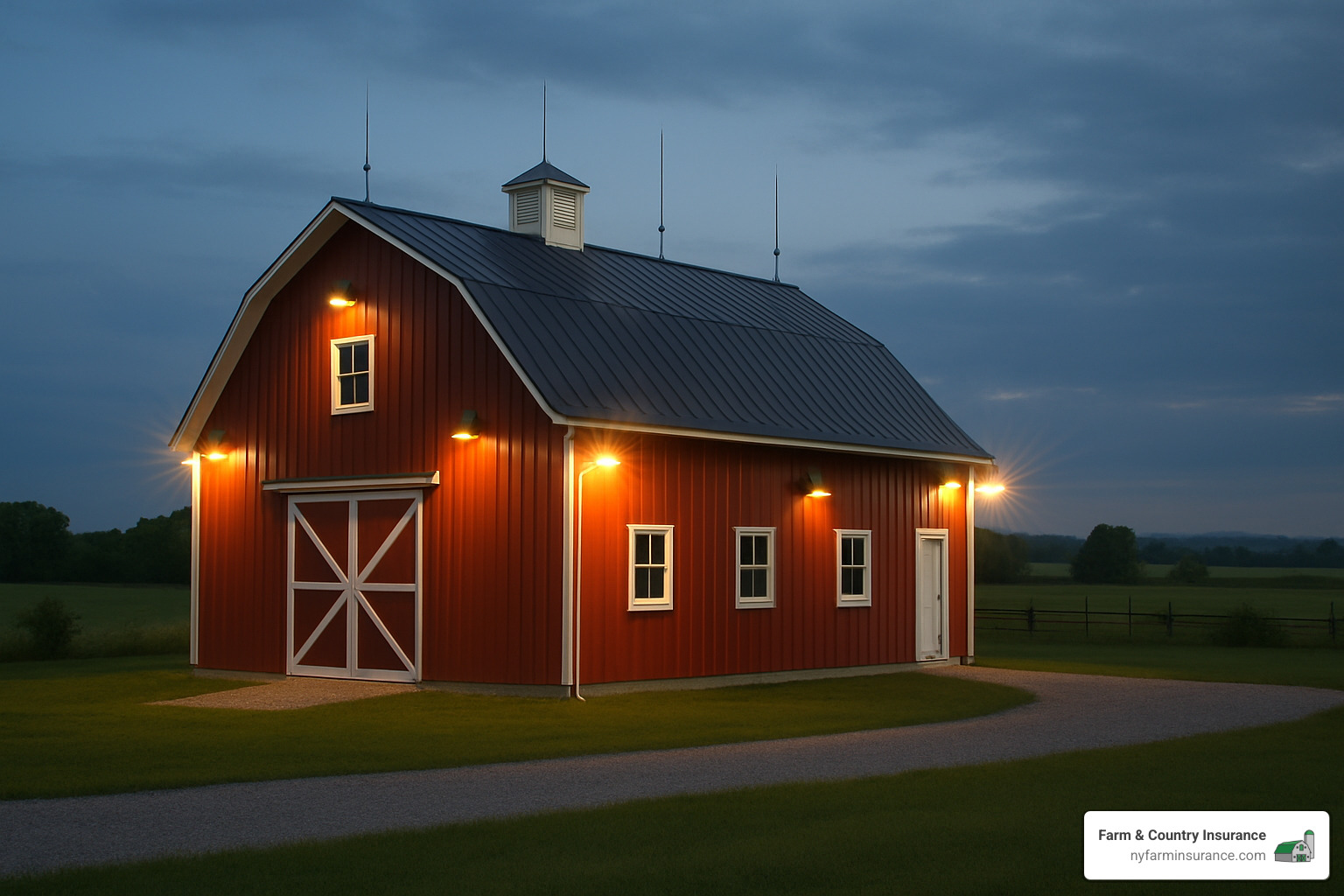
Safety features like fire alarms, sprinkler systems, and security measures can reduce your premiums. Installing lightning protection systems is a wise investment, especially since lightning strikes remain one of the most common causes of barn fires.
Proper ventilation can significantly reduce both moisture damage and the risk of spontaneous combustion in hay storage areas. These preventive measures not only protect your investment but can make your barn insurance coverage more affordable.
Ways to Lower Your Barn Insurance Bill
Bundle policies: Combine farm property, liability, auto, and other coverages for substantial discounts—sometimes saving 15-20% across all policies.
Increase deductibles strategically: If you have sufficient cash reserves to cover minor damage repairs, raising your deductible could reduce your premium.
Pursue loss-control discounts: Many insurers offer premium reductions for implementing specific safety measures.
Schedule annual professional inspections: These can spot potential problems before they become expensive claims.
Upgrade to safer materials: Metal roofing or fire-resistant treatments can qualify you for better rates.
At Farm & Country Insurance, we help New York farmers develop cost-effective risk management strategies that protect both their operations and their finances.
For more information, check out this helpful resource on farm insurance basics or learn more about preventing one of the most devastating farm disasters through our guide on How to Prevent a Barn Fire.
Frequently Asked Questions about Barn Insurance
How often should I review my barn policy?
We recommend reviewing your barn insurance coverage at least once a year, preferably 60-90 days before renewal. This timing gives you plenty of runway to make adjustments before your next premium comes due.
Beyond your annual check-in, certain events should trigger an immediate policy review:
– Adding new structures or renovating existing ones
– Changing how you use your barn
– Significant changes in construction costs
– Installing new equipment or systems
At Farm & Country Insurance, we reach out to our clients proactively, helping farmers across New York ensure their coverage evolves alongside their operations.
Do I need to list every outbuilding separately?
Yes, farm policies typically require each structure to be “scheduled” – individually listed with its own description and value. This ensures that each building gets precisely the coverage it needs based on its unique characteristics.
While some policies offer blanket coverage options for multiple smaller structures, your primary barns should always have their own line items. At Farm & Country Insurance, we’ve been helping farmers in Cayuga County and throughout New York create comprehensive building schedules since 1984.
Does barn insurance cover livestock or hay stored inside?
Standard barn insurance coverage typically protects only the structure itself and permanently attached equipment or fixtures. The contents – whether livestock, hay, or equipment – need their own separate coverage:
- Livestock require specific livestock coverage
- Hay falls under farm personal property insurance
- Tractors, tools, and other equipment need their own coverage
This separation allows you to adjust coverage levels seasonally without changing your entire policy. At Farm & Country Insurance, we help New York farmers build layered protection that covers not just the structures, but everything that makes your farm work.
Conclusion
Securing appropriate barn insurance coverage is a critical step in protecting your agricultural investment. As you consider your next steps, keep these essential points in mind:
- Your barns must be specifically scheduled on your farm policy – they won’t automatically be covered
- Relying on standard homeowners policies for agricultural structures leaves dangerous gaps in protection
- Replacement cost valuation provides much more comprehensive protection than actual cash value, especially for older structures
- Equipment and fixtures within 100 feet of your barn can be included in your coverage
- Regular policy reviews are essential as your operation evolves and construction costs change
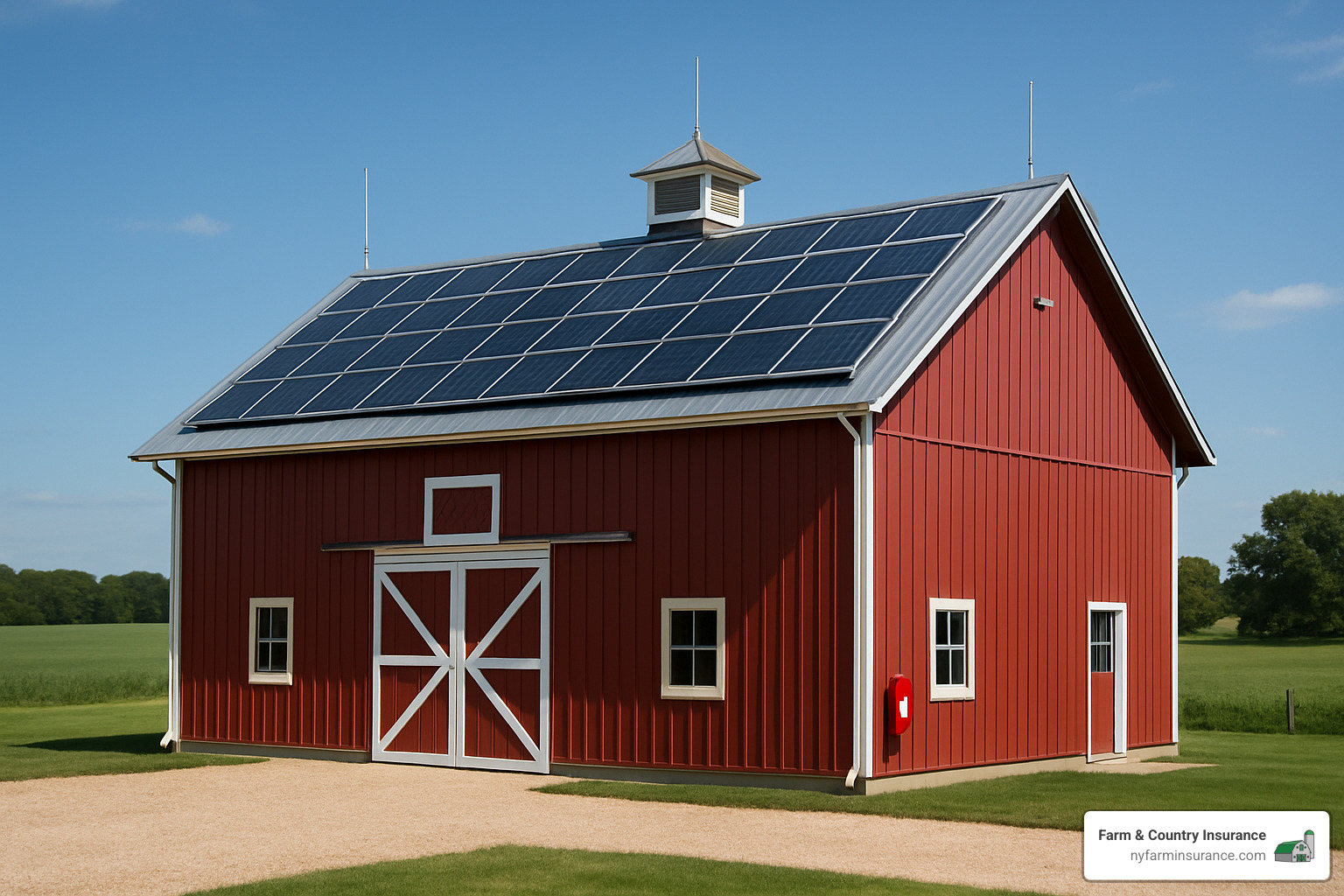
At Farm & Country Insurance, we’ve spent nearly four decades helping New York farmers steer the complexities of protecting their operations. We understand that in Cayuga County and throughout the state, barns aren’t just buildings – they’re the heartbeat of your farm operation and represent significant financial investments.
Whether you’re tending to a small hobby farm in Moravia or managing a large commercial dairy in Scipio, your agricultural buildings deserve protection that truly reflects their value to your operation.
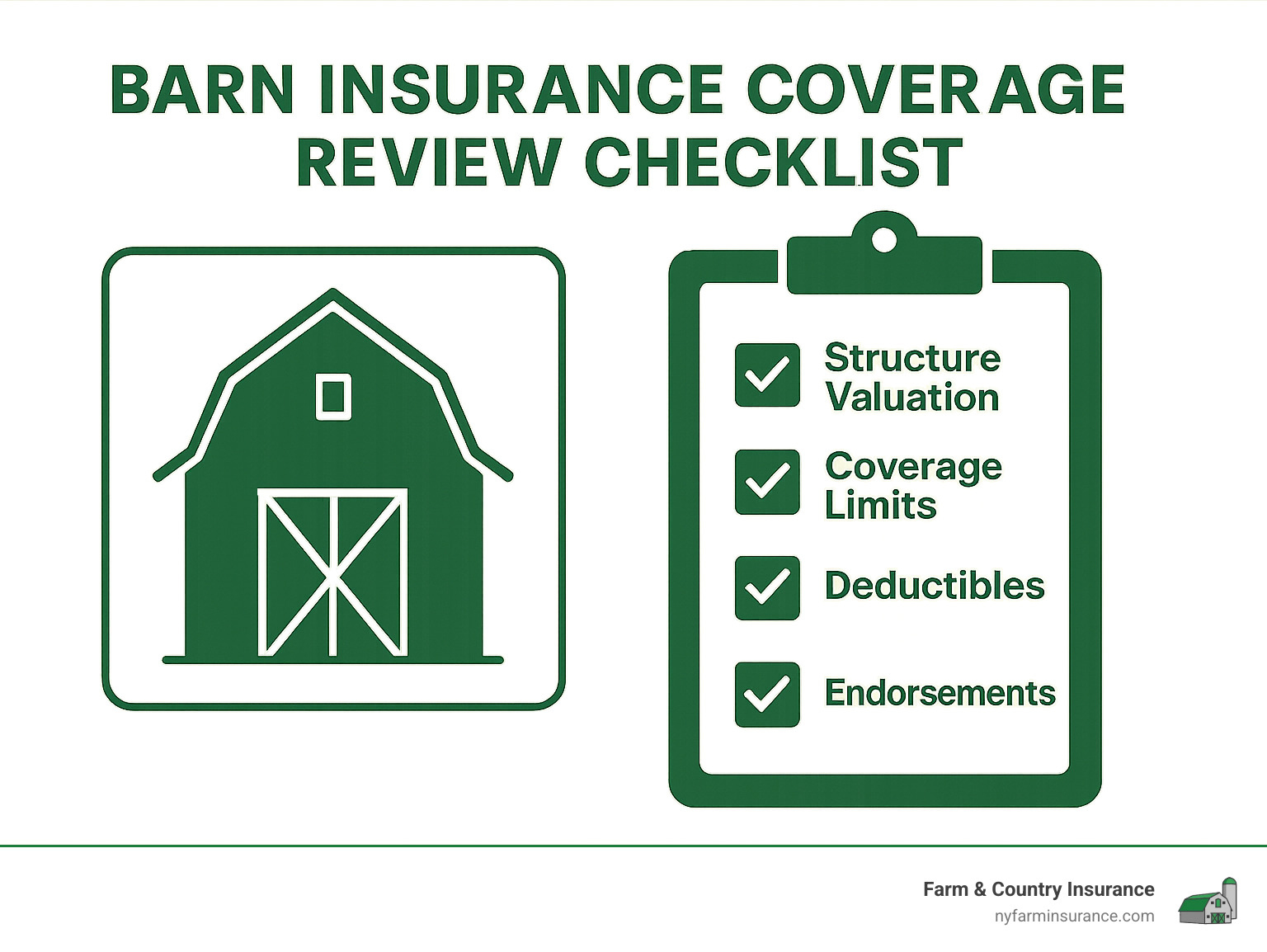
Your barns shelter your livestock, protect your equipment, and store your harvest – they deserve protection that’s as reliable as you are. We invite you to reach out to Farm & Country Insurance today for a friendly, no-pressure conversation about your barn insurance coverage needs.
Visit our Farm Insurance hub for a personalized quote and risk assessment that reflects the true value of your agricultural investment.