
Understanding the Role of Crop Insurance Specialists
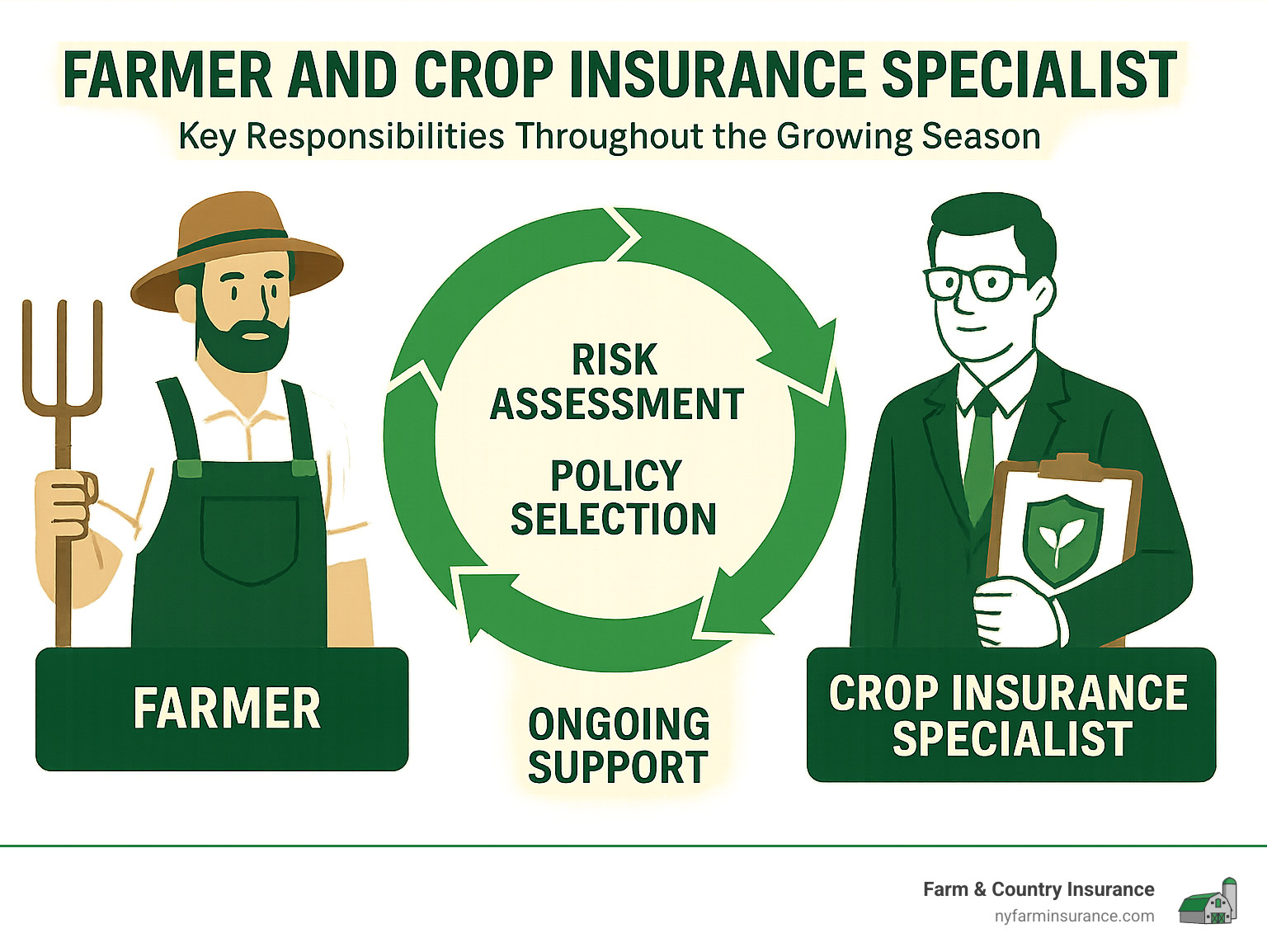
Crop insurance specialists are licensed professionals who focus exclusively on agricultural risk management through federal and private crop insurance programs. They help farmers evaluate risks, select appropriate coverage, and steer the claims process.
Here’s what makes crop insurance specialists essential for farmers:
- Deep agricultural knowledge: They understand farming operations and regional growing conditions
- Policy expertise: They stay current on USDA Risk Management Agency (RMA) programs and updates
- Customized solutions: They tailor coverage to your specific crops, livestock, and risk tolerance
- Claims support: They guide farmers through the loss reporting and indemnity process
- Financial analysis: They help calculate coverage levels that protect farm profitability
Farming involves countless risks—from drought and floods to price fluctuations and pest outbreaks. Having a dedicated crop insurance specialist means you’re working with someone who understands these challenges and can recommend appropriate protection.
More than 90 percent of all farmland in the United States is protected by federal crop insurance programs, with specialists helping farmers steer the more than 80 types of crops covered by individual federal plans.
I’m Casey Love, owner of Farm & Country Insurance, where I’ve spent years connecting New York farmers with qualified crop insurance specialists who understand the unique challenges of northeastern agriculture and provide customized coverage solutions.
Crop insurance specialists further reading:
– agricultural equipment insurance
– agricultural land insurance
– farm fire insurance
What Do Crop Insurance Specialists Do?
Crop insurance specialists are the vital bridge connecting farmers to the often complex world of agricultural risk management. Unlike general insurance agents who might sell everything from auto to homeowners policies, these specialists focus exclusively on protecting farm operations.

At Farm & Country Insurance, we’ve seen that the most effective crop insurance specialists wear many hats to serve New York’s farming community:
They conduct thorough risk assessments by evaluating your operation’s unique vulnerabilities based on crop types, location, soil conditions, and historical weather patterns. This personalized approach ensures your coverage addresses your specific risks.
These specialists excel at policy navigation, understanding the subtle differences between federal programs like Multi-Peril Crop Insurance (MPCI), Revenue Protection, and Yield Protection, as well as private options like crop-hail coverage.
Staying current with USDA RMA compliance is another critical function. Your specialist keeps up with Risk Management Agency regulations, ensuring your policy meets all requirements for federal subsidy eligibility—something that can significantly reduce your premium costs.
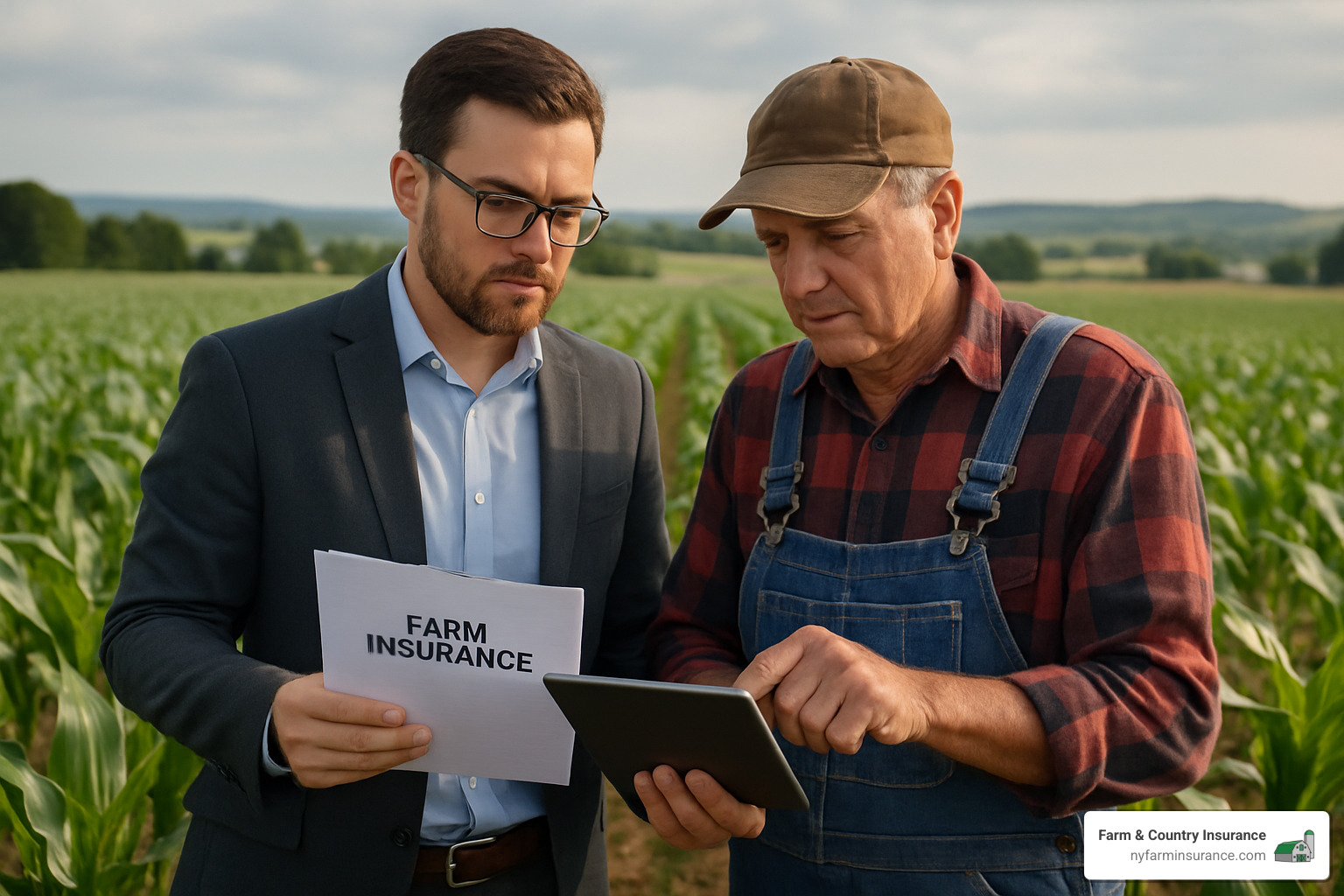
This expertise becomes particularly valuable across New York state’s diverse agricultural landscape. From dairy operations in the Finger Lakes to apple orchards in the Hudson Valley and vegetable farms on Long Island, each farm faces different risks and qualifies for different coverage options.
For more comprehensive information about crop insurance and its importance to your farm operation, visit our detailed guide: More info about Crop Insurance: What You Need to Know.
Key Skills Every Crop Insurance Specialist Must Master
The best crop insurance specialists bring together a unique blend of agricultural expertise, insurance knowledge, and people skills. At Farm & Country Insurance, we partner with specialists who have mastered these essential areas:
Licensing and Certification
All legitimate crop insurance specialists maintain proper credentials, including state insurance licenses with crop insurance endorsements and annual certification through the USDA Risk Management Agency.
Agronomic Knowledge
What truly sets crop insurance specialists apart is their deep understanding of farming. They know New York’s regional growing conditions, different crop varieties and their vulnerabilities, soil types, and typical planting and harvesting timeframes.
Financial Analysis Skills
The best specialists can translate crop insurance into financial terms that matter to your operation, analyzing farm financial statements to recommend appropriate coverage levels and calculating premium costs against potential indemnity payments.
For farmers interested in learning more about the qualifications that distinguish top specialists, we recommend reviewing our guide: Crop Insurance Certification.
How Crop Insurance Specialists Assist During Claims
When disaster strikes your farm, the true value of working with dedicated crop insurance specialists becomes crystal clear. The claims process is when your insurance investment is put to the test, and having an experienced advocate by your side makes all the difference.
The claims journey typically follows a path that your specialist helps steer:
- Initial loss reporting: Your specialist helps you file a timely notice of loss, typically within 72 hours of finding damage.
- Adjuster coordination: They schedule and often attend the adjuster visit to ensure your farm’s damage is thoroughly assessed.
- Documentation support: They help gather production records, photographs, weather data, and other evidence needed to support your claim.
- Indemnity calculations: They review the adjuster’s findings to confirm that your payment reflects your actual loss and policy provisions.
At Farm & Country Insurance, we’ve seen crop insurance specialists help New York farmers through countless challenging situations, from excessive rainfall damaging corn silage to frost damage in apple orchards.
For a deeper understanding of how crop insurance adjusters work and how your specialist interfaces with them, visit our detailed guide: Crop Insurance Adjuster.
Expert Roundup: Leading Crop Insurance Specialists by Region
Finding the right crop insurance specialist is a bit like finding the perfect farming partner – you need someone who truly understands your region’s unique challenges and opportunities. At Farm & Country Insurance, we’ve learned that specialists with deep roots in specific growing regions often provide the most valuable guidance to farmers.
Northeast Specialists (New York Focus)
Here in New York where Farm & Country Insurance has been serving farm families since 1984, our crop insurance specialists need a unique skillset. They understand the challenges of our shorter growing seasons and those freeze-thaw cycles that can wreak havoc on crops.
Our local specialists have become experts in protecting dairy operations and their crucial forage crops, as well as the region’s thriving apple orchards, vineyards, and diverse vegetable farms. Many Northeast specialists develop expertise in Whole Farm Revenue Protection (WFRP) policies that can cover an entire diverse operation under one policy.
Midwest Row-Crop Experts
Midwest specialists typically focus on Revenue Protection policies with harvest price options – essential tools for producers in a region where massive production can lead to significant price fluctuations. They’ve also become adept at incorporating precision agriculture data into insurance planning.
Southern Specialty Crop Authorities
The South presents its own unique challenges, from hurricane threats to specialized crops. Crop insurance specialists in this region develop deep knowledge of cotton, peanut, and rice production, along with citrus and other subtropical fruits.
Western Range & Forage Professionals
In the arid West, crop insurance specialists become experts in drought monitoring and management. They help ranchers steer Pasture, Rangeland, and Forage (PRF) insurance, which works differently than traditional crop policies by using a rainfall index to determine payments.
Finding a specialist who understands your specific region and crops is crucial for effective risk management. The USDA makes this easier with their RMA Agent Locator.
Spotlight on Specialty-Crop Authorities
Specialty crops require specialty knowledge, which is why crop insurance specialists who focus on these high-value crops develop such specific expertise.
Tree nut specialists understand the long establishment periods before orchards become productive and the devastating impact a single freeze can have. Citrus experts have become particularly valuable following historic freeze events, while vineyard specialists understand spring frost protection strategies and quality factors for wine, table, and juice grapes.
The top perils covered for specialty crops include freeze/frost damage, excess precipitation, drought, wind damage, hail, disease and insect infestation, fire, wildlife damage, quality loss, and market price decline in revenue-based policies.
Livestock & Whole-Farm Revenue Protectors
Many crop insurance specialists develop expertise in protecting livestock operations and diversified farms through specialized federal programs like Livestock Risk Protection (LRP), Livestock Gross Margin (LGM), and Whole-Farm Revenue Protection (WFRP).
For diversified operations, WFRP experts provide invaluable guidance by analyzing farm revenue from all commodities under one policy. Smaller operations benefit from specialists who understand Micro Farm coverage, which helps small-scale producers with under $350,000 in revenue.
For farmers considering these options, the USDA provides helpful tools to estimate costs and coverage levels through their Cost Estimator.
How to Work With a Crop Insurance Specialist for Custom Coverage
Building a relationship with a crop insurance specialist is one of the smartest moves you can make for your farm’s financial security. At Farm & Country Insurance, we’ve helped countless New York farmers steer this process, and I’ve seen how the right partnership can make all the difference when disaster strikes.
The Initial Consultation Process
When you first meet with a crop insurance specialist, expect a conversation that digs deep into your operation. They’ll want to understand everything about your farm—not just its size and what you grow, but how you grow it and what keeps you up at night during storm season.
Your specialist will carefully review your Actual Production History (APH) records, those golden documents that establish your yield benchmarks for coverage calculations. They’ll also have an honest conversation about risk tolerance and consider how crop insurance fits with your farm’s overall financial position.
Acreage Reporting and Documentation
Documentation might not be the most exciting part of farming, but your crop insurance specialist makes this critical process manageable. They’ll guide you through reporting precise acreage measurements, planting dates, share arrangements, and FSA farm numbers alignment.
Premium Quote Development
Based on your operation’s unique details, your specialist will craft coverage options that might include different coverage levels (typically 50-85% of expected yield or revenue), optional endorsements for specific perils, and strategic unit structure decisions.
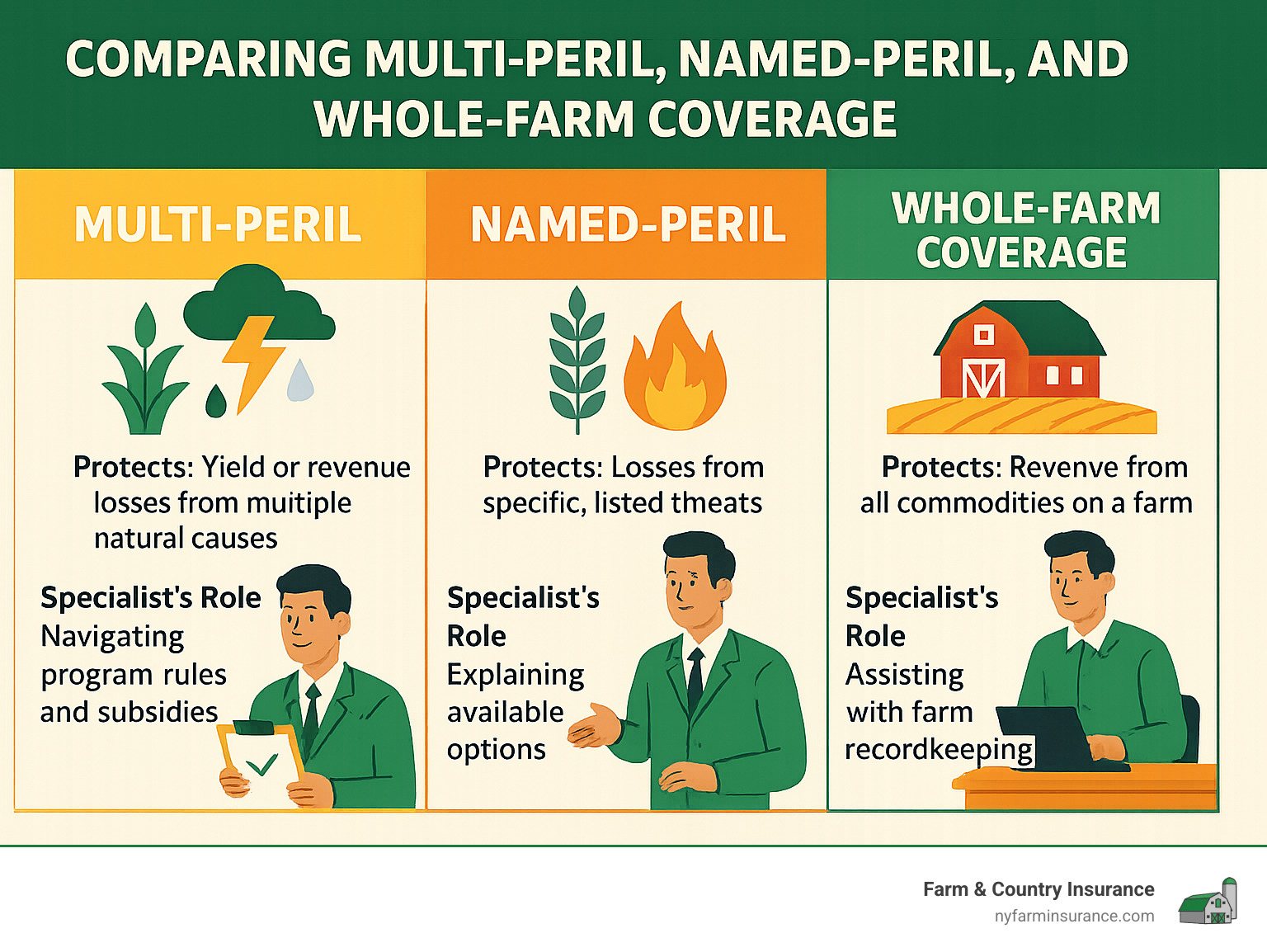
Comparing Multi-Peril vs. Named-Peril vs. Whole-Farm Coverage
| Coverage Type | What It Protects | Specialist’s Role | Best For |
|---|---|---|---|
| Multi-Peril (MPCI) | Yield or revenue losses from multiple natural causes | Navigating federal program rules and subsidy levels | Core production of major crops |
| Named-Peril (e.g., Hail) | Specific risks like hail or fire damage | Matching coverage to specific farm vulnerabilities | High-value crops in high-risk areas |
| Whole-Farm Revenue | Total farm revenue across all commodities | Analyzing diversification and revenue documentation | Diversified operations with multiple crops/livestock |
At Farm & Country Insurance, we connect New York farmers with crop insurance specialists who truly understand our region’s unique challenges. For a deeper dive into how crop insurance works, visit: How Does Crop Insurance Work?.
Step-by-Step Buying Process With Crop Insurance Specialists
Working with crop insurance specialists to purchase coverage follows a structured timeline with critical deadlines. Understanding this process helps ensure you obtain the right protection for your farm operation.
1. Initial Consultation (Anytime, but ideally 3-4 months before sales closing)
* Review your farm’s production history and risk profile
* Discuss your coverage goals and risk tolerance
* Explain available policy options and endorsements
2. Coverage Selection (1-2 months before sales closing)
* Compare different coverage levels and their premium costs
* Evaluate unit structure options (basic, optional, enterprise)
* Calculate premium subsidies you qualify for
3. Application Submission (Before sales closing date)
* Complete and sign application forms
* Provide required documentation
* Submit everything before the sales closing deadline
4. Acreage Reporting (By acreage reporting deadline)
* Document planted acres by crop, type, and practice
* Verify planting dates for each field
* Submit final acreage reports by the deadline
For New York farmers seeking more detailed information about the buying process, we recommend reviewing: How Does Crop Insurance Work?.
Key Calendar Dates Your Specialist Tracks
Crop insurance specialists serve as your calendar keepers for critical insurance deadlines throughout the year. At Farm & Country Insurance, we emphasize the importance of these key dates for New York farm operations.
Spring Deadlines
* March 15: Sales closing date for most spring-planted crops
* April 30: Production reporting deadline for many crops
Summer Deadlines
* July 15: Acreage reporting deadline for spring-planted crops
* July 1: Premium billing date for fall-planted crops
Fall Deadlines
* August 15: Premium billing date for spring-planted crops
* November 15: Sales closing date for most fall-planted crops

For New York farmers seeking more information about working with crop insurance agents and understanding these critical deadlines, we recommend: Crop Insurance Agent.
Staying Ahead of Federal Changes & Market Volatility
In the ever-changing world of agricultural risk management, crop insurance specialists are like weather forecasters for policy changes. At Farm & Country Insurance, we’ve seen how the best specialists keep their finger on the pulse of both regulatory updates and market trends to give New York farmers the edge they need.
Think of your crop insurance specialist as your early warning system for important changes that could affect your coverage. They’re constantly digging through USDA bulletins, studying updated RMA handbooks, and analyzing actuarial tables that most farmers would find mind-numbing.
The best crop insurance specialists also keep a watchful eye on market conditions that affect your bottom line. They track commodity price trends that influence your revenue guarantees and monitor input cost fluctuations that could change what coverage level makes sense for your operation.
At Farm & Country Insurance, we’re particularly impressed by specialists who have acceptd newer protection strategies like Margin Protection policies. These innovative products consider both your potential revenue and your input costs, offering a more complete picture of your farm’s financial health.
For farmers who want to explore current actuarial information, the USDA offers an excellent resource through their Actuarial Information Browser.
Tech & Tools Specialists Use
Today’s tech-savvy crop insurance specialists have traded their clipboards for tablets loaded with sophisticated software. They’re using satellite imagery to spot potential problem areas in your fields before they affect yields. Some even employ drone technology to capture detailed field-level data, making acreage reporting more accurate than ever before.
GPS field mapping has revolutionized unit structure planning and acreage reporting. Instead of rough estimates, specialists can create precise field boundaries that ensure you’re paying premiums on exactly what you’re growing—no more, no less.
Beyond field technology, the best crop insurance specialists employ powerful decision support software. These tools run side-by-side comparisons of different coverage levels, showing you the cost-benefit ratio of each option. Revenue projection models can simulate various yield and price scenarios, helping you find the sweet spot for revenue protection.
The paperwork burden has also lightened considerably. Modern specialists use digital signature platforms that allow for remote policy signing and updates—a real time-saver during planting season when you can’t afford to drive to town for a signature.
At Farm & Country Insurance, we value specialists who strike the perfect balance between technological innovation and personal service. The best tools improve, rather than replace, the crucial relationship between specialist and farmer.
For more information about multi-peril crop insurance and how technology is improving coverage options, visit our detailed guide: Multi-Peril Crop Insurance.
Frequently Asked Questions about Crop Insurance Specialists
I’ve been helping New York farmers steer crop insurance questions for years at Farm & Country Insurance, and these are the questions we hear most often about working with crop insurance specialists.
How do crop insurance specialists differ from general insurance agents?
Think of crop insurance specialists as agricultural risk management experts rather than general insurance salespeople. The difference is significant:
They breathe agriculture every day, focusing exclusively on crop and livestock policies rather than splitting their attention between auto, home, and other coverage types. Many have dirt under their fingernails from their own farming experience.
Crop insurance specialists speak your language because they understand what you’re growing and the challenges you face. They maintain deep knowledge of USDA Risk Management Agency programs and stay current through mandatory annual training on program changes.
That specialized knowledge makes a difference when helping you select appropriate coverage levels, properly document your operation, and steer the claims process when disaster strikes.
What qualifications are required to become a crop insurance specialist?
Behind every qualified crop insurance specialist is a combination of education, licensing, and agricultural know-how.
Most have formal education in agribusiness, agricultural economics, or related fields, though some enter the profession with practical farming experience. What’s non-negotiable is proper licensing—they must maintain a state insurance license with crop insurance endorsements and complete annual certification through their approved insurance providers.
The best specialists go beyond minimum requirements. They actively participate in professional organizations like the Crop Insurance Professionals Association and commit to ongoing education about both insurance programs and agricultural production practices.
Can a specialist cover both my crops and livestock under one policy?
Yes, this is possible in certain situations, and crop insurance specialists can help you determine the best approach for your operation.
For diversified farms—which are common throughout New York—Whole-Farm Revenue Protection (WFRP) can be an excellent solution. This program covers revenue from all commodities on your farm, including both crops and livestock, under a single policy.
Alternatively, many specialists are authorized to sell both crop-specific policies and livestock policies, allowing them to create a coordinated protection strategy using separate policies custom to each aspect of your operation.
Conclusion
Crop insurance specialists truly are the unsung heroes of modern farming. Throughout this guide, we’ve seen how these dedicated professionals help farmers steer the often murky waters of agricultural risk management. Their expertise isn’t just helpful—it’s often the difference between a farm’s survival or failure when disaster strikes.
At Farm & Country Insurance, we’ve been privileged to serve New York farm families since 1984. Over these decades, we’ve connected countless producers with qualified crop insurance specialists who understand the unique challenges that come with northeastern agriculture. Our deep roots in Cayuga County, Auburn, Aurelius, and surrounding communities have given us insight into the specific risks that New York farmers face every day.
What makes a truly effective specialist? It’s a rare combination of qualities: deep agricultural knowledge paired with technical insurance expertise, strong financial analysis skills, a commitment to continuous regulatory education, comfort with modern technology, and perhaps most importantly, a personal commitment to your success.
Whether you’re growing corn in Brutus, raising dairy cattle in Fleming, or producing vegetables in Owasco, having the right crop insurance specialist by your side makes all the difference. When the inevitable challenges arise—whether it’s a devastating drought, destructive storm, or market collapse—their guidance helps transform potential financial devastation into manageable recovery.
More than 90 percent of all farmland in the United States is now protected by federal crop insurance programs. These specialists help farmers steer more than 80 types of crops covered by individual federal plans. This widespread adoption speaks volumes about the value these programs provide when implemented with expert guidance.
We encourage you to use the resources we’ve shared throughout this article to find and evaluate crop insurance specialists who can best serve your operation’s unique needs. For personalized assistance with your farm insurance questions, we invite you to learn more about our custom farm risk solutions: More info about custom farm risk solutions.
At Farm & Country Insurance, we remain steadfastly committed to protecting New York’s rich agricultural heritage by connecting hardworking farmers like you with the specialized expertise you need to thrive in an increasingly complex and challenging industry.