
Why Farm Credit Powers America’s Agricultural Success
Farm credit serves as the financial backbone for over 600,000 farmers, ranchers, and rural businesses across the United States. Here’s what you need to know:
Key Farm Credit Facts:
– $398.2 billion in total loan volume nationwide
– 40% of all U.S. farm business debt supported by Farm Credit
– $3.08 billion returned to borrowers through patronage in 2023
– Customer-owned cooperatives governed by local farmer boards
– 100+ years of serving rural America since 1916
The Farm Credit System operates differently from traditional banks. Instead of maximizing profits for shareholders, these customer-owned cooperatives return earnings directly to borrowers through annual patronage payments. This unique structure means your loan payments can come back to you as cash dividends.
Farm Credit institutions collectively support everything from $50,000 equipment loans to multi-million dollar land purchases. They offer specialized products like operating lines of credit, real estate financing, and livestock loans – all designed specifically for agricultural operations.
What makes Farm Credit special? Local farmer-directors who understand your challenges govern each association. They hire relationship managers with farming backgrounds who can evaluate your operation based on agricultural knowledge, not just credit scores.
As Casey Love, founder of Farm & Country Insurance, I’ve worked alongside countless farmers navigating both farm credit financing and insurance protection for their operations. The most successful farms integrate both credit and insurance strategies to build long-term resilience and growth.
Farm credit helpful reading:
– agribusiness
– agriculture insurance near me

Understanding the Farm Credit Landscape
Picture this: It’s 1916, and American farmers are struggling to get the credit they need to grow food for a growing nation. Banks didn’t understand farming, and many rural areas had no banks at all. That’s when Congress stepped in and created something – the Farm Credit System.
Fast forward over a century, and this network of customer-owned cooperatives has become the backbone of rural America’s financial infrastructure. What started as a government solution to help farmers has grown into something much bigger and more sophisticated.
Today’s Farm Credit System serves more than 600,000 borrowers in every corner of rural America – all 50 states plus Puerto Rico. Think about that for a moment: nearly two-thirds of a million farm families, ranchers, and rural businesses rely on this system for their financing needs.
The numbers tell an impressive story. Farm credit institutions hold over 40% of all U.S. farm business debt, making them the single largest source of agricultural credit in the nation. Their mission hasn’t changed since day one: provide steady, reliable capital to rural communities through good times and bad.
The Farm Credit Administration (FCA) keeps a watchful eye over the entire system as an independent federal regulator. This oversight ensures these institutions stay financially strong while never losing sight of their agricultural mission. Scientific research on rural-financing consistently shows how this regulated cooperative model outperforms traditional commercial lenders, especially when economic storms hit rural communities.
What Is Farm Credit and Why It Matters
Farm credit isn’t just another type of loan – it’s financing designed specifically for the unique world of agriculture. While your typical bank might scratch their heads at seasonal cash flows or livestock collateral, farm credit lenders live and breathe this stuff.
Congress created the Farm Credit System with a laser focus: serve farmers, ranchers, rural homeowners, and agricultural cooperatives. This specialized mission means your loan officer understands why you need operating capital in spring but can pay it back after harvest. They know the difference between breeding stock and market animals, and why timing matters so much in farming.
But here’s what many people don’t realize – farm credit reaches far beyond individual farm operations. These institutions finance the entire rural infrastructure that keeps communities thriving. We’re talking about broadband networks bringing internet to remote areas, power cooperatives keeping the lights on, and water systems serving rural towns.
They also back the grain elevators, processing plants, and agribusiness operations that create jobs and economic activity throughout rural America. It’s this comprehensive approach that makes farm credit so vital to the fabric of rural communities.
Key Players in Farm Credit
The Farm Credit System works like a well-orchestrated team, with different players handling specific roles in serving agricultural borrowers.
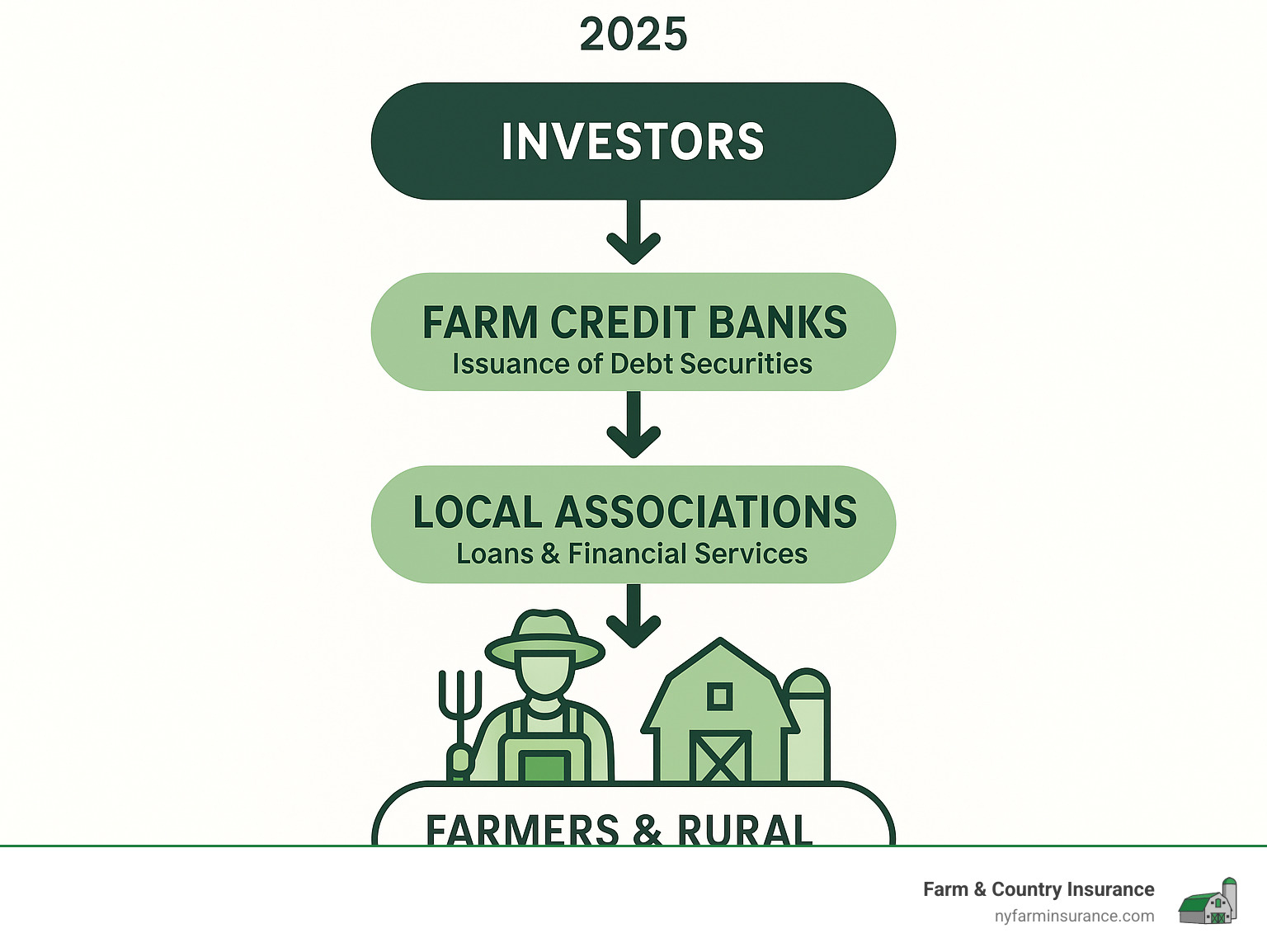
Farm Credit Banks act as the wholesale funders for local associations. These four regional banks tap into national money markets to raise capital, then distribute it to local associations at competitive rates. Each bank serves its geographic region, but they all coordinate to ensure farmers get consistent service whether they’re in Maine or Montana.
CoBank takes on the role of wholesale lender for Farm Credit associations serving more than 75,000 farmers, ranchers, and rural borrowers across 23 states. But CoBank also steps up to directly finance large agribusiness operations, rural infrastructure providers, and agricultural cooperatives that might be too big for local associations to handle alone.
Farmer Mac operates the secondary market for agricultural real estate loans, rural housing, and certain rural utility loans. By purchasing loans from the original lenders, Farmer Mac pumps additional money into the agricultural credit market and helps keep underwriting standards consistent across the system.
As someone who’s worked with farmers for decades through Farm & Country Insurance, I’ve seen how this cooperative structure creates real advantages for agricultural borrowers. The system’s focus on serving agriculture – rather than maximizing profits – makes a genuine difference in how farmers access the capital they need to succeed.
How the Farm Credit System Works: Cooperative Advantage
When you borrow from a farm credit association, something special happens – you don’t just become a customer, you become an owner. This cooperative structure changes everything about how your lender operates and treats you.
Think about it this way: traditional banks answer to shareholders who want maximum profits. But farm credit cooperatives answer to you and your fellow farmers. When you take out a loan, you automatically become a member-owner with voting rights and a stake in the association’s success.
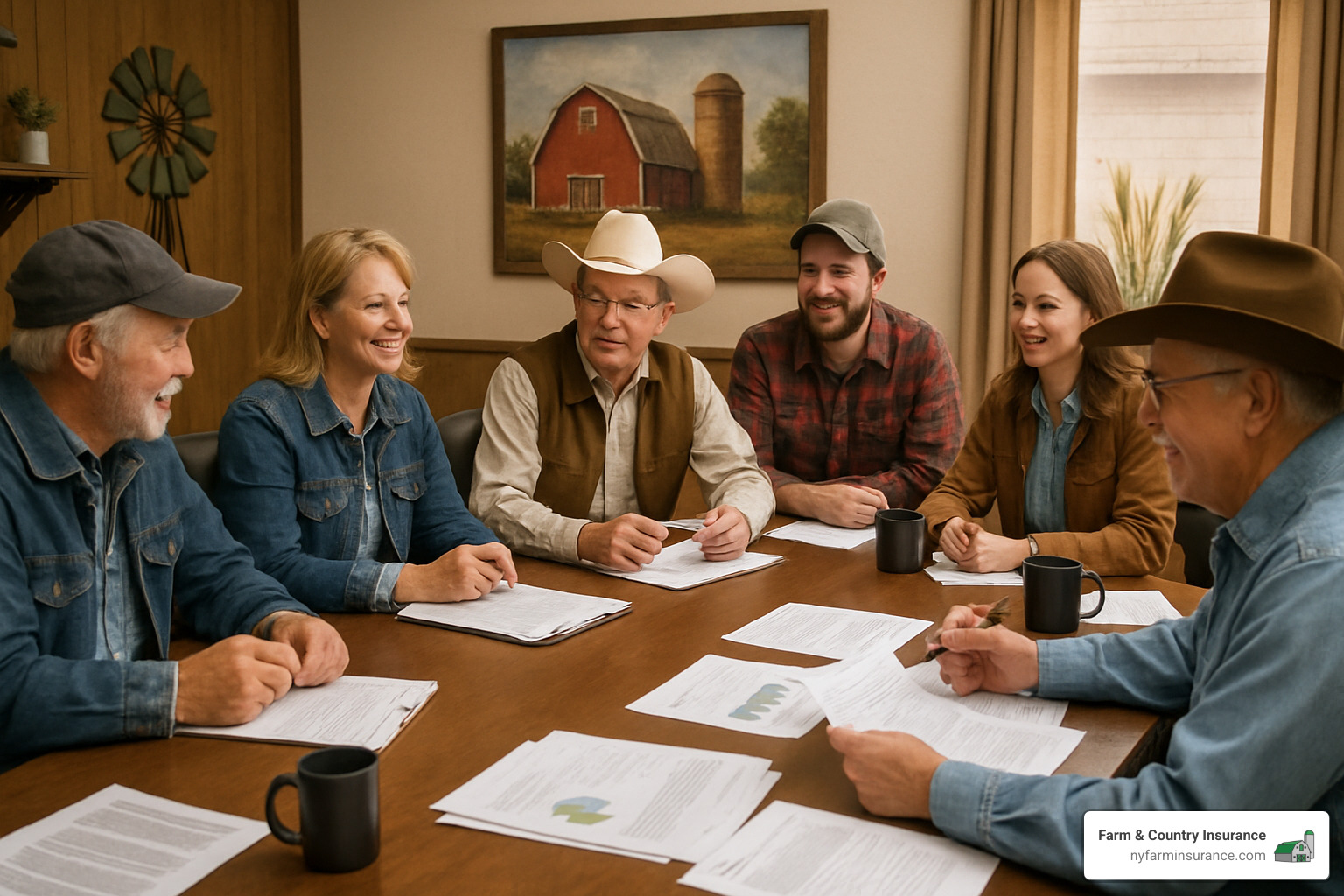
Local farmer-directors govern each Farm Credit association, and here’s the best part – you help elect them. These aren’t distant executives in glass towers. They’re your neighbors who understand what it’s like to worry about weather, commodity prices, and equipment breakdowns because they face the same challenges on their own operations.
The patronage program is where the cooperative advantage really shines. Instead of keeping all profits, Farm Credit associations return excess earnings directly to borrower-members. In 2023, these institutions returned a whopping $3.08 billion to customer-owners – money that flowed right back into rural communities where it belongs.
Your share of patronage depends on your average loan balance and how well your association performs financially. It’s like getting a dividend on your debt, which sounds backwards until you remember that you own part of the company lending you money.
Behind the scenes, the Farm Credit Funding Corporation works to keep your borrowing costs low by issuing systemwide debt securities. This centralized approach lets even small rural associations tap into national capital markets at competitive rates – savings that get passed directly to you.
The Farm Credit System Insurance Corporation provides an additional safety net by insuring all systemwide debt obligations. This insurance helps Farm Credit institutions raise funds at rates comparable to U.S. Treasury securities, which again translates to lower costs for your operation.
Governance & Regulation of Farm Credit
The Farm Credit Administration keeps a watchful eye over the entire system through regular examinations and detailed reporting requirements. Their FCA examination manual covers everything from credit risk management to ensuring your rights as a borrower are protected.
Borrower rights aren’t just nice words on paper – they’re backed by federal regulations. You have the right to receive written explanations if your credit application gets denied, access to all your loan documents, and formal appeal processes if you disagree with lending decisions. The FCA makes sure these protections apply consistently across all Farm Credit institutions.
The Farm Credit System Insurance Corporation (FCSIC) provides crucial insurance coverage for all systemwide debt obligations. This protection keeps investors confident and capital flowing, which maintains your access to affordable credit even during economic uncertainty.
More info about Farm Credit Council offers additional insights into how advocacy and coordination support the entire system’s mission of serving rural America.
The Patronage Payback: Getting Cash Back on Your Loan
Here’s something you won’t find at traditional banks – farm credit cooperatives actually pay you back for borrowing money. The patronage program returned $3.08 billion to customer-owners in 2023 alone, bringing total patronage payments to $21 billion since 2012.
The earnings return process works beautifully in its simplicity. When your Farm Credit association generates profits beyond what’s needed for operations and building capital reserves, the farmer-directors declare a patronage distribution. Your share depends on your average loan balance and how well the association performed financially.
Let’s look at a real example: Farm Credit Mid-America returned $260 million in net earnings to customer-owners in 2025. Over nine years, they’ve returned more than $1.5 billion to the farmers and rural businesses they serve. These aren’t small amounts – patronage payments often reduce your effective borrowing cost by 0.5% to 1.0% annually.
The customer benefit goes beyond immediate cash in your pocket. Patronage payments help build equity in your operation, provide working capital during tight cash flow periods, and prove that your lender truly has your success in mind rather than maximizing profits for distant shareholders.
At Farm & Country Insurance, we’ve seen how farmers who understand both their financing and insurance options build stronger, more resilient operations. When your lender is also your partner through the cooperative structure, it creates a foundation for long-term agricultural success.
Comparing Top Farm Credit Products & Services
When you’re looking at farm credit options, you’ll find a complete toolkit designed specifically for agricultural operations. Think of it as one-stop shopping, but with people who actually understand why you need that expensive combine harvester.
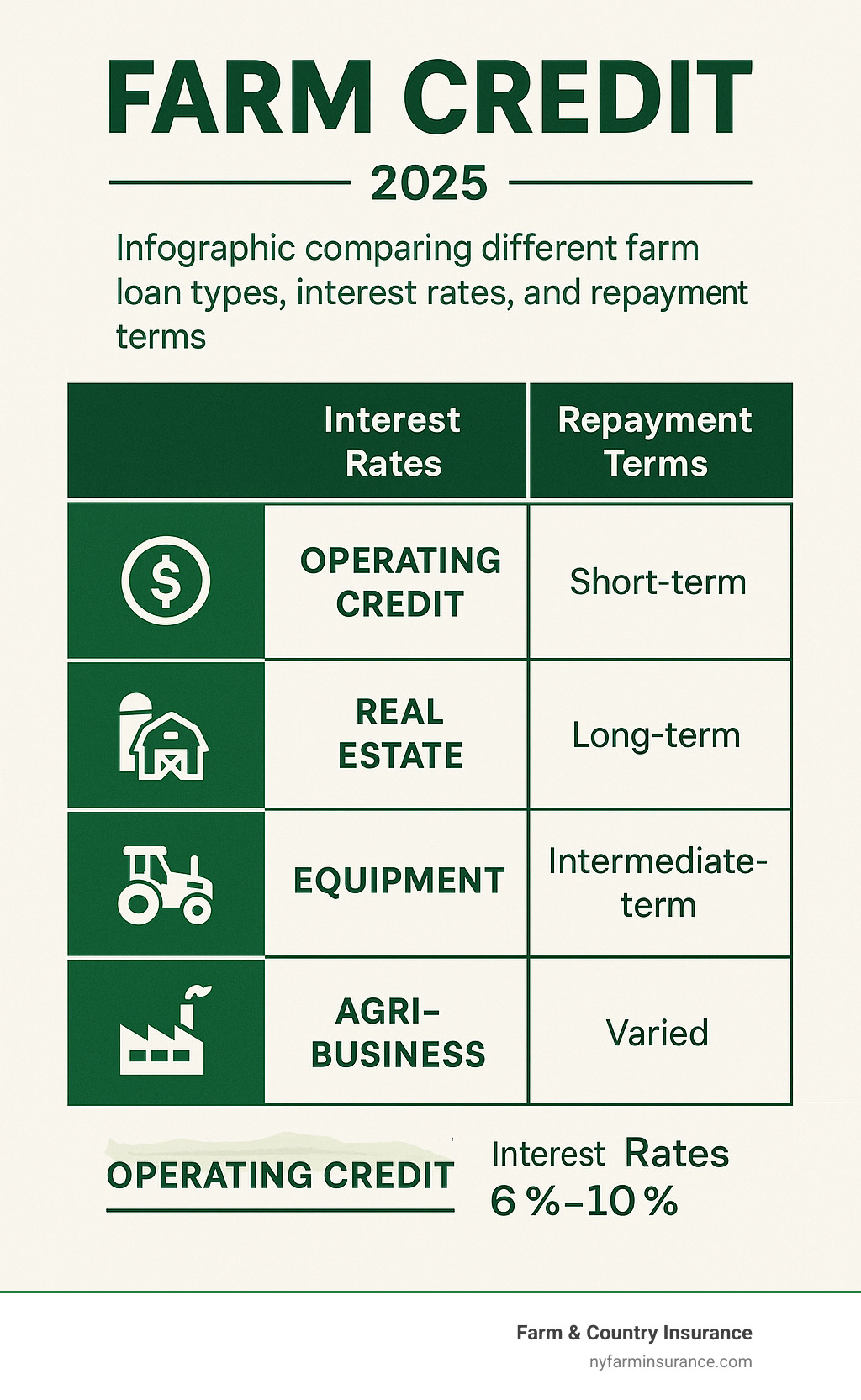
Operating lines of credit keep your cash flow smooth during those inevitable gaps between planting and harvest. These revolving credit lines cover your seasonal needs – seed, fertilizer, feed, and all those other expenses that hit before the income rolls in. The best part? Repayment terms that actually match when you sell crops or livestock, not some arbitrary bank schedule.
Real estate loans help you expand your operation or finally buy that perfect piece of ground next door. Farm credit institutions often offer longer payback periods and higher loan amounts compared to what you’d get from a typical bank. Many of these loans are assumable too, which means they can transfer to a qualified buyer – adding real value when it’s time to sell.
Equipment financing covers everything from basic tractors to those high-tech precision agriculture systems. Farm Credit lenders understand that a $500,000 combine isn’t just an expensive toy – it’s essential equipment that generates income. They know equipment values and how different machines hold their worth over time.
Rural home loans serve farmers and other rural folks who might not fit the cookie-cutter requirements of conventional mortgages. Your income might be seasonal, your property might be unique, but that doesn’t mean you can’t get financing for your home.
Agribusiness credit supports the businesses that keep agriculture running – grain elevators, feed mills, processing plants, and equipment dealers. These loans recognize that agribusiness has its own rhythm, with seasonal cash flows and specialized equipment as collateral.
Risk management services go beyond just lending. Many Farm Credit associations employ specialists who help you steer crop insurance, interest rate protection, and other financial tools that protect your operation.
Farm Credit Solutions for Every Stage of Growth
Starting out in farming? Beginning farmer loans recognize that everyone has to start somewhere, even if your bank account doesn’t look like a seasoned producer’s yet. These programs often require smaller down payments and offer more flexible approval criteria. Plus, many include mentoring programs that pair you with experienced farmers who’ve been where you are.
The numbers tell the story – the Farm Credit System made $18.9 billion in new loans to beginning farmers in 2023 alone. That’s serious commitment to keeping agriculture’s future bright.
Expansion capital helps established operations take the next step. Whether you’re adding acres, upgrading facilities, or trying something completely new, Farm Credit lenders understand that growth requires calculated risks. They’ll structure financing around your projected cash flows from new investments, not just your current balance sheet.
Infrastructure financing supports the backbone of rural communities – utilities, broadband networks, and renewable energy projects. These loans often come with longer terms and competitive rates because they recognize the community-wide benefits of modern rural infrastructure.
Renewable energy projects get specialized attention too. Solar panels on your barn roof, wind turbines on your back forty, or biomass systems using crop residues – Farm Credit understands both the farming and energy sides of these investments.
Farm Credit vs. Traditional Banks – Which Wins?
Here’s where farm credit really shines. Relationship lending means your loan officer actually knows your operation. They visit your farm, understand your challenges, and can make decisions based on agricultural reality rather than just computer-generated credit scores.
The agricultural expertise runs deep throughout Farm Credit organizations. Your loan officer probably has dirt under their fingernails or at least understands why you do. Many have farming backgrounds or agricultural education, so when you explain why you need that expensive piece of equipment, they actually get it.
Cooperative dividends through patronage payments give you something no commercial bank can match – money back on your loans. While a bank might offer a competitive rate upfront, those annual patronage checks effectively reduce your borrowing costs year after year.
Commercial bank fees can nickel and dime you to death. The cooperative structure eliminates the pressure to maximize fee income, so you get more straightforward pricing and fewer surprise charges.
At Farm & Country Insurance, I’ve seen countless farmers benefit from combining smart farm credit financing with comprehensive insurance protection. The most successful operations use both tools together to build long-term stability and growth.

Special Programs for Young, Beginning & Small Farmers
Starting a farming operation can feel overwhelming, especially when you’re trying to secure financing without an established track record. That’s where farm credit really shines – the system has made supporting the next generation of farmers a top priority.
The numbers tell the story: $18.9 billion in new loans went to beginning farmers in 2023 alone. This isn’t just lending – it’s investing in the future of American agriculture. Farm Credit associations understand that today’s beginning farmers will be tomorrow’s agricultural leaders.
What makes these programs special is the mentoring support that comes with the financing. Many associations connect new producers with experienced farmers who’ve walked the same path. These mentors share practical wisdom about everything from crop rotation to cash flow management. It’s like having a seasoned farmer in your corner, cheering you on through the tough early years.
Education workshops are another cornerstone of Farm Credit’s approach to supporting new farmers. These sessions cover the business side of farming – financial planning, record keeping, marketing strategies, and risk management. Many associations partner with local extension offices and agricultural colleges to deliver comprehensive training programs.
The flexible terms available through beginning farmer programs recognize that starting out in agriculture is different from other businesses. You might have great farming skills and solid business plans, but limited cash for down payments. Farm Credit associations work with these realities rather than against them.
More info about Dairy Farm Risk Management becomes especially important for beginning dairy farmers, who often face significant startup investments and complex risk exposures.

Accessing Farm Credit When You’re Just Starting Out
Getting your first farm credit loan doesn’t have to be an uphill battle. Starter programs focus on your potential rather than just your current financial statement. Loan officers evaluate your agricultural education, management experience, and business planning skills alongside traditional credit factors.
Micro-loans serve farmers who need smaller amounts of capital – typically $5,000 to $50,000 – to get started or test new enterprises. Maybe you want to try direct marketing vegetables or add a few head of livestock to your operation. These loans feature streamlined applications and faster approval processes.
The collateral alternatives available through Farm Credit can be game-changers for beginning farmers. Instead of requiring traditional assets like established real estate, lenders might accept growing crops, young livestock, or even management contracts as security. This flexibility recognizes that farming assets look different from other businesses.
Your farm credit association understands that starting small doesn’t mean thinking small. They’re looking for farmers who demonstrate good judgment, strong work ethic, and realistic business plans – qualities that predict long-term success better than current net worth.
Building Resilience with Insurance & Credit Together
Smart farmers know that risk mitigation requires more than just good financing – it demands a coordinated approach to both credit and insurance. At Farm & Country Insurance, we’ve seen how the most successful operations integrate their financing and insurance strategies from day one.
Crop insurance becomes especially critical when you’re carrying debt. Production losses that might be manageable for an established farmer with significant equity can threaten loan payments for someone just starting out. Your Farm Credit lender will likely require adequate crop insurance coverage, and they can help you understand the federal crop insurance system.
Income protection extends beyond crop insurance to cover the various risks that could disrupt your ability to service debt. This might include livestock mortality coverage, business interruption insurance, or key person life insurance if your operation depends heavily on specific individuals.
The beauty of working with Farm Credit is that they understand how insurance and financing work together. They’re not just interested in getting paid back – they want to see your operation thrive over the long term.
More info about Crop Insurance for Farmers provides detailed guidance on building a comprehensive insurance program that complements your financing strategy and protects your investment in agriculture.
Frequently Asked Questions about Farm Credit
How do I find my local farm credit lender?
Finding your local farm credit association is easier than you might think. The Farm Credit Administration provides a handy online locator tool where you simply enter your zip code, city, or farm address to find which association serves your area.
Each farm credit association operates within specific geographic boundaries, so you’ll work with the one covering your farm’s location. Think of it like school districts – clear lines determine which association serves which areas.
You can also call the FCA directly or browse individual association websites to confirm service territories. Most associations clearly display their coverage areas on their websites, often with helpful maps showing county-by-county service regions.
What is the minimum down payment for a farm credit real-estate loan?
Farm credit real estate loans typically require 10-25% down payment for qualified borrowers, but don’t let that discourage you if you’re just starting out. The exact amount depends on several factors that work in your favor.
Beginning farmer programs often slash these requirements significantly. Qualified new farmers may secure financing with down payments as low as 5-10% through specialized programs designed to help the next generation get started.
Your specific down payment requirement depends on your credit history, management experience, debt-to-income ratios, and the property you’re financing. Farm Credit lenders evaluate the whole picture, not just your bank account balance.
The beauty of farm credit is that loan officers understand farming. They know that a beginning farmer with solid management skills and a good business plan might be a better risk than someone with more money but less agricultural knowledge.
How does the patronage refund lower my effective interest rate?
Here’s where farm credit gets exciting – your loan payments can actually come back to you as cash! The patronage refund works like a annual rebate based on your average loan balance and your association’s financial performance.
Let’s say you’re paying 6% interest on your operating loan but receive a 0.75% patronage refund at year-end. Your effective interest rate drops to 5.25% – money back in your pocket when you need it most.
Patronage payments typically range from 0.25% to 1.0% of your average loan balance, though the exact amount varies annually based on your association’s profitability. In strong financial years, some borrowers receive even higher patronage rates.
The timing works perfectly for most farm operations. You receive patronage payments during winter months when cash flow often tightens, providing working capital for the upcoming season. It’s like getting a discount on money you’ve already borrowed and used productively.
At Farm & Country Insurance, we’ve seen countless farmers use their patronage payments to invest in better insurance coverage or facility improvements that reduce long-term risks. It’s one of those rare situations where borrowing money can actually put money back in your pocket.
Conclusion
The Farm Credit System has weathered more than a century of agricultural ups and downs, and it’s not slowing down now. Today’s challenges – from succession planning to climate adaptation – require the same innovative spirit that created this cooperative system back in 1916.
Succession planning has become one of the most critical services Farm Credit offers. When longtime farmers are ready to hang up their boots, these associations help structure deals that work for both the retiring generation and the young folks taking over. It’s not uncommon to see financing packages that help grandpa retire comfortably while giving his grandson the capital to modernize the operation.
Climate challenges are pushing farmers to think differently about everything from soil health to energy use. Farm credit lenders are stepping up with specialized financing for cover crops, precision agriculture equipment, and renewable energy projects. These aren’t just feel-good investments – they’re helping farmers cut costs and boost resilience in an unpredictable world.
The smart money today integrates credit and insurance strategies from day one. We’ve learned at Farm & Country Insurance that the farms that thrive long-term don’t just think about borrowing money or buying insurance – they think about how these tools work together to protect their operation.
Whether you’re milking cows in Cayuga County, growing vegetables near Auburn, or running any kind of agricultural operation across New York, the combination of cooperative lending and comprehensive insurance coverage gives you the solid foundation every farm needs. When market prices swing wildly or Mother Nature throws a curveball, you’ll have the financial tools to stay in the game.
The cooperative advantage isn’t going anywhere. Those patronage checks, farmer-elected boards, and agricultural expertise that set farm credit apart will keep serving rural America for the next hundred years. After all, when farmers own the bank, the bank truly understands farming.
The bottom line? When it comes to financing your agricultural dreams, Farm Credit delivers exactly what it promises – and then pays you back for the privilege of being your lender.
More info about agricultural-insurance-coverage provides additional insights into protecting your agricultural investment alongside your financing strategy.