
Understanding Home Farm Insurance: Protection for Your Home and Livelihood
If you’re searching for information about home farm insurance, here’s what you need to know:
- Home farm insurance combines elements of homeowners insurance with specialized farm coverage
- It protects both your dwelling and farm operations (unlike standard homeowners policies)
- Typical coverage includes: home structure, personal property, farm buildings, equipment, livestock, and liability
- The USDA defines a farm as any place that produced and sold at least $1,000 of agricultural products annually
- 75% of farm businesses are underinsured by 40% or more
Home farm insurance is a specialized insurance product designed for properties that serve as both a residence and an agricultural operation. Unlike standard homeowners policies that explicitly exclude farm structures, equipment, and business activities, farm homeowners insurance provides comprehensive protection for your home, barns, machinery, livestock, and the liability exposures unique to farming operations.
When a single piece of farm equipment like a combine harvester can cost upwards of $300,000, proper insurance coverage becomes essential to your financial security. Farm properties face distinctive risks that standard policies simply weren’t designed to address.
I’m Casey Love, owner of Farm & Country Insurance, and I’ve spent over 15 years helping New York farmers develop customized home farm insurance solutions that protect both their homes and agricultural operations.
Home farm insurance vocabulary:
– flood insurance New York
– home insurance for rural properties
– New York house insurance
Home Farm Insurance vs. Standard Homeowners: Key Differences
When your property serves as both your home and livelihood, standard homeowners insurance simply doesn’t cut it. Your farm deserves protection as unique as the life you’ve built on it.
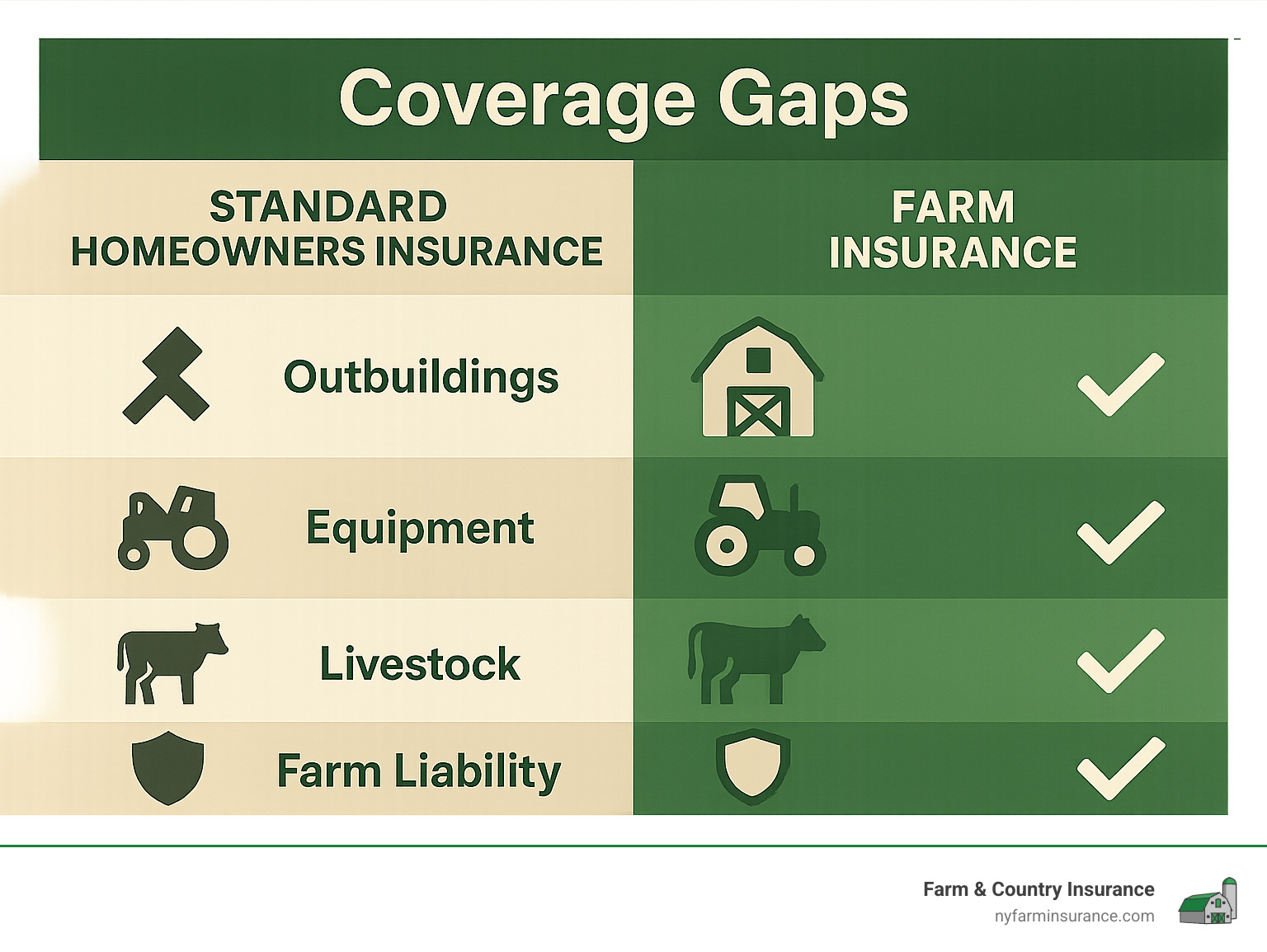
The gap between standard homeowners policies and home farm insurance is wider than most people realize. While your house might be covered under both, everything that makes your farm a farm typically falls into coverage gaps with standard policies.

| Coverage Type | Standard Homeowners (HO-3) | Home Farm Insurance |
|---|---|---|
| Dwelling | Covered | Covered |
| Personal Property | Covered (with limits) | Covered (with higher limits) |
| Detached Structures | Limited coverage (typically 10% of dwelling) | Full coverage for barns, silos, etc. |
| Farm Equipment | Not covered | Covered |
| Livestock | Not covered | Covered |
| Farm Products | Not covered | Covered |
| Business Liability | Limited/excluded | Comprehensive coverage |
| Farm Operations | Not covered | Covered |
That standard HO-3 homeowners policy sitting in your filing cabinet? It specifically excludes structures used for farming purposes. This means your barn, equipment shed, grain bins, and other farm structures have zero coverage if damaged or destroyed. That $300,000 combine harvester? Not covered. Your livestock? Also not covered.
Perhaps most concerning is the liability gap. If someone gets injured during your farming operations or your livestock damages a neighbor’s property, standard homeowners insurance won’t help you.
According to the USDA, your property qualifies as a farm if it produced at least $1,000 of agricultural products during a given year. If you meet this definition, specialized coverage isn’t just recommended—it’s essential.
More info about Farm and Ranch Insurance Coverage
Why farmers and rural homeowners need home farm insurance
Your farm faces challenges and risks that city dwellers simply don’t encounter. That’s why standard homeowners policies fall short for rural properties.
Your property serves dual purposes—it’s where you live and where you work. This unique situation demands coverage that acknowledges both aspects under one comprehensive policy. Those specialized structures like barns, silos, and equipment sheds require specific coverage that recognizes their purpose and value.
Farm liability exposures go far beyond what homeowners policies address. Whether it’s visitors touring your property, customers purchasing your products, or environmental concerns from your operations, home farm insurance provides the protection you need.
Even if you consider yourself a hobby farmer with minimal income from agricultural activities, you likely still need proper farm coverage. That USDA threshold of $1,000 in annual production is lower than many realize.
Main risks and perils protected
Home farm insurance shields your operation from threats that could otherwise devastate your livelihood:
Fire and lightning remain among the most destructive forces for farm properties. Wooden barns filled with hay are particularly vulnerable. A comprehensive policy protects both the structures and their contents.
Wind and hail damage pose significant threats to New York farms, with seasonal storms capable of destroying buildings, damaging equipment, and ruining crops in minutes.
Theft and vandalism protection is crucial when you have valuable equipment that might be stored in remote locations or left in fields. Modern farm equipment represents a substantial investment that deserves proper coverage.
Machinery breakdown coverage can be a lifesaver during critical operational periods. When your equipment fails during planting or harvest, the right policy helps you get back up and running quickly.
Animal-related incidents need specialized coverage—whether it’s your livestock escaping and damaging others’ property or your animals being injured by covered perils. Chemical drift liability protection can also be essential if you use herbicides or pesticides that might affect neighboring properties.
Core Coverages in Home Farm Insurance
Dwelling & personal property under a home farm insurance policy
Your farmhouse isn’t just any home – it’s often the heart of your operation and your family’s heritage. That’s why home farm insurance starts with robust protection for your dwelling and belongings.
Your home itself is protected through replacement cost coverage, which means if disaster strikes, you’ll be able to rebuild with materials of similar quality without worrying about depreciation. Many policies include inflation guard protection that automatically adjusts your coverage limits to keep pace with rising construction costs.
For added peace of mind, you can opt for extended replacement cost coverage, which provides an additional cushion (typically 25-50%) above your dwelling limit if rebuilding ends up costing more than expected.
If you’re temporarily displaced after a covered loss, extra living expenses coverage helps with costs like hotel stays and restaurant meals while your home is being repaired.
Your personal belongings – from furniture and clothing to kitchen appliances and electronics – are also protected. Family heirlooms can be specifically scheduled, and we can arrange higher limits for valuable items.
Equipment, livestock, and outbuildings—are they really covered?
This is where home farm insurance truly shines compared to standard homeowners policies. Your agricultural assets represent significant investments – often the tools of your livelihood – and deserve proper protection.
Those barns, equipment sheds, and silos that dot your property? They’re fully covered, including any fixed equipment inside them like milking systems or grain handling equipment. Your fencing, gates, and similar property are protected too, which can represent thousands of dollars of investment across a property.
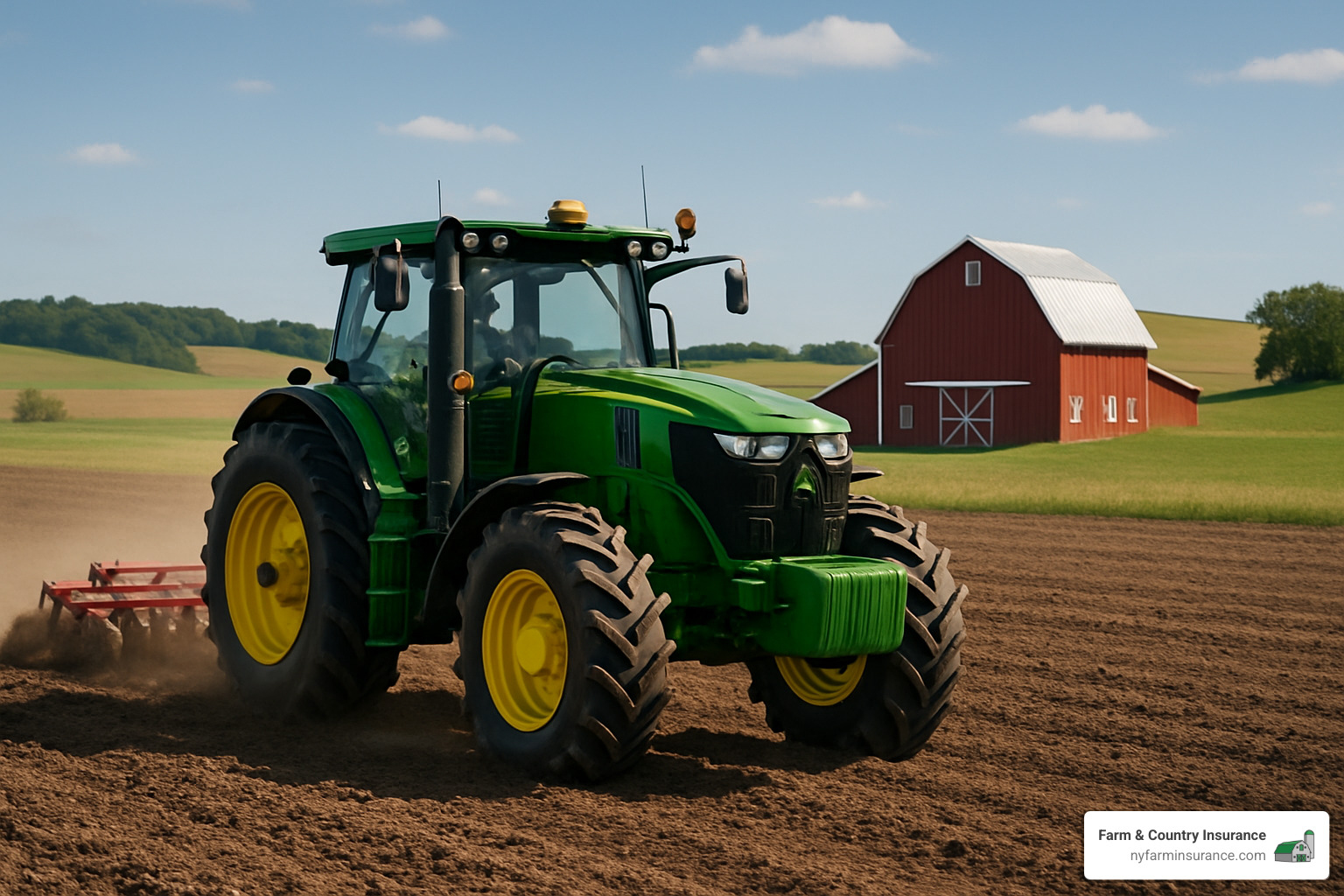
Farm equipment and machinery protection is absolutely crucial. When a single combine harvester can cost upwards of $300,000, having proper coverage isn’t a luxury – it’s a necessity. Your tractors, implements, tools, and other equipment are covered whether they’re in use, in storage, or in transit.
Your animals deserve protection too. Home farm insurance includes livestock coverage against perils like fire, lightning, theft, and certain weather events. Feed, seed, and supplies – from hay and grain to fertilizer and pesticides – are also covered while stored on your property.
At Farm & Country Insurance, we help farmers choose between two important coverage approaches:
Scheduled coverage individually lists and values specific high-value items like tractors or specialized equipment.
Blanket coverage provides a single limit that applies across multiple categories of property, offering flexibility in how claims are settled.
Liability protections unique to home farm insurance
Liability coverage might not be the first thing farmers think about, but it’s often the most important protection in your policy. One serious accident could threaten everything you’ve worked for without proper coverage.
Premises liability protects you if someone is injured on your property, whether they’re a friend stopping by, a delivery person dropping off supplies, or a customer picking up produce.
Your farming activities are protected through operations liability coverage. This kicks in if your tractor damages a neighbor’s fence while you’re working near your property line, or if your livestock escapes and causes an accident on a nearby road.
If you sell products directly to consumers, products liability is absolutely essential. This protects you if someone claims illness or injury from products you grew or produced.
We also offer specialized liability endorsements to match your specific operation:
Agritourism liability covers farm tours, U-pick operations, or corn mazes that bring the public onto your property. Environmental impairment protection defends against claims of pollution or contamination, while chemical drift liability covers incidents where pesticides or herbicides drift onto neighboring properties.
Industry research published in the Insurance Journal found that many farm operations are under-insured for liability by as much as 40%, underscoring the importance of carrying adequate limits.
Your policy also includes medical payments coverage, which pays smaller medical expenses for visitors regardless of fault – often preventing minor incidents from turning into major liability claims.
For farms needing extra protection, umbrella liability provides additional coverage limits beyond your base policy, typically starting at $1 million in extra coverage.
Customizing and Saving on Your Home Farm Insurance
Every farm has its own unique story, which is why home farm insurance policies need to be as individual as the farms they protect. The good news? Tailoring your coverage doesn’t necessarily mean emptying your wallet—in fact, smart customization often leads to both better protection and more money staying in your pocket.
Tailoring coverage for different farm sizes and operations
Your farm’s size and purpose dramatically impact what coverage makes sense for your situation:
For smallholder farms under 50 acres, we typically focus on protecting your dwelling and outbuildings first, with equipment coverage for your smaller tractors and implements. Don’t overlook liability protection, especially if you welcome visitors to your property.
When it comes to mid-size diversified farms, you’ll likely need broader equipment coverage that encompasses multiple machinery types. We’ll also recommend increased liability limits if you’re selling farm products and business interruption insurance to protect your income streams if disaster strikes.
Large commercial operations naturally require higher policy limits across all categories. We’ll work with you to craft customized coverage for specialized equipment, improved liability protection for your workforce, and custom endorsements addressing your operation’s specific risks.
If you run a CSA or direct-market farm, we’ll emphasize product liability coverage. Dairy operations need specialized protection for milking equipment and bulk tanks. Organic farms benefit from coverage that recognizes certification status and premium crop values. Agritourism ventures require additional liability coverage for visitors.
Homeowners Insurance for Hobby Farms
Factors that influence premium cost
Understanding what affects your home farm insurance premiums helps you make smarter coverage decisions and potentially identify savings:
Your property size and value naturally impact premiums—larger farms with more acreage and higher-value buildings typically cost more to insure. Similarly, the type of operation you run matters, as different farming activities carry different risk profiles.
The construction and age of your buildings play a significant role too. Newer buildings with modern materials and safety features typically qualify for lower rates than older structures. The same applies to your equipment—the replacement cost and age of your machinery fleet significantly impacts what you’ll pay.
Your location and local weather patterns can’t be overlooked. Farms in areas prone to severe weather events may face higher premiums due to increased risk. However, you can often offset this with security and safety measures like alarm systems, fire protection, and modern electrical systems.
Your loss history tells insurers a lot about your operation’s risk management. Previous claims can affect your rates, while claim-free histories typically earn lower premiums.
Discounts and strategies to lower premiums
Despite the specialized nature of home farm insurance, there are plenty of ways to manage costs while maintaining robust protection:
Bundling your policies is one of the simplest ways to save. When you combine multiple policies with us at Farm & Country Insurance, you’ll typically see significant discounts—home and auto bundles often save 10-15%, and adding umbrella liability coverage may qualify you for even more savings.
Adjusting your deductibles can substantially lower your premiums. Increasing from $1,000 to $2,500 might reduce premiums by 15-20%, though you’ll want to consider your comfort level for out-of-pocket expenses if you need to file a claim.
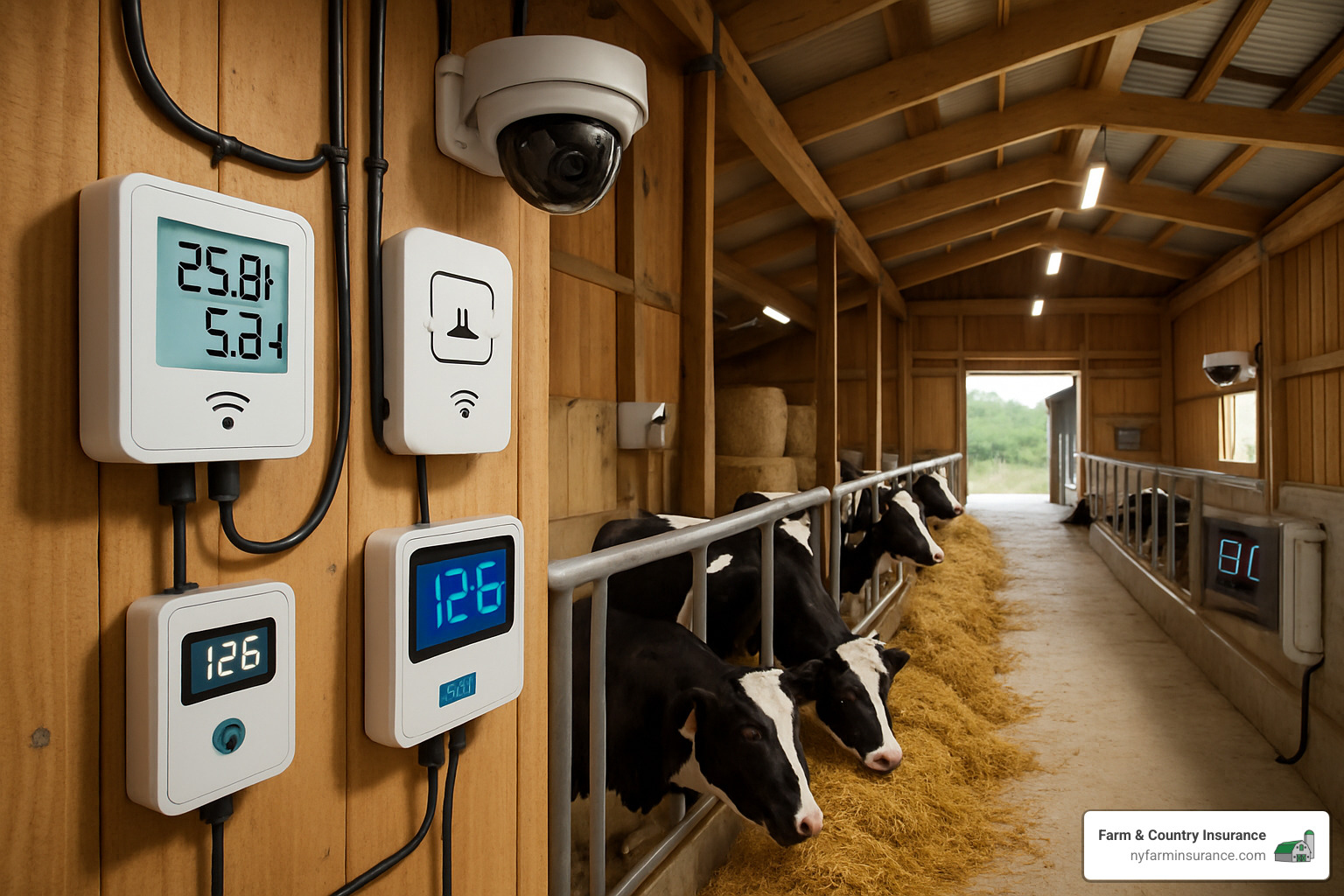
Smart investments in safety and security not only protect your farm but can lower your insurance costs too. Modern electrical systems, lightning protection, fire detection and suppression systems, security cameras, and smart monitoring technology all demonstrate to insurers that you’re serious about risk management.
Don’t overlook loyalty and claims-free discounts. Many insurers offer reduced rates for long-term customers, and staying claims-free for 3-5 years often triggers additional discounts.
Your professional associations might be another source of savings. Farm Bureau membership often qualifies for insurance discounts, as do many industry-specific associations that offer group rates.
Claims, Underinsurance & Policy Maintenance
Having the right home farm insurance policy is only the beginning—knowing how to use it effectively when losses occur and keeping it updated as your farm evolves are equally important aspects of protecting your agricultural operation.
How to determine if your farm is underinsured
I’ve seen it time and again in my years at Farm & Country Insurance—farmers who thought they were fully protected only to find devastating gaps in coverage after a loss. The statistics are sobering: 75% of farm businesses are underinsured by 40% or more. Your farm might be one of them if you recognize these warning signs:
No recent professional valuation of your property is a major red flag. Farm values change significantly over time, and if it’s been more than 3-5 years since your last appraisal, you’re likely working with outdated numbers.
Have you upgraded equipment or added new machinery without updating your policy? That shiny new tractor might not be covered if disaster strikes. The same goes for building improvements—that renovated barn or new grain bin needs to be reflected in your coverage.
Many farmers expand their livestock operations gradually, adding animals season by season until suddenly their herd value has doubled without corresponding insurance adjustments. And if you’ve ventured into new revenue streams like direct marketing or farm tours, your liability exposure has changed dramatically.
Step-by-step process for filing a home farm insurance claim
When disaster strikes your farm, the last thing you need is confusion about your insurance claim. Having helped countless New York farmers through this process, I can tell you that knowing these steps makes all the difference:
Safety comes first—always. Before worrying about insurance, make sure everyone is safe and address any dangerous conditions. Once that’s handled, grab your phone and document everything. Take photos and videos from multiple angles, make detailed notes about what happened, and record the date and time.
Don’t wait to make emergency repairs. If your barn roof is damaged, tarp it immediately to prevent water damage to equipment below. Just be sure to photograph everything before and after these temporary fixes and keep all receipts—these emergency expenses are typically covered.
Contact us at Farm & Country Insurance as soon as possible. Be prepared to provide basic information about what happened.
Before the adjuster visits, gather any relevant documents like inventory lists, receipts, or previous photos of the property. Make a list of damaged items and be available to walk through everything together.
When you receive the settlement offer, review it carefully. Understand what’s covered and what isn’t, and don’t hesitate to ask questions about anything unclear.
When and how often to update your home farm insurance
Your farm is constantly evolving—shouldn’t your insurance keep pace? Home farm insurance isn’t something you can set up once and forget about. As your operation grows and changes, your coverage needs to evolve too.
I recommend reviewing your policy at least annually with your agent. Many of my clients at Farm & Country Insurance find the period after harvest ideal for these reviews—equipment is stored, the season’s work is done, and they have time to consider the past year’s changes and plan for the future.
Beyond these annual check-ins, certain events should trigger immediate policy updates. Major equipment purchases need coverage from day one—I’ve seen too many farmers experience losses on tractors or combines they bought just weeks before but hadn’t added to their policies yet. The same goes for new buildings or renovations—that investment deserves protection from the moment construction begins.
Significant changes in your livestock operation, whether expanding your herd or adding high-value breeding stock, require policy adjustments. If you’ve shifted your business model—perhaps adding direct-to-consumer sales or agritourism activities—your liability exposure has changed dramatically and needs appropriate coverage.
Frequently Asked Questions about Home Farm Insurance
What types of liability are included in a home farm insurance policy?
When it comes to protecting your farm, liability coverage is often where the rubber meets the road. A robust home farm insurance policy includes several layers of liability protection that standard homeowners policies simply don’t provide.
Your farm faces unique liability exposures from multiple directions. Personal liability covers you as a homeowner, while premises liability protects you when visitors are on your property. Operations liability is your safety net when farming activities cause damage to others, and products liability becomes essential if you sell anything you grow or produce.
For farms with employees, employer’s liability provides crucial protection beyond what workers’ compensation offers. Many farmers also add environmental liability coverage for peace of mind against pollution claims or chemical drift incidents.
Most base policies include $1 million in liability coverage, but in today’s lawsuit-happy world, that might not be enough. At Farm & Country Insurance, we typically recommend umbrella policies extending protection to $2-5 million for New York farmers.
Does standard homeowners insurance ever cover farm equipment or livestock?
I hate to be the bearer of bad news, but standard homeowners policies and farming activities mix about as well as water and oil. Your typical HO-3 homeowners policy explicitly excludes:
Farm structures like barns, silos, and equipment sheds
Farm machinery from tractors to specialized equipment
Livestock and animals kept for business purposes
Business activities including any farming operations
Liability arising from agricultural pursuits
There are a few narrow exceptions—your riding mower might be covered if it’s used mainly for your lawn, and a few chickens kept as pets rather than for egg production might squeak by under personal property coverage. But these exceptions have strict limits and won’t meaningfully protect a working farm.
Even small hobby farms need proper home farm insurance. I’ve seen too many heartbreaking cases where farmers thought their homeowners policy would cover them, only to find the truth after a loss.
How can I bundle home farm insurance with other policies for savings?
Who doesn’t love saving money? Bundling your insurance policies is one of the smartest ways to reduce premiums while keeping comprehensive protection. Think of it as the insurance equivalent of buying in bulk.
The most common bundle combines your home farm insurance with personal auto policies, typically saving you 10-15% on both. Adding an umbrella liability policy not only provides crucial extra protection but often triggers additional multi-policy discounts.
Don’t forget about your farm vehicles! Bringing your farm trucks, tractors, and other vehicles under the same carrier as your farm policy can lead to significant savings. Some New York farmers save up to 20% through careful policy consolidation.
Conclusion
Your farm is more than just a business—it’s your home, your heritage, and your legacy. Proper home farm insurance provides the comprehensive protection needed to safeguard everything you’ve worked so hard to build.
Throughout this guide, we’ve seen that standard homeowners insurance simply wasn’t built to handle the unique challenges farm properties face. Your barns, tractors, livestock, and the liability that comes with agricultural operations require specialized coverage that understands the rhythm of farm life.
Remember these essential points as you consider your coverage:
Comprehensive protection matters. Your policy should seamlessly cover your home, farm buildings, equipment, livestock, and the unique liability exposures that come with agricultural operations.
Annual reviews prevent costly surprises. Farm operations evolve constantly—new equipment, expanded herds, additional acreage. Schedule a yearly sit-down with your agent, ideally after harvest when you have time to breathe and reflect.
Detailed documentation is your friend. After a loss is the worst time to try remembering what you owned. Maintain current inventories with photographs and receipts stored safely off-site or digitally.
Customization creates real value. Cookie-cutter policies rarely fit farm operations well. Work with an agent who understands the difference between a combine and a cultivator, who knows why your dairy barn needs different coverage than your equipment shed.
Smart bundling saves money. Consolidating your home, auto, farm, and umbrella policies with one carrier not only simplifies your life—it typically generates substantial premium savings while providing more cohesive protection.
Since 1984, Farm & Country Insurance has been protecting farms throughout New York—from small hobby operations to multi-generation commercial enterprises. Our team lives and breathes agriculture, bringing that understanding to every policy we write.
We’d love to review your current coverage and help identify any potential gaps or opportunities for savings. Our approach isn’t about selling you more insurance—it’s about making sure the coverage you have truly protects what matters.
Your farm deserves protection as specialized and hardworking as you are. Let us help you secure your home, your operation, and your agricultural legacy with home farm insurance that truly understands what’s at stake.