Home Owner Insurance: 2025’s Ultimate Protection
Why Home Owner Insurance is Your Financial Safety Net
Home owner insurance provides essential financial protection for your most valuable asset: your home. With home replacement costs rising and severe weather causing billions in damages, going uninsured is a significant financial risk. A single fire or storm could be financially devastating without proper coverage.
Most mortgage lenders require home owner insurance, but even if you own your home outright, it’s a crucial safeguard. This guide will help you understand your policy, find ways to save, and secure the best coverage for your New York home.
I’m Casey Love, owner of Farm & Country Insurance. For years, I’ve helped New York families steer home owner insurance for all types of properties, from suburban homes to rural farmsteads. Understanding your coverage is the first step toward financial peace of mind.
Key Components of Home Owner Insurance:
- Property Coverage: Protects your home’s structure and belongings.
- Liability Protection: Covers injuries to others on your property.
- Additional Living Expenses: Pays for temporary housing during repairs.
- Personal Property: Replaces stolen or damaged belongings.
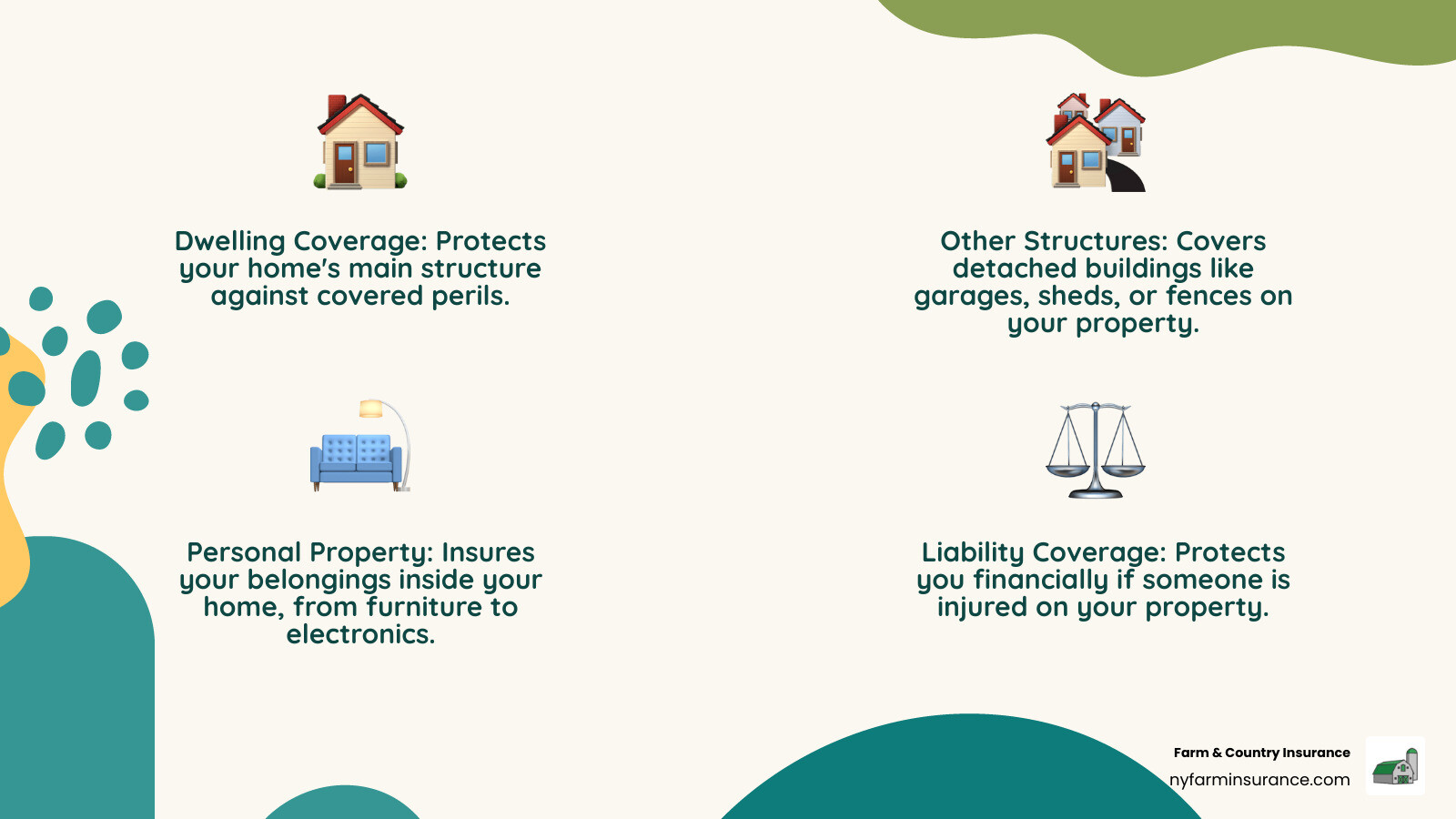
Home owner insurance terms to learn:
Understanding Your Policy: What’s Covered and What’s Not
A standard home owner insurance policy is a package that combines property damage coverage with liability coverage, creating a financial safety net for your family.
Here’s a breakdown of what’s typically included:

- Dwelling Coverage: This is the core of your policy, protecting the structure of your home—walls, roof, floors, and built-in fixtures. It helps you rebuild after events like a fire or severe windstorm.
- Other Structures Coverage: This protects detached buildings like a garage, shed, or fence. It’s usually set at 10% of your dwelling coverage.
- Personal Property Coverage: This covers your belongings, from furniture to electronics, if they are stolen or damaged in a covered event. This protection often extends to items outside your home, like a camera stolen on vacation.
- Additional Living Expenses (ALE): If a disaster makes your home uninhabitable, ALE covers extra costs like hotel stays and meals while your home is repaired.
- Personal Liability Coverage: This protects your finances if someone is injured on your property or if you accidentally damage someone else’s property. It covers legal and medical expenses that could otherwise be devastating.
- Medical Payments Coverage: This handles minor injuries to guests on your property, regardless of fault, helping to resolve small incidents quickly.
For more details, the Homeowners Insurance Basics | III is an excellent resource.
Most policies protect against common perils like fire, lightning, windstorms, hail, theft, vandalism, and water damage from burst pipes. However, it’s just as important to know what’s not covered. Standard policies typically exclude damage from floods, earthquakes, and poor maintenance. For example, a leaky roof that was neglected for years would not be covered.
Types of Home Insurance Policies
Choosing the right policy depends on your needs and budget.
- Comprehensive (HO-3, HO-5): Offers the broadest protection, covering your home against all perils except those specifically excluded. This is the most common choice for homeowners.
- Broad Form (HO-2): Covers your property only against a list of specific, named perils.
- Basic (HO-1): Provides the most limited protection, covering only a short list of common perils like fire and wind. This may be suitable for older homes or tight budgets.
| Policy Type | Dwelling Coverage | Personal Property Coverage | Best For |
|---|---|---|---|
| Comprehensive | All perils except excluded | Named perils (HO-3) or all perils (HO-5) | Most homeowners wanting broad protection |
| Broad Form | Specific named perils list | Same named perils | Balanced coverage and cost |
| Basic | Limited named perils | Same limited perils | Budget-conscious or older homes |
Home Insurance for Different Types of Residences
Your home’s type and location influence your insurance needs. A townhouse in Albany has different risks than a farm in Wyoming County.
- Single-Family Homes: Standard policies generally provide comprehensive protection for the dwelling, other structures, personal property, and liability.
- Rural and Farm Properties: These properties have unique needs. They are often farther from fire departments, may have alternative heat sources like wood stoves, and include outbuildings for agricultural use. Standard policies don’t cover the unique liability of farm operations, such as risks from equipment or selling products to consumers.
Farm & Country Insurance specializes in these complex properties. We understand the specific risks of New York’s agricultural industry and can tailor coverage for your home and operation. Our Home Insurance for Rural Properties resource offers more insight.
Decoding the Cost: Factors That Influence Your Premium

Your home owner insurance premium is calculated based on a risk assessment unique to you and your property. Understanding the key factors can help you manage your costs.
- Location: Proximity to fire hydrants and fire departments is crucial. Insurers use a Public Protection Class rating (1 is best, 10 is worst) to assess this risk. Local risks like severe weather patterns or higher crime rates in your specific New York neighborhood also affect your premium.
- Home Characteristics: Newer homes often cost less to insure due to modern electrical, plumbing, and roofing systems. Construction materials also matter; a brick home is typically cheaper to insure than a wood-frame one because it’s more fire-resistant. Your roof’s age and condition are also key factors.
- Rebuild Cost: This is the cost to rebuild your home from the ground up with today’s labor and material costs, not its market value. Unique features or high-end finishes increase this cost and your premium.
- Claims History: A history of frequent claims, by you or even previous owners, suggests higher risk and can lead to higher premiums.
- Coverage Limits: Higher limits for your dwelling, personal property, and liability will result in a higher premium. It’s about balancing adequate protection with affordability.
How a Deductible Affects Your Home Owner Insurance Cost
A deductible is the amount you pay out-of-pocket on a claim before your insurance coverage begins. Choosing a higher deductible lowers your premium because you’re taking on more financial risk. For example, increasing your deductible from $1,000 to $2,500 could save you around 11% annually.
However, you must be able to afford your deductible if you need to file a claim. Most homeowners select a deductible around $1,000. Be aware that some policies have special, higher deductibles for events like windstorms.
The Role of Your Credit Score
In New York, your credit history can influence your home owner insurance premium. Insurers use a credit-based insurance score, as studies show a correlation between financial management and property care. This score is a predictor of the likelihood of future claims.
This check is a “soft inquiry” and won’t harm your credit score. You have the right to check your credit report and can request it from the major credit bureaus.
Tailoring Your Coverage with Endorsements and Specialized Policies
A standard home owner insurance policy is a great foundation, but endorsements (add-ons) allow you to customize it for your specific needs. The right endorsements can prevent a coverage gap from becoming a financial disaster.
Common endorsements include:
- Water Damage: Standard policies cover sudden damage like burst pipes, but you may need endorsements for sewer backup or overland flooding from heavy rain or snowmelt.
- Earthquake Coverage: While not a primary concern in New York, even minor tremors can cause damage that a standard policy won’t cover.
- Identity Theft Protection: This can help cover the costs and provide assistance to restore your identity if it’s stolen.
- Scheduled Personal Property: For high-value items like jewelry, art, or antiques, this endorsement lists them individually with their appraised values, ensuring they’re fully covered beyond standard policy limits.
- Home Business Endorsement: If you work from home, this is crucial for covering business equipment and liability, which your regular policy likely excludes.
For unique properties like farms or rural homes, these endorsements are often essential. We offer specialized solutions like Homeowners Insurance for Hobby Farms to address these specific needs.
Ensuring Adequate Coverage for Your Unique Needs
Beyond endorsements, you must ensure your coverage limits are sufficient. Many homeowners find they are underinsured only after a loss.
- Create a Home Inventory: Document all your belongings with photos or video. Note serial numbers for expensive items and keep receipts. Store this list in the cloud or off-site.
- Understand Value: Know the difference between replacement cost and actual cash value. Replacement cost pays to buy a new, similar item, while actual cash value pays the depreciated worth of your old item. Replacement cost coverage is highly recommended.
- Protect Your Home’s Structure: For your home itself, guaranteed replacement cost coverage is the best option, as it pays whatever is needed to rebuild, even if costs exceed your policy limit. Extended replacement cost provides a buffer (e.g., 20-50%) above your limit.
At Farm & Country Insurance, we help New York families make these decisions. Our expertise with unique properties, including our specialized Farm Homeowners Insurance, ensures your coverage fits your life perfectly.
How to Get the Best Rate on Your Home Owner Insurance

Finding affordable home owner insurance without sacrificing quality is achievable with a proactive approach. Many homeowners miss out on savings by letting their policies auto-renew without review.
Insurance Broker vs. Buying Direct
You can purchase home owner insurance in New York either through an insurance broker or directly from a company.
- Working with a broker like Farm & Country Insurance means you have an advocate. We work for you, not a single insurance company, allowing us to shop multiple carriers to find the best fit. Our expert advice is especially valuable for unique New York properties like farms or rural homes, where online quote systems may miss important details. We provide access to specialized carriers and can help you steer the claims process.
- Buying direct online or by phone offers convenience. If you are confident in your coverage needs, this can be a quick option. However, the personalized guidance and market access from a broker often provide better overall value.
Practical Tips for Lowering Your Premium
Here are actionable steps to reduce your home owner insurance costs:
- Shop Around: Get at least three comparable quotes annually. Rates can vary significantly between carriers for the same coverage.
- Bundle Your Policies: Combining your home and auto insurance with one carrier can lead to substantial discounts, often up to 25%.
- Increase Your Deductible: If you can afford a higher out-of-pocket expense, raising your deductible is a fast way to lower your premium.
- Install Safety and Security Features: Smoke detectors, deadbolt locks, and centrally monitored security systems can all earn you discounts.
- Maintain Your Home: Proactively updating an old roof or modernizing your electrical and plumbing systems reduces risk and can lower your premium.
- Stay Claims-Free: A clean claims history can lead to discounts. Consider paying for minor repairs yourself to avoid filing small claims that could impact your rates.
- Ask About Group Discounts: Check if you’re eligible for savings through your employer, alumni groups, or professional associations.
- Review Coverage Annually: Your needs change over time. An annual review with Farm & Country Insurance ensures your coverage is optimal and priced competitively.
Frequently Asked Questions about Home Insurance in New York
At Farm & Country Insurance, we’ve helped families across New York, from Auburn to Victory, with their home owner insurance. Here are answers to the most common questions we encounter.
Is home insurance mandatory in New York?
No, home owner insurance is not required by New York state law. However, if you have a mortgage, your lender will almost certainly require you to carry a policy to protect their financial investment in your property. Even if you own your home outright, insurance is a critical tool for protecting your own investment from catastrophic loss, such as a fire or storm.
What is the difference between Replacement Cost and Actual Cash Value?
This is a crucial distinction that significantly affects claim payouts.
- Replacement Cost (RC) pays to rebuild your home or replace your belongings with new items of similar quality, without deducting for depreciation. If your five-year-old sofa is destroyed, RC gives you enough money to buy a brand-new one.
- Actual Cash Value (ACV) pays the replacement cost minus depreciation. For that same sofa, ACV would only pay what a five-year-old sofa was worth, which could be significantly less than the cost of a new one.
We almost always recommend replacement cost coverage for the superior financial protection it provides.
Will making a claim increase my home owner insurance premium?
Filing a claim can potentially increase your premium at renewal, but it’s not guaranteed. Insurers see a claims history as an indicator of future risk. The frequency of claims often has a greater impact than the size; for example, two small claims may raise your rates more than one large one. The type of claim also matters.
To offset this, many insurers offer claim forgiveness programs, which prevent a rate increase after your first claim (if you’ve been claims-free for a certain period). It’s wise to be strategic: pay for minor damages out-of-pocket, but use your insurance for major losses that could seriously impact your finances. That’s what it’s for.
Conclusion
Protecting your home with the right home owner insurance is about building a financial fortress around your most important asset. By understanding your policy, comparing quotes, and customizing your coverage, you can secure this vital safety net.
Home owner insurance is there when accidents happen or storms strike, preventing a single event from destroying your financial security. In New York, where properties range from suburban homes in Auburn to working farms in Cayuga County, specialized knowledge is key.
At Farm & Country Insurance, we’ve protected New York families and their unique properties since 1984. Our deep understanding of the risks facing rural and agricultural properties means we can craft coverage that truly fits your needs. We proudly serve communities across Cayuga County, including Aurelius, Cato, Genoa, Moravia, Scipio, Sennett, Sterling, Venice, Victory, and many more.
Your home is more than an investment; it’s where your life happens. Let us help you protect what matters most.