
Why Getting a Homeowners Insurance Quotation Can Save You Hundreds
A homeowners insurance quotation is your first step toward finding affordable protection for your most valuable asset. Here’s how to get started:
Quick Steps to Get Your Quote:
- Gather Information – Property details, personal info, claims history
- Compare Multiple Quotes – Get at least 3 quotes from different insurers
- Review Coverage Options – Understand what’s included and excluded
- Choose the Best Value – Balance cost with adequate protection
The numbers tell a compelling story. Shoppers who take the time to compare can save an average of $417 per year on home insurance. Some see even bigger savings – new customers switching both home and auto policies report average annual savings of approximately $924.
Rising costs don’t mean you’re powerless. With home replacement costs more than doubling since 2002 and severe weather causing over $3.1 billion in insured damages in 2023, getting the best homeowners insurance quotation has never been more important.
I’m Casey Love, owner of Farm & Country Insurance. I’ve spent years helping New York homeowners steer the complexities of homeowners insurance to find coverage that protects their unique needs. My experience with rural and farm properties has shown that the right approach to getting quotes can mean the difference between overpaying and getting comprehensive protection at a fair price.
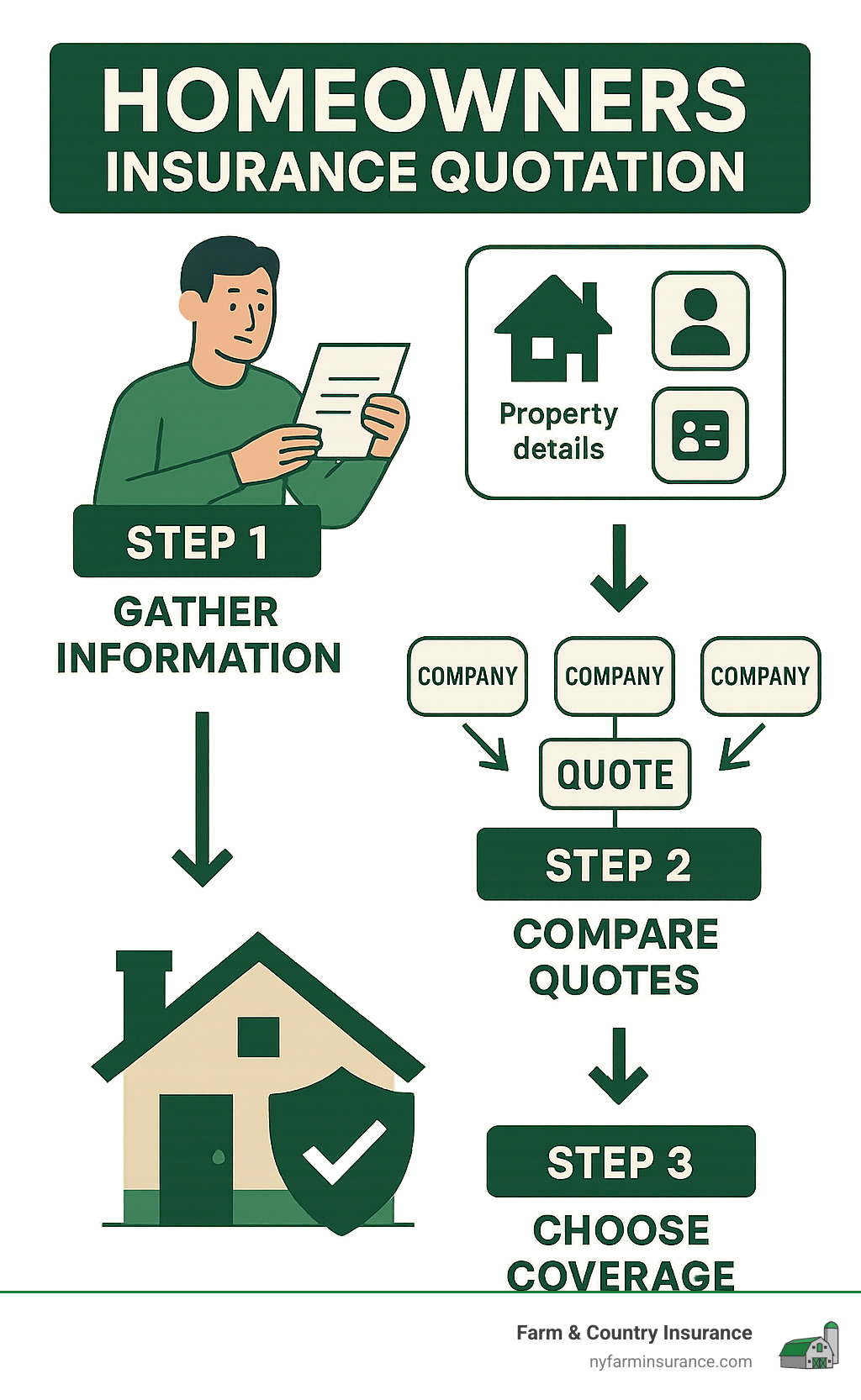
Homeowners insurance quotation terminology:
How to Get Your Homeowners Insurance Quotation
Getting your homeowners insurance quotation is easier than most people think. The key is knowing what information to gather and where to look.


The process starts with providing details about yourself and your home to an insurer, who uses this information to calculate your risk and premium. Many companies offer online tools that provide an estimate in minutes.
Insurance agents and brokers can also guide you, especially if your property has unique features. At Farm & Country Insurance, we find that rural properties and farms often need this personal touch for accurate quotes.
Remember: quick online estimates are usually preliminary. The final quote might change after a more thorough review or a home inspection, which is a normal part of the process.
Information You’ll Need for a Quote
Before you start shopping for your homeowners insurance quotation, gather these key details. The more accurate your information, the more precise your quote will be.
You’ll need personal details (full name, date of birth) and the property address. Your location helps insurers understand local risks.
Your home’s year built is important; newer homes often get better rates because they meet modern safety codes. You’ll also need your home’s square footage to help determine rebuilding costs.
Construction materials play a big role. Be ready to describe your exterior siding (brick, vinyl, etc.), your roof type and age, and your foundation type.
Your heating system type also affects rates. Electric and natural gas systems typically cost less to insure than oil or wood systems due to lower associated risks like leaks or fires.
Don’t forget your claims history. You’ll need details about any home insurance claims you’ve made in the past three to five years. A clean record often leads to better rates.
If you have a mortgage, gather your mortgage lender information, as most lenders require proof of insurance.
Where to Get Your Quotes
Once you have your information, it’s time to shop. Getting multiple quotes is crucial because each insurer assesses risk differently, leading to varied prices for the same coverage.
Direct insurers provide quotes on their websites or through their sales teams, offering a direct line to the company.
Independent insurance agents work with multiple companies and shop around for you. They are especially valuable for unique properties, like the farms and rural homes we specialize in here in New York. These agents understand that a historic farmhouse needs different coverage than a new suburban home.
Online comparison websites let you enter your information once to get quotes from several companies side-by-side, which is convenient for seeing your options quickly.
The importance of getting multiple quotes can’t be overstated. People who compare quotes save an average of $417 per year. With just a few hours of research, you could put hundreds of dollars back in your pocket. At Farm & Country Insurance, we’ve seen how much quotes can vary, especially for rural properties. We always encourage homeowners to shop around to find the best protection for their specific situation.
Decoding Your Premium: What Factors Influence the Cost?
Ever wonder why your homeowners insurance quotation is so different from your neighbor’s? Dozens of factors are at play. Insurance companies assess your property, its location, and your personal profile to determine the cost.

Once you understand these factors, you can take steps to potentially lower your costs.
Your Property’s Characteristics
Every detail about your home helps an insurer predict the likelihood of a claim.
Home age is a major factor. A new home meets current safety standards, while an older home might have outdated wiring or plumbing that poses a higher risk.
Construction materials also matter. A brick home, for example, withstands weather differently than one with vinyl siding.
Replacement cost is not your home’s market value; it’s the cost to rebuild it from scratch using today’s materials and labor. Since these costs have more than doubled since 2002, this figure is a key part of your premium.
Your roof condition is critical. A newer roof in good shape suggests a lower risk of water damage claims.
Electrical and plumbing systems that are updated reduce the risk of fires and water damage. Old knob-and-tube wiring or aging pipes are red flags for insurers.
Features like wood stoves and swimming pools add risk. Wood stoves increase fire risk, while pools bring liability concerns. Even certain dog breeds can affect your rates.
At Farm & Country Insurance, we specialize in understanding the unique features of rural homes and farms across New York.
More on insuring unique properties
Location and Environmental Risks
Where your home is located can dramatically affect your homeowners insurance quotation.
Proximity to fire stations is a key factor. A shorter response time can mean less damage in a fire, resulting in a lower premium.
Local crime rates also play a role. Areas with higher rates of theft or vandalism will cost more to insure.
Weather-related risks are increasingly important. Your area’s history with events like severe storms, flooding, or hail directly impacts your rates. Severe weather caused over $3.1 billion in insured damages in 2023 alone, and insurers adjust rates based on these trends.
Statistics on severe weather losses
Your Personal Profile
Your personal characteristics can also affect your homeowners insurance quotation.
Your claims history is a primary indicator. A history of multiple claims suggests a higher likelihood of future claims.
Credit score is used by most insurers in states where it’s permitted. The theory is that financial responsibility correlates with home maintenance and fewer claims.
Information on credit scores from TransUnion
Pet ownership can be a factor, especially with certain dog breeds known for higher liability risk due to bite statistics.
Lifestyle choices, such as running a home-based business or renting out a room, change your risk profile and can affect your rates.
Understanding these factors helps you see the full picture. At Farm & Country Insurance, we help New York homeowners, especially those with unique rural and farm properties, steer these complexities.
Understanding Your Coverage: Policies, Perils, and Exclusions
When you receive a homeowners insurance quotation, you’re seeing the foundation of protection for your home. Not all policies are the same, so it’s crucial to understand what is and isn’t covered.
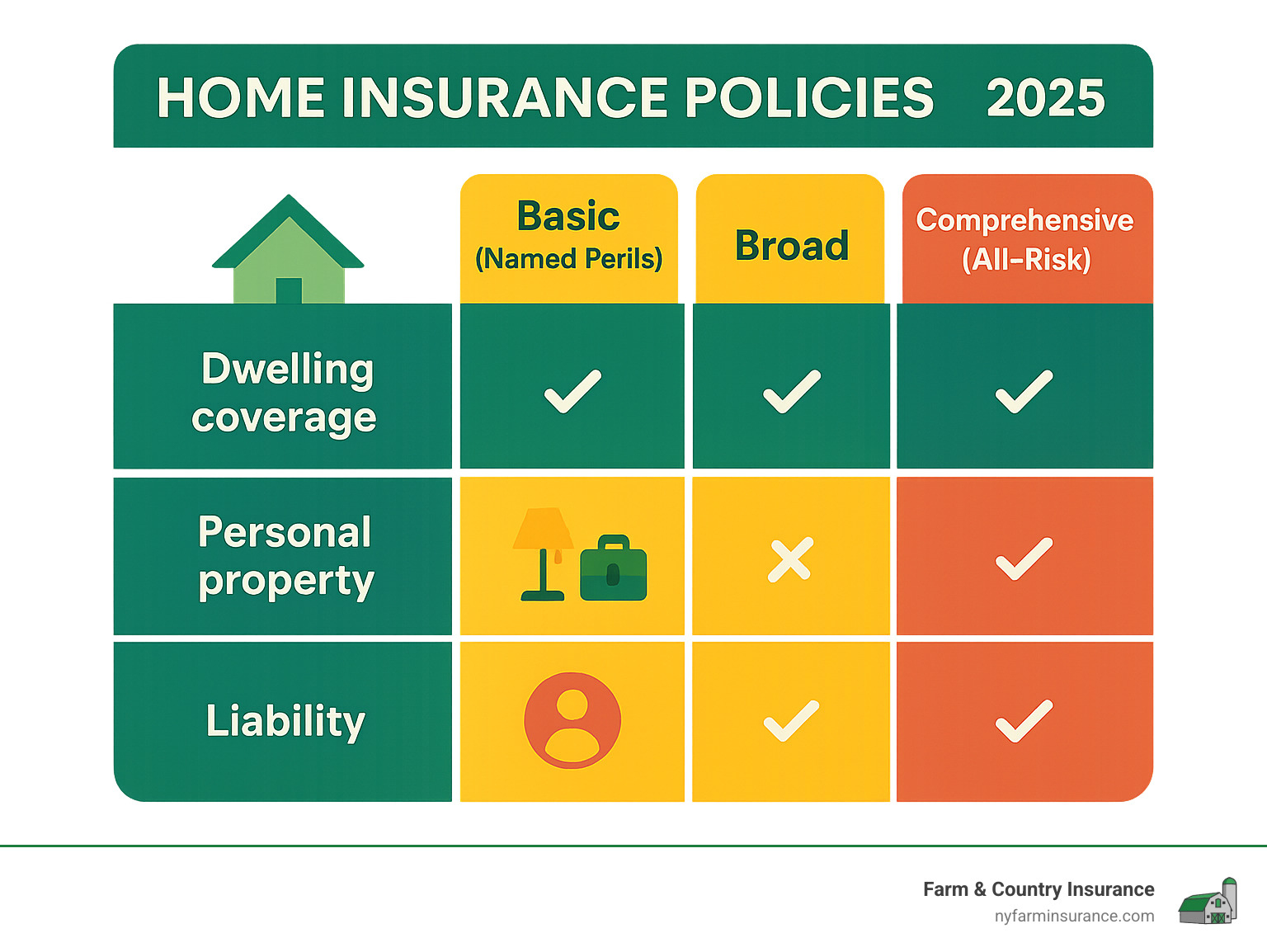
Most home insurance policies come in three main types. Basic (Named Perils) only covers disasters specifically listed in your policy. Broad coverage protects your home’s structure against most perils but offers more limited coverage for your personal belongings. Comprehensive (All-Risk) coverage protects both your home and belongings against everything except for specific exclusions. Most homeowners choose this option for its extensive protection.
Key Elements of a Standard Policy
Every homeowners insurance quotation breaks down into several key components.
Dwelling Protection covers the structure of your home: the foundation, walls, and roof. This coverage should be for the full replacement cost—what it would take to rebuild your home from scratch—not its market value.
Contents Coverage protects your personal belongings, like furniture, electronics, and clothes. You can choose Actual Cash Value (which pays the depreciated value) or Replacement Cost Value (which pays for a new item). We always recommend replacement cost coverage.
Additional Living Expenses covers costs like hotel bills if your home becomes unlivable due to a covered event.
Personal Liability is crucial protection. It covers you if someone is injured on your property or if you accidentally damage someone else’s property.
Medical Payments covers minor medical expenses for guests injured on your property, regardless of who is at fault.
What Standard Policies Typically Don’t Cover
Standard policies have significant exclusions that homeowners should be aware of to avoid surprises.
Overland flooding from overflowing rivers or heavy rain is not covered. Separate flood insurance is required for this protection.
Earthquakes also require a separate policy or endorsement.
Sewer backup is another common exclusion. You need a specific add-on to be covered for damage from wastewater backing up into your home.
Wear and tear is not covered, as insurance is for sudden and accidental events, not gradual deterioration.
Pest damage from termites, mice, or other critters is considered a maintenance issue and is not covered.
Home-based business operations may not be fully covered by a standard policy. This is especially relevant for our clients in New York who operate hobby farms or small agricultural businesses, as business equipment, inventory, and liability may be excluded.
At Farm & Country Insurance, we help rural property owners identify and close these potential coverage gaps.
7 Smart Ways to Get a Cheaper Homeowners Insurance Quotation
While insurance premiums are on the rise, you can take smart, actionable steps to reduce your homeowners insurance quotation without sacrificing protection. Insurance companies reward lower-risk customers with discounts you just need to know to ask for.

At Farm & Country Insurance, we help New York homeowners find savings they didn’t know were available.
Maximize Your Discounts
Insurers offer a wide array of stackable discounts for even greater savings.
Bundling home and auto is one of the biggest money-savers. Insurers offer substantial discounts (up to 20%) when you buy both policies from them. New customers who switched both policies reported average annual savings of approximately $924.
Protective devices like centrally monitored security and fire alarm systems, smoke detectors, and carbon monoxide detectors can lower your rates.
A new home discount may be available for recently built homes, which are up to current building codes.
Your claims-free history is valuable. Maintaining a clean record for 3-5 years can lead to significant discounts. Some policies even offer a “shrinking deductible” for each claim-free year.
Loyalty rewards can pay off, though we still recommend comparing quotes annually. Some companies also offer online purchase discounts.
Check for group insurance rates through your employer or other associations. Even water monitoring systems or a LEED-certified building might qualify you for savings.
Always ask your insurance provider about all available discounts when getting your homeowners insurance quotation.
Policy Adjustments for a Better Homeowners Insurance Quotation
Beyond discounts, you can strategically adjust your policy for a lower premium.
Increasing your deductible is highly effective. Your deductible is what you pay out-of-pocket before insurance pays. Raising it from $1,000 to $2,500 can lower your premium by an average of 11%. Ensure you can afford the higher amount if you need to file a claim.
Reviewing and adjusting coverage limits ensures you’re not over-insured. Periodically check if your coverage still matches your needs, especially after selling valuables or making major renovations.
Paying your premium annually instead of in installments often comes with a small discount.
Improving your credit score can lead to better rates, as insurers often use credit-based scores to predict risk.
Keeping your home in good repair and making home upgrades like a new roof or updated wiring can reduce risks and potentially lower your premium over time.
By combining these strategies, you can significantly reduce your homeowners insurance quotation and get the best value.
Find cheap homeowners insurance options
Frequently Asked Questions about Home Insurance Quotes
Getting a homeowners insurance quotation can bring up many questions. At Farm & Country Insurance, we’ve been helping New York homeowners since 1984, and we’ve compiled answers to the most common inquiries we receive.
Is home insurance mandatory in New York?
While homeowners insurance is not legally required by New York state, your mortgage lender will almost certainly require it. Lenders need to protect their financial investment in your property, which serves as collateral for the loan. This requirement typically remains until the mortgage is paid off.
Even if you own your home outright, we strongly advise maintaining coverage. Your home is likely your largest asset, and going uninsured could lead to devastating financial loss after a disaster like a fire. For our clients with farms and rural properties in New York, the stakes are even higher, as you may also be protecting barns, equipment, and other essential structures.
New York house insurance details
How often should I get a new homeowners insurance quotation?
We recommend getting a fresh homeowners insurance quotation at least once a year, ideally at your policy renewal. The insurance market changes, and what was a great deal last year might not be competitive today.
Certain life events should also prompt you to shop for a new quote:
- Major life events like getting married or adding to your family.
- Significant home renovations that change your home’s value.
- A large rate increase at renewal without a clear reason.
Will getting multiple insurance quotes affect my credit score?
No, getting multiple homeowners insurance quotations will not hurt your credit score. When insurers check your credit for a quote, they use a “soft inquiry,” which does not impact your credit score. This is different from a “hard inquiry” used for loan or credit card applications.
Insurers use a specialized credit-based insurance score to help assess risk, which is separate from your regular credit score. While poor credit might lead to higher rates, the act of shopping for quotes will not damage your credit standing.
Information on credit scores from TransUnion
So, shop around with confidence. Getting multiple quotes is one of the smartest financial moves a homeowner can make.
Conclusion: Secure the Right Protection for Your Home
Getting the right homeowners insurance quotation is an achievable goal. By gathering your information, comparing multiple quotes, understanding your premium factors, and using smart strategies to save, you can secure excellent protection at a fair price.
The key takeaways are simple: shop around annually, understand your coverage, and don’t settle for auto-renewal. Homeowners who compare quotes save an average of $417 per year, with some saving nearly $1,000 when bundling policies.
Your home is more than just a building; it’s where memories are made and, for many of our clients in Auburn, Cayuga County, and surrounding rural communities, it’s the heart of their agricultural livelihood.
Farm properties and rural homes face unique risks that standard policies often miss. From equipment and livestock to agribusiness operations, these properties require specialized coverage.
Since 1984, Farm & Country Insurance has been dedicated to understanding the specific risks New York farmers and rural homeowners face. We know that cookie-cutter policies don’t work for your unique situation.
Take control of your insurance costs by being an informed consumer. Request multiple homeowners insurance quotation options and apply the money-saving strategies we’ve discussed. The peace of mind that comes from knowing your most valuable asset is properly protected is priceless.