
Why Protecting Your Equine Investment Matters
Horse insurance is a specialized type of insurance designed to protect horse owners from the significant financial losses that can arise from their horse’s death, illness, injury, or liability claims. For many, a horse is more than just an animal; it’s a partner, a family member, and a substantial investment of time, emotion, and money. Whether you own a single pleasure horse for trail riding through the beautiful New York countryside or manage a competitive show barn or breeding operation, understanding your coverage options is a critical step that can save you thousands of dollars in unexpected veterinary bills and legal costs.
Quick Answer: What Horse Insurance Covers
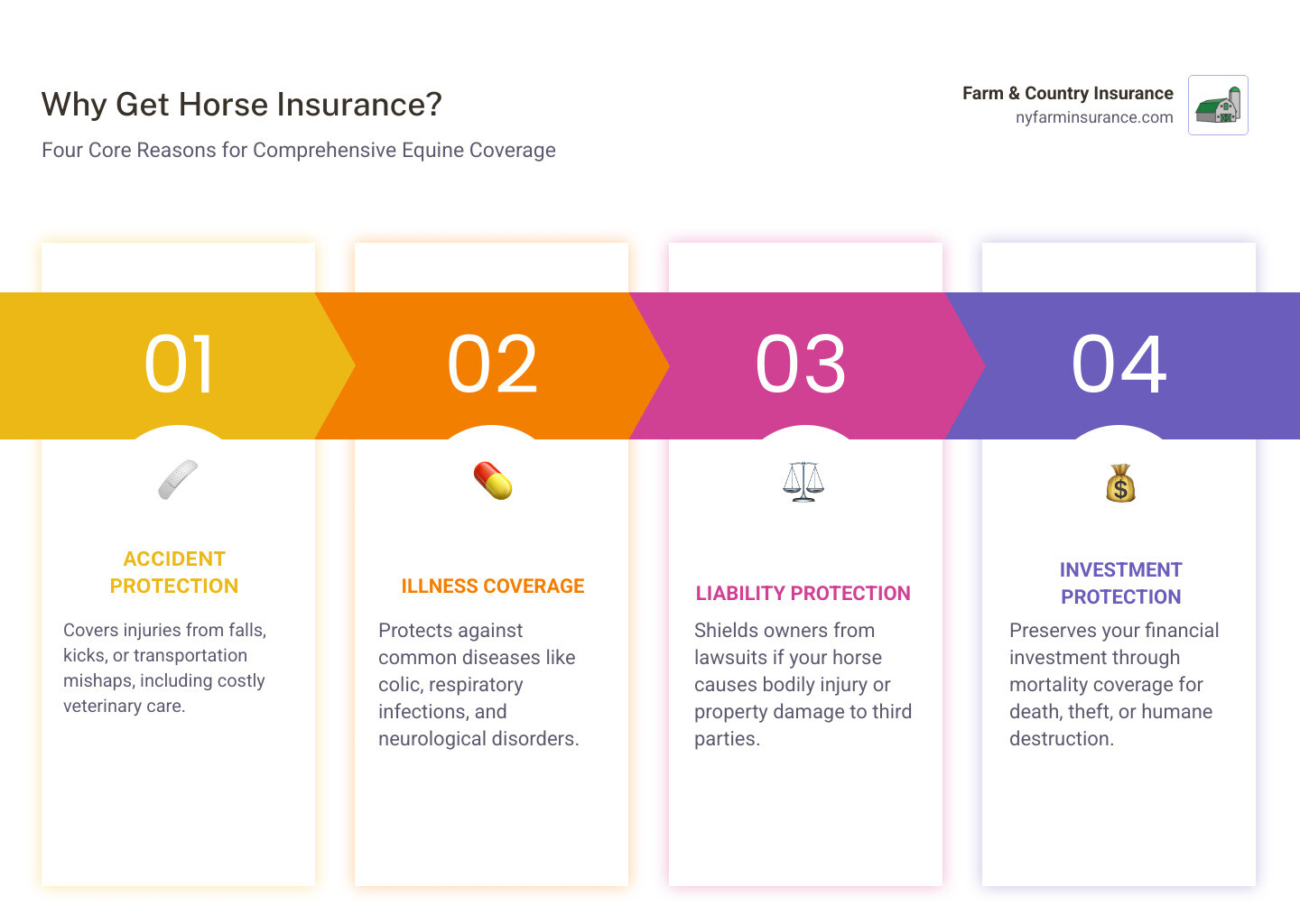
- Mortality Insurance: Covers death from accident, illness, or disease
- Major Medical Insurance: Reimburses veterinary expenses up to policy limits
- Liability Insurance: Protects against claims if your horse injures someone
- Loss of Use Insurance: Pays if your horse can’t perform its intended purpose
- Equipment Coverage: Protects tack, trailers, and equipment
The financial stakes are real, and they extend far beyond a single diagnosis. While colic surgery can cost $10,000 or more, a complex lameness issue involving diagnostics like MRIs and specialized treatments can easily run up a similar bill. Soft tissue injuries, respiratory infections requiring hospitalization, or even a simple pasture accident can result in thousands of dollars in veterinary care. Furthermore, a liability claim from a horse-related accident—such as a kick, bite, or an escape onto a roadway—could reach hundreds of thousands of dollars in legal fees and settlements. As one industry expert noted, “horses seem to be prone to illness, accidents, and injury” – making insurance less of a luxury and more of a necessity for responsible ownership.
Annual premium costs typically range from 2.5% to 4% of your horse’s value for mortality coverage, with major medical adding another 3% to 5%. For a $10,000 horse, you might pay $550-900 per year for comprehensive coverage.
I’m Casey Love, owner of Farm & Country Insurance in Honeoye Falls, NY. For decades, I’ve worked closely with farm families across New York, from Cayuga County to the surrounding regions, helping them protect their most valuable assets. I’ve seen how devastating an unexpected accident or illness can be, not just financially but emotionally. My experience with horse insurance has shown me that the right coverage isn’t just a policy; it’s a safety net that provides profound peace of mind, allowing owners to focus on what truly matters: caring for and enjoying these magnificent animals.
Horse insurance terms to remember:
Understanding the Fundamentals of Equine Coverage
Picture this: you’re enjoying a peaceful morning feeding your horse when suddenly they start showing signs of colic. Within hours, you’re facing a decision between a $15,000 emergency surgery or losing your beloved companion. This scenario plays out more often than horse owners like to think about, which is exactly why horse insurance exists.

The reality is that horses seem to have a talent for finding trouble. Whether it’s a pasture accident, a sudden illness, or even causing damage to someone else’s property, these magnificent animals can create expensive situations faster than you can say “veterinary emergency.” Without proper coverage, you’re essentially gambling with thousands of dollars every single day. A horse that gets tangled in a fence can require stitches and antibiotics, costing over a thousand dollars. A trailering accident can lead to severe injuries and extensive rehabilitation.
Horse insurance protects you from unexpected veterinary bills that can drain your savings account overnight. A simple fracture can cost $8,000 to treat, while complex surgeries can easily reach $20,000 or more. Even routine emergencies like severe cuts, eye ulcers, or respiratory infections can quickly add up to several thousand dollars in treatment costs, including diagnostics, medication, and follow-up visits.
Beyond medical expenses, there’s the liability aspect that many horse owners don’t fully consider. If your horse kicks a visitor, escapes and causes a car accident, or injures another horse at a show, you could face a lawsuit that reaches into the hundreds of thousands of dollars. Your regular homeowner’s insurance likely won’t cover these equine-specific risks, leaving you financially vulnerable. This is a critical gap that specialized equine liability insurance is designed to fill.
For comprehensive information about protecting your valuable livestock investments, check out our guide on livestock insurance options.
The Main Types of Horse Insurance Policies
When you’re shopping for horse insurance, you’ll find it’s not just one simple policy. Instead, it’s more like a menu of coverage options that you can mix and match based on your specific needs and budget.
| Coverage Type | What it Covers | Key Benefits |
|---|---|---|
| Mortality | Death from accident, illness, disease, or humane destruction | Protects your full investment; covers natural disasters |
| Major Medical | Veterinary expenses up to policy limits | Reimburses treatment costs; includes diagnostics and medications |
| Liability | Bodily injury or property damage caused by your horse | Legal protection; covers defense costs and settlements |
Mortality coverage is the foundation of most horse insurance policies. This protects your financial investment if your horse dies from an accident, illness, or needs to be humanely euthanized due to suffering. It also typically covers theft. Most policies are written on an “agreed value” basis, meaning you and the insurance company agree on the horse’s value when the policy is written. If a covered death occurs, the policy pays out this predetermined amount, helping you recover your investment without dispute over the horse’s worth at the time of death.
Major Medical coverage works similarly to health insurance for people and is one of the most used equine coverages. It reimburses you for reasonable and customary veterinary expenses when your horse gets sick or injured. This can include everything from emergency colic surgery and diagnostics (like X-rays and ultrasounds) to treatment for respiratory infections or wound care. Policies come with a deductible (the amount you pay first), co-insurance (the percentage of the bill you share with the insurer), and an annual limit on the total amount of coverage available.
Surgical coverage is a more limited, and therefore more affordable, version of major medical that specifically covers the costs associated with surgical procedures. This includes the surgeon’s fees, anesthesia, and operating room costs. While it won’t cover non-surgical treatments or diagnostics, it provides a crucial safety net for the most catastrophic (and expensive) veterinary events. If you’re on a tight budget but want protection against the highest potential bills, this might be a good middle ground.
Liability protection is crucial for any horse owner, as your standard homeowner’s policy often excludes equine-related incidents. This coverage protects you financially if your horse causes bodily injury to someone else or damages their property. This could be a guest getting kicked at your farm, your horse getting loose and causing a traffic accident, or a bite incident at a public event. The policy helps cover legal defense costs, settlements, and judgments, which can otherwise be financially ruinous.
Loss of Use coverage is a specialized policy that pays out a percentage of the horse’s insured value if it becomes permanently unable to perform its intended purpose due to a covered injury or illness, but doesn’t require humane euthanasia. This is particularly important for high-value performance horses, breeding stock, or horses used in business operations. These claims have a high threshold for proof, often requiring extensive veterinary documentation to confirm the disability is permanent and career-ending.
Tack and Equipment insurance protects your significant investment in gear. This can be added to your policy to cover saddles, bridles, harnesses, show clothing, and even horse trailers from theft, fire, or damage during an accident or transit. When you consider that a custom saddle can cost thousands of dollars and a trailer tens of thousands, protecting this equipment becomes just as important as insuring the horse itself.
Specialized Coverage Options to Consider
Beyond the standard coverage types, horse insurance can include several specialized options that might be perfect for your specific situation.
Preventative Care coverage helps offset the costs of routine veterinary care like vaccinations, dental work, and health certificates. While not typically included in basic policies, this add-on can help make budgeting for routine care more predictable and encourage proactive wellness management.
Colic coverage is sometimes offered as a separate add-on, given how common and expensive colic episodes can be. Some policies include this automatically, while others require you to purchase it separately. This can cover both medical (non-surgical) and surgical colic treatments.
Stallion Infertility insurance protects breeding operations if a valuable stallion becomes unable to breed naturally or through artificial insemination due to a covered accident, sickness, or disease. This specialized coverage is essential for commercial breeding programs to protect future revenue.
Prospective Foal coverage protects the investment in breeding by covering foals from conception through a specified age (often 30 days after birth). This can include coverage for stillbirths, congenital defects, or early death, safeguarding the costs of stud fees and mare care.
Transit insurance provides protection while your horse is being transported. Whether you’re heading to a show in another state, moving to a new barn across New York, or shipping a horse you’ve purchased, this coverage protects against accidents and injuries that occur during transport.
For more detailed information about what different types of livestock insurance can cover, including horses, visit our comprehensive guide on what livestock insurance covers.