
Your Path to Protecting America’s Farmers
What does it take to be a crop insurance agent is a question many professionals ask when considering this rewarding career. The role requires a blend of education, specific skills, and a commitment to agriculture. Key qualifications include a high school diploma (or a bachelor’s degree in agribusiness/finance), a state insurance license with crop insurance certification, and strong communication skills. You’ll also need agricultural knowledge, computer proficiency, and the ability to travel to farms.
The crop insurance industry is growing rapidly. In 2022, more than 80% of planted acres had crop insurance coverage, protecting over $46 billion in crops. This creates excellent opportunities for new agents.
A crop insurance agent is “the link between you and the biggest single part of the Federal safety net for agriculture,” as noted by the USDA. These professionals are trusted advisors who help farmers steer complex risk management decisions, protecting their operations from challenges like drought or market fluctuations.
I’m Casey Love, owner of Farm & Country Insurance. I’ve spent years helping New York farmers protect their operations. My experience comes from seeing how the right agent can help a farmer manage risk and secure their future.
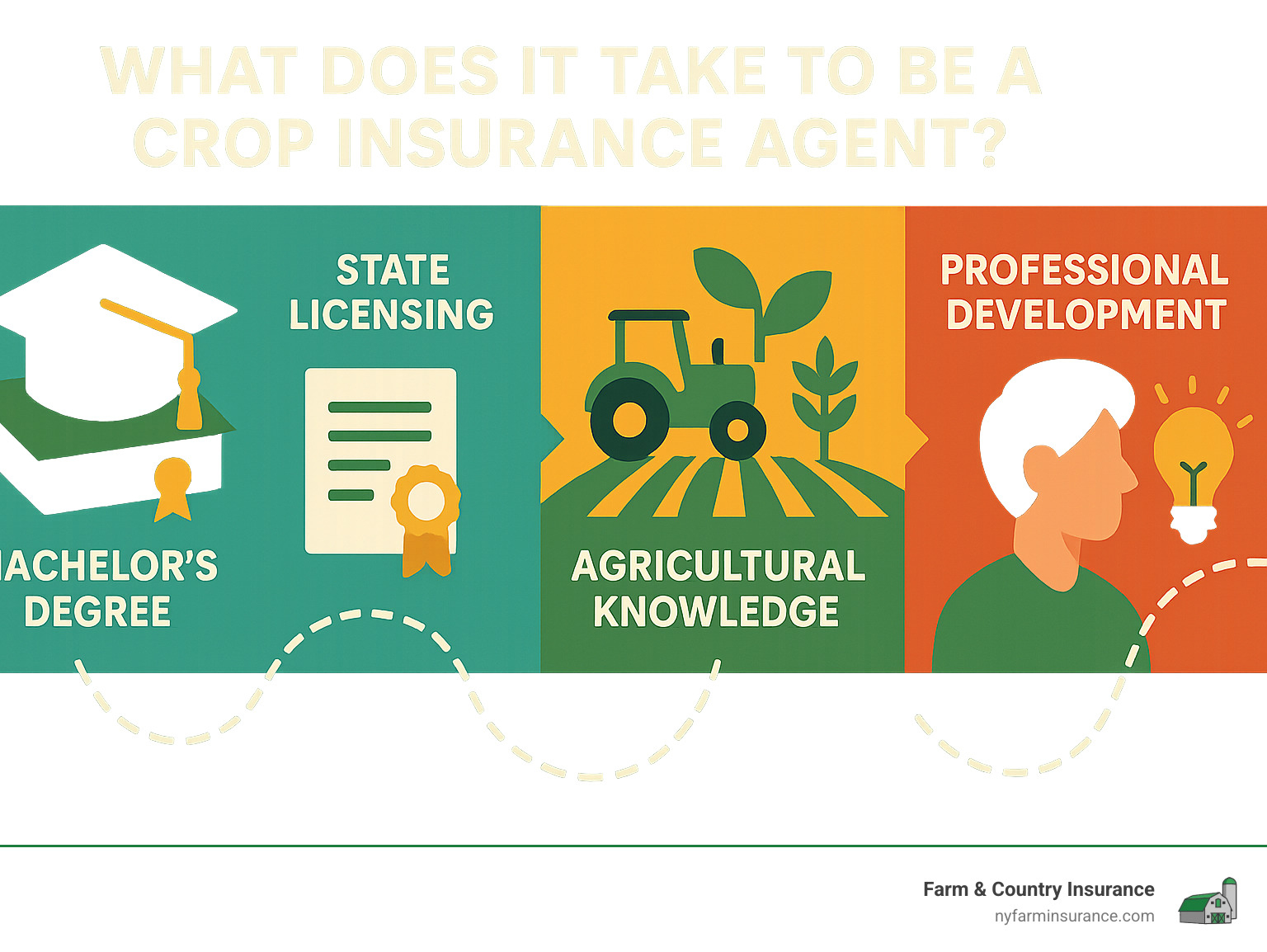
What Does It Take to Be a Crop Insurance Agent? The Core Requirements
If you’re wondering what does it take to be a crop insurance agent, you’re looking at a career that combines financial expertise with a genuine care for farming communities. The path requires dedication to learning and a commitment to understanding agriculture. Here’s what you’ll need to get started.
Education and Licensing: Your First Steps
Your journey begins with the right credentials. While a high school diploma is the minimum, a bachelor’s degree in agribusiness, finance, or marketing provides a significant edge. It helps you understand the business and agricultural complexities you’ll face.


The next step is your state insurance license. This involves passing a comprehensive exam and committing to ongoing continuing education to stay current with new regulations and policy options. You’ll also need specialized crop insurance certification and must pass competency testing required by the Federal Crop Insurance Corporation (FCIC) to understand the federal programs that form the backbone of crop insurance.
At Farm & Country Insurance, we provide comprehensive support through our training programs because we believe continuous professional development is key. For detailed guidance, check our resources on Crop Insurance Certification and find More info about insurance certification.
Essential Skills and Knowledge for Success
Success as a crop insurance agent requires a unique blend of skills:
- Agricultural knowledge: You must understand crop cycles, soil types, and the specific challenges farmers face in your region, like New York’s dairy, grain, fruit, and vegetable farms.
- Regional crop expertise: What works for a corn farmer in Iowa won’t apply to an apple grower in upstate New York. You must become a local expert.
- Risk management: Your ability to help farmers protect against losses from events like extreme weather is critical, as noted in reports on Understanding agricultural risks.
- Communication and sales skills: You’ll need to explain complex policies simply, build trust, and match farmers with the right protection.
- Regulatory knowledge: Staying current with USDA regulations and legislative changes is essential for compliance.
- Computer proficiency: This helps you process policies and manage claims efficiently.
Our Crop Insurance Specialists resources offer deeper insight into this specialized knowledge.
The Qualities of a Top-Performing Agent
Beyond technical skills, certain personal qualities separate good agents from great ones:
- Personal integrity: Farmers trust you with sensitive information. You must act ethically and always put their interests first.
- Client-focused: Listen to each farmer’s unique situation to provide customized solutions and peace of mind.
- Team player: Integrate with the farmer’s network of advisors, including lenders and agronomists.
- Proactive and detail-oriented: Anticipate needs, send timely reminders, and prevent costly mistakes in paperwork.
- Relationship building: Your goal is a long-term partnership, not a single sale. This requires consistency and reliability.
- Problem-solving: Farmers need agents who can think on their feet when unexpected situations arise.
The USDA’s Risk Management Agency highlights these qualities in its guide on What farmers expect from an agent, aligning perfectly with our values at Farm & Country Insurance.
The Role of a Crop Insurance Agent in Modern Agriculture
The life of a crop insurance agent is varied, mixing office work with time spent on farms. It’s a career at the heart of the agricultural community, offering daily challenges and opportunities to make a difference.
Typical Responsibilities and Daily Tasks
When people ask what does it take to be a crop insurance agent, they’re often curious about the day-to-day job. No two days are alike. Your time will be split between office work and farm visits.
- Office Work: You’ll input policy data, organize financial records, review policy details, and prepare recommendations for farmers. Accuracy is critical.
- On-Farm Visits: A key part of the job is meeting clients on their farms. You’ll walk through fields, discuss coverage in barns, and build relationships to understand each operation.
- Claims & Reporting: You’ll help farmers process claims after a loss, which involves gathering acreage reports and reviewing production histories.
- Sales & Outreach: You will make sales calls and conduct presentations to farm groups to build your network.
- Communication: Constant contact with clients via phone, email, and meetings is essential, as is staying current on USDA regulations.

Travel to farms throughout your territory is a rewarding aspect of the job. For a deeper look, see A day in the life of a crop insurance agent.
Types of Policies You Will Handle
As an agent, you’ll master several types of Crop Insurance to protect farmers against different risks:
- Federal Crop Insurance (MPCI): This is the core coverage for most farmers, protecting against unavoidable perils like drought, freezing, and disease.
- Crop-Hail Insurance: This provides specialized, acre-by-acre protection against hail, which is critical for high-value crops like New York’s apple orchards.
- Revenue Protection (RP): This popular policy addresses both yield losses and price declines, which is valuable in volatile markets.
- Yield Protection (YP): This focuses specifically on production losses due to natural disasters.
- Whole-Farm Revenue Protection (WFRP): This is a safety net for diversified operations, protecting a farm’s entire revenue. It’s ideal for New York farms with multiple crops.
Understanding these policies is key. Learn more about How Does Crop Insurance Work?.
How Selling Crop Insurance Differs from Other Insurance
Selling crop insurance is a niche market that’s very different from auto or home insurance.
- Deep Industry Knowledge: You need to understand crop cycles, regional growing conditions, and market dynamics. You’re an agricultural risk management consultant.
- Client Relationships: Relationships are deep and long-term. You become a trusted advisor, often through on-farm visits where you become invested in the farm’s success.
- Seasonal Sales Cycles: The work follows the agricultural calendar, from spring sales deadlines to fall harvest and claims.
- Federal Program Integration: You don’t compete on price, as the USDA sets rates. Success depends on the quality of your service, expertise, and support.
- Protecting Livelihoods: You are protecting not just a business, but a way of life and family legacies. This makes the work incredibly meaningful.
Career Outlook and Professional Development
Becoming a crop insurance agent leads to a profession with excellent stability and growth potential. Answering what does it take to be a crop insurance agent includes understanding that this career offers financial rewards and the satisfaction of making a real difference.
Job Outlook and Salary Potential
The job market for crop insurance agents is strong. Agriculture is a constant, and farmers need protection from unpredictable weather and markets, creating stable career growth.
Salary potential is competitive and varies by location, experience, and the size of your client base. Agents in prime agricultural regions like those in New York often see higher earning potential. As you build your book of business, your income grows. Your success directly correlates with the value you provide to farmers. Most agents work for agricultural banks or specialized insurance companies like Farm & Country Insurance. The Career Profile from AgCareers provides more insight into earning potential.
Professional Organizations and Training Resources
Learning never stops in this business. The agricultural industry evolves constantly, and successful agents accept continuous learning.
Organizations like the American Association of Crop Insurers (AACI) and National Crop Insurance Services (NCIS) are vital resources for advocacy, education, and industry data. They help agents stay current on policy changes and best practices.
At Farm & Country Insurance, we provide comprehensive training, including on-demand courses, live webinars, and in-person sessions. We believe training is about giving you the tools and confidence to be the trusted advisor farmers depend on. This investment in professional development pays dividends in career advancement and the satisfaction of helping farmers steer challenges.
Crop Insurance Agent vs. Crop Adjuster: Understanding the Difference
When people ask what does it take to be a crop insurance agent, they sometimes confuse the role with a crop adjuster. Both are critical to protecting farmers, but they serve very different functions.
An agent is a farmer’s trusted advisor year-round. They sell and service policies, build long-term relationships, and proactively help farmers manage risk before a loss occurs. Think of them as the planner.
A crop adjuster steps in after a disaster strikes. Their job is to investigate claims, assess damage, and determine fair settlements. They are the problem-solvers who arrive after a loss.
Here’s how these two essential roles compare:
| Feature | Crop Insurance Agent | Crop Adjuster |
|---|---|---|
| Primary Function | Sales, policy management, client advisory | Claims investigation, loss assessment, settlement |
| Licensing | State insurance license (crop-hail, multi-peril) | State adjuster license, CAPP certification (often) |
| Daily Tasks | Client meetings, policy recommendations, sales calls, marketing, processing policy updates, gathering historical data | Field inspections, measuring fields/bins, collecting production records, assessing damage, communicating findings, documenting claims |
| Client Interaction | Proactive, long-term relationship building, risk planning, ongoing support | Reactive, post-loss interaction, claims-focused, often involves difficult conversations |
| Orientation | Proactive (risk mitigation, sales) | Reactive (loss verification, claims processing) |
The agent’s world revolves around prevention and planning, helping farmers choose the right coverage. The adjuster’s world is about recovery and resolution, ensuring farmers receive fair compensation after a loss. At Farm & Country Insurance, we work closely with experienced adjusters to ensure our clients receive prompt claim settlements.
Understanding this distinction is crucial. Both paths are rewarding, but they require different skills. Agents need sales and relationship-building abilities, while adjusters need investigative and technical expertise. If you’re drawn to planning and long-term relationships, the agent path is for you. If you prefer post-event problem-solving, consider adjusting. Learn more about the More on the Crop Insurance Adjuster role.
Frequently Asked Questions about Becoming a Crop Insurance Agent
Here are answers to the most common questions about this career path.
What education does it take to be a crop insurance agent?
What does it take to be a crop insurance agent educationally? A high school diploma is the minimum, but a bachelor’s degree in agribusiness, finance, or marketing is highly recommended for credibility and a strong business foundation. The most critical step is getting your state insurance license, which requires passing an exam and completing ongoing continuing education. The Federal Crop Insurance Corporation (FCIC) also requires competency testing to ensure you understand the federal programs.
How much do crop insurance agents typically make?
Crop insurance agent salaries are competitive but vary based on experience, location, and the size of your client base. Agents in agriculturally dense areas like New York often have higher earning potential. As you build your book of business, your income grows. The job outlook is good, with stable demand for qualified agents due to the essential nature of agriculture and increasing risks from weather and market volatility.
Do I need a farming background to become a crop insurance agent?
No, a farming background is helpful but not required. What is essential is a genuine willingness to learn about agriculture, including crop cycles, regional farming practices, and federal programs. Companies like Farm & Country Insurance provide comprehensive training to build this knowledge. The most important qualities are curiosity, strong communication skills, and a desire to help farmers. Farmers value an agent’s knowledge and dedication to service above all else.
Secure Your Future by Securing Theirs
Starting a career as a crop insurance agent is a rewarding profession at the heart of America’s agricultural community. Answering what does it take to be a crop insurance agent means understanding that you’ll be making a genuine difference in people’s lives.
You become a trusted guardian of farming families’ futures, helping them protect their operations from unpredictable challenges like drought or market shifts. The path requires a blend of financial expertise, agricultural knowledge, and strong people skills to build lasting relationships.
Success comes from a solid foundation of education, licensing, and a commitment to continuous learning. Your real education happens in the field, learning from the farmers you serve. If you’re passionate about supporting New York’s diverse farming landscape, this career offers a chance to make a real impact. Farm & Country Insurance has provided comprehensive risk management solutions since 1984, and we know how to serve our farming communities.
Your success is directly tied to helping others secure their futures. When you provide the right coverage, you’re offering peace of mind that can save a family farm.
Ready to join this vital profession? Learn more about our specialized crop insurance offerings and see how Farm & Country Insurance can help you build a meaningful career.