
What is pollution insurance? It’s a specialized insurance coverage that protects against costs and damages resulting from unexpected releases of pollutants. Key aspects include:
- Coverage: Offers protection for losses related to environmental damage, including cleanup costs and third-party claims.
- Scope: Unlike general liability insurance, it specifically addresses risks from pollution.
- Industries: Essential for businesses operating with chemicals, working in environmentally sensitive or densely populated areas, or transporting hazardous substances.
Pollution insurance is critical due to the rising frequency of environmental claims driven by natural catastrophes and emerging pollutants like PFAS and microplastics. As environmental risks increase, the financial impact on businesses can be significant, highlighting the importance of such coverage.
Pollution insurance is not just for large corporations; even small operations, like auto shops and farms, benefit from shielding themselves against costly pollution-related lawsuits. Understanding what is pollution insurance ensures appropriate risk management and peace of mind.
I’m Jeffrey Joseph, owner of Farm & Country Insurance. With a deep understanding of what is pollution insurance and its importance, my aim is to provide farmers and businesses custom solutions that protect their operations from environmental risks. Transitioning forward, we’ll dig deeper into the specific components and significance of pollution insurance.
Common what is pollution insurance vocab:
– pollution insurance policy
– pollution legal liability
What is Pollution Insurance?
Pollution insurance is a specialized coverage designed to protect businesses from the financial fallout of environmental damage. It offers a safety net against the costs associated with pollution incidents, ensuring businesses can manage risks without facing crippling expenses.
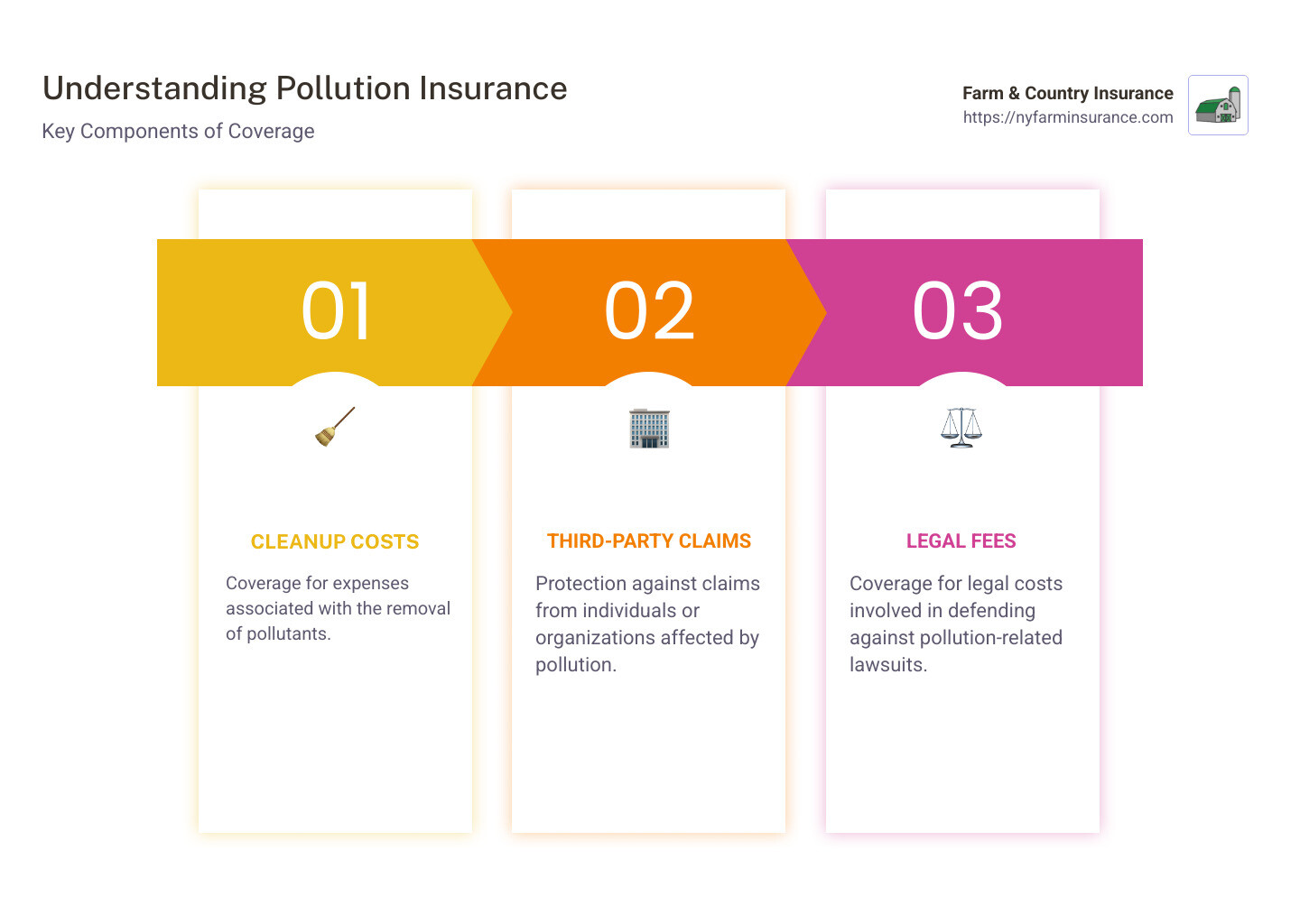
Key Components of Pollution Insurance
Pollution insurance covers several key areas:
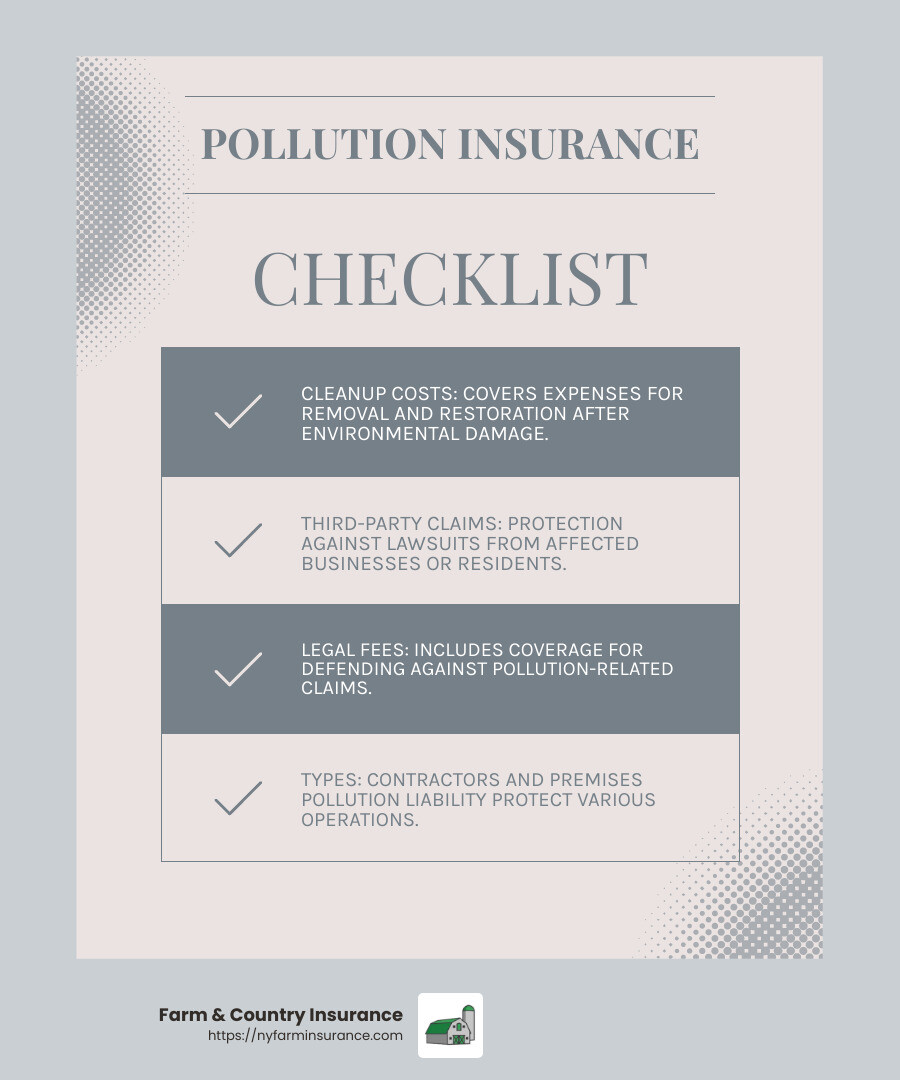
Cleanup Costs: One of the primary benefits is covering the expenses for cleaning up environmental damage. This includes the removal of hazardous substances and restoring the site to its original condition. For instance, if a chemical spill occurs, the insurance would cover the cost of containment and cleanup.

Third-Party Claims: Businesses can face claims from third parties affected by pollution. This could include neighboring businesses or residents suffering from health issues or property damage due to contamination. Pollution insurance helps cover these claims, protecting businesses from potentially devastating lawsuits.
Legal Fees: Defending against pollution-related claims can be costly. Pollution insurance often includes coverage for legal expenses, ensuring businesses have the resources to mount a proper defense.
Types of Pollution Insurance
There are two primary types of pollution insurance that cater to different needs:
Contractors Pollution Liability (CPL): This is custom for contractors and covers pollution claims that arise from their operations at job sites. For example, if a contractor accidentally releases pollutants while working, CPL provides coverage for the resulting cleanup and legal claims.
Premises Pollution Liability (PPL): This type is designed for property owners and operators. It covers pollution incidents that occur on, at, or migrating from a specific location. PPL is crucial for businesses that own or manage properties where pollutants are stored or used.
Both types of insurance ensure that businesses, whether they’re contractors or property owners, have the necessary protection against environmental risks.
Understanding the key components of pollution insurance and the different types available helps businesses choose the right coverage for their specific needs. This knowledge is essential for effective risk management and financial protection.
Importance of Pollution Insurance
Pollution insurance is not just a luxury—it’s a necessity for many businesses. Why? Because it acts as a critical shield against the financial and legal repercussions of environmental mishaps. Let’s explore who really needs this type of insurance and why.
Who Needs Pollution Insurance?
1. Construction Companies
Construction sites are busy hubs of activity. They often involve the use of heavy machinery, chemicals, and other materials that can lead to accidental spills or emissions. For example, consider a construction company working on a new development. If a fuel tank leaks and contaminates the soil, the cleanup costs could be astronomical. Pollution insurance ensures these companies can manage such risks without financial ruin.
2. Small Businesses
Even small businesses are not immune to environmental risks. Imagine a small auto repair shop that improperly disposes of oil, leading to groundwater contamination. Without pollution insurance, the shop could face hefty fines and cleanup costs that might threaten its very existence. This insurance offers them a safety net, allowing them to focus on growth rather than fear of unexpected liabilities.
3. Hazardous Waste Generators
Industries that produce hazardous waste—like chemical manufacturing or waste treatment facilities—are under constant scrutiny. Regulatory compliance is a must, and any slip-up can lead to severe financial penalties. Pollution insurance provides financial protection and helps these businesses comply with environmental regulations, safeguarding them from potential shutdowns or legal battles.
Why is Pollution Insurance Important?
Risk Management: Pollution insurance is an integral part of a comprehensive risk management strategy. It helps businesses identify potential environmental threats and prepare for them, minimizing the impact on operations.
Financial Protection: The costs associated with environmental damage can be crippling. Insurance acts as a financial buffer, covering cleanup, legal fees, and third-party claims, ensuring businesses remain solvent even in the face of disaster.
Regulatory Compliance: Environmental laws are strict and changing. Compliance is not optional, and pollution insurance helps businesses meet these requirements, avoiding penalties and maintaining a good standing with regulatory bodies.
Pollution insurance is a vital tool for businesses of all sizes. It ensures they can operate confidently, knowing they’re protected against the unpredictable nature of environmental risks. Whether you’re running a construction company, a small business, or dealing with hazardous waste, having this insurance is a smart move for long-term stability and peace of mind.
Frequently Asked Questions about Pollution Insurance
What does a pollution insurance policy cover?
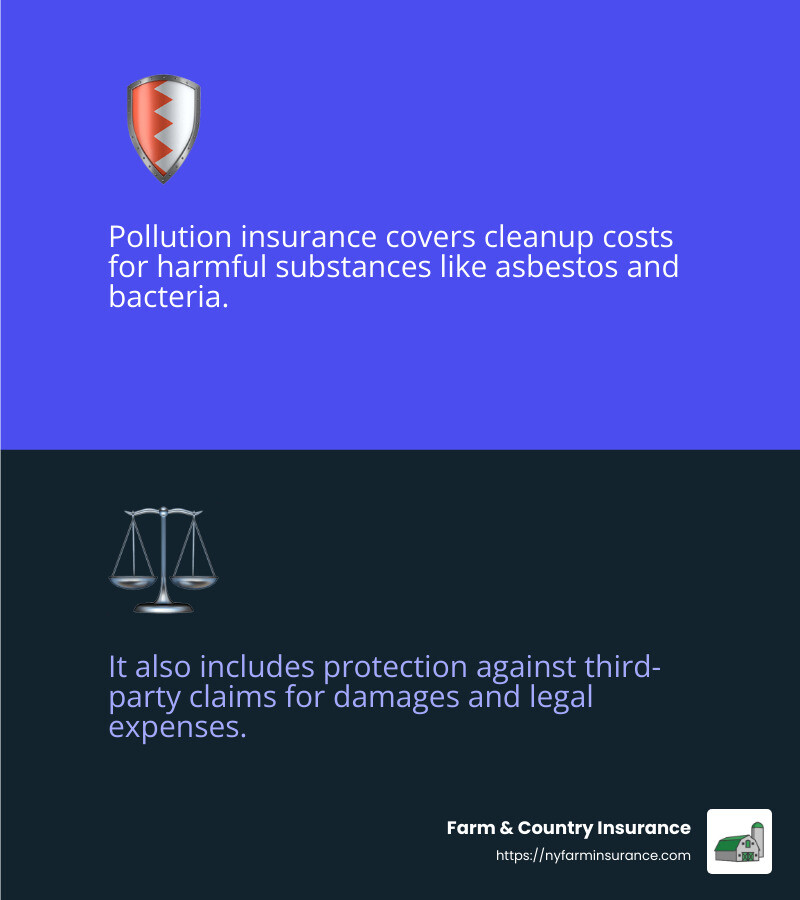
Pollution insurance provides a safety net against various environmental risks. It covers cleanup costs for pollutants like fungus, bacteria, and asbestos. These substances can cause significant harm, not just to health but also to property. For example, if asbestos is found in a building, the removal and disposal costs can be enormous. Pollution insurance steps in to cover these expenses, protecting businesses from financial strain.
The policy also includes third-party claims for bodily injury or property damage. Imagine a scenario where contaminants from a business seep into a nearby water source, affecting local residents. The ensuing legal claims and medical expenses could be covered by the insurance.
How much does pollution insurance cost per year?
The cost of pollution insurance can vary widely based on several factors. Industry risks play a significant role. For instance, a chemical manufacturing plant might pay more than a small auto shop due to the higher risk of hazardous waste production.
Location also impacts the premium. Businesses in areas prone to natural disasters, like floods or earthquakes, might face higher costs due to the increased likelihood of environmental incidents.
On average, businesses might pay anywhere from a few hundred to several thousand dollars annually for pollution insurance. It’s essential to consult with an insurance agent to get a custom quote that reflects your specific business needs and risks.
Is pollution liability the same as general liability?
No, pollution liability and general liability are not the same. General liability insurance covers a broad range of risks, like property damage and bodily injury, but it typically excludes pollution-related incidents. This is where the pollution exclusion comes into play, leaving businesses vulnerable to environmental claims.
Pollution liability insurance specifically addresses these gaps. It offers protection against losses arising from environmental damage, which general liability policies often won’t cover. For businesses handling chemicals or hazardous materials, having both types of insurance ensures comprehensive protection.
In summary, while general liability covers many business risks, pollution liability is essential for safeguarding against environmental hazards. Understanding these coverage differences helps businesses make informed decisions about their insurance needs.
Conclusion
At Farm & Country Insurance, we understand that every farm and agribusiness has its own unique set of risks and needs. That’s why we offer custom solutions custom specifically to your operations. Whether you’re running a dairy farm in Cayuga County or managing a grain farm in Auburn, we have the expertise to help you steer the complexities of pollution insurance.
Pollution insurance is a crucial component of a comprehensive risk management strategy. It provides financial protection against unexpected environmental incidents that could otherwise lead to significant financial loss. From cleanup costs to third-party claims, having the right coverage means you’re prepared for the unexpected.
Our team is dedicated to helping you understand your risks and how pollution insurance can mitigate them. We pride ourselves on our deep understanding of the farming industry and the unique challenges you face. With over 50 years of experience, we have built a reputation for providing reliable, hands-on service.
If you haven’t yet considered pollution insurance, now is the time to explore your options. Our knowledgeable agents are ready to assist you in finding the right coverage to protect your business and give you peace of mind. For more information, visit our pollution insurance service page and learn how we can help safeguard your future.
At Farm & Country Insurance, your protection is our priority. Let’s work together to ensure you have the coverage you need to thrive.